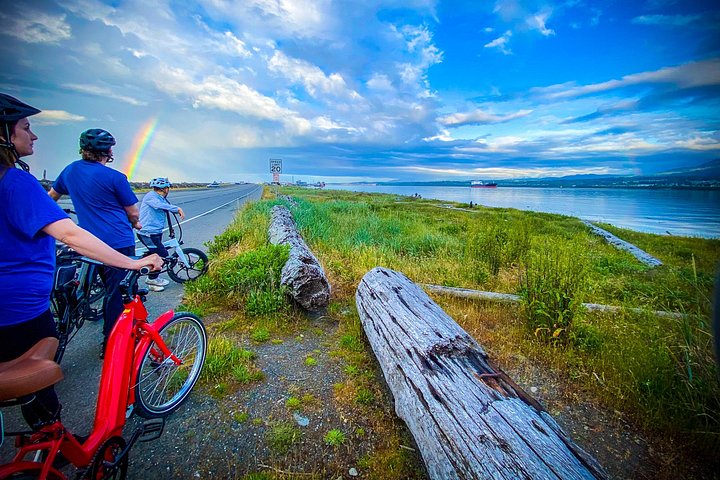
Dungeness Spit stretches about 5.5 miles into the Strait of Juan de Fuca, a thin curving arm of sand and driftwood that is among the longest natural sand spits in the United States. It is protected as part of the Dungeness National Wildlife Refuge, which means that wildlife, rather than development, shapes the experience. At the far end stands the New Dungeness Lighthouse, built in 1857, and walking out to it is one of the great long beach hikes of the peninsula. On one side lie wild waves and the open strait; on the other, a sheltered bay and a lagoon that teems with shorebirds, harbor seals and migrating waterfowl.
The walk is simple but long. The trail begins at the refuge entrance near Sequim with a half-mile path through forest to a bluff, then drops to the beach, where you walk the spit out and back, a round trip of about 11 miles. Most people walk part of it.
Check the tide table before you set out: at high tide parts of the spit are hard to walk, and you want the return trip to occur when water is low. Wear sturdy shoes and bring water and food, as there are no services on the spit.
At the end, volunteers staff the lighthouse, and visitors can climb the tower and learn about keepers who lived there for generations. The light is operated by a volunteer organization, and in some seasons you can stay at the keepers quarters as a volunteer. It is an unusual way to spend a week, and a reminder of how remote the place feels.
Wildlife is the other reason to come. The refuge protects a major stopover for migrating birds along the Pacific Flyway, with brant geese, loons, grebes, and a huge variety of shorebirds appearing in spring and autumn. Harbor seals haul out on the spit, and you should keep a good distance from them, especially during pupping season, when disturbance can cause mothers to abandon their pups. Dogs are not allowed in the refuge, and fires and camping are restricted. A fee for entry applies.
The nearby town of Sequim sits in the rain shadow of the Olympics and gets only a fraction of the rain that falls on the western side, so the area is often sunny when the coast is not. Combine the spit with lavender farms in summer, fresh crab and oysters in local restaurants, and an easy drive along the Olympic Discovery Trail. A quieter alternative is to walk a shorter portion of the spit, then picnic and head home before the tide turns.
Think about the tide before anything else, because it controls how much of the spit is comfortable to walk and whether a return trip is safe. A falling tide is ideal for heading out, leaving you the rising tide for the walk back along the firm upper beach. Sun reflects off water and sand, so bring sunglasses and sunscreen even in cool weather, and wind off the strait can chill you quickly.
If the full walk sounds too long, the first mile or two still give you big views and plenty of birds, and the bluff overlook at the start is worth a pause by itself.
What to expect
The experience
An 11-mile round-trip beach walk to a historic lighthouse inside a wildlife refuge; shorter partial walks are common.
Best time
Spring and autumn for migrating birds; summer for dry weather. Check the tide table.
How long
Four to six hours for the full walk; one to two hours for a partial.
Tips
Check the tide, carry water and food, and keep distance from seals and nesting birds.
Quick picks
- Best for
- Walkers and birders who like a long, flat beach.
- Families
- A shorter walk along the beach suits families, though the full spit is a long trip for small children.
- Couples
- A quiet, scenic stroll with big sky.
- Pair with
- Sequim lavender farms or a seafood lunch.
- Time needed
- A morning or most of a day.
Good questions
How long is the walk to the lighthouse?+
About 5.5 miles one way, 11 miles round trip, plus a half-mile trail from the parking area.
Can I bring my dog?+
No, dogs are not allowed in the refuge.
Can I climb the lighthouse?+
Usually yes, when volunteers are on site. Check with the lighthouse association for current access.
What wildlife can I see?+
Shorebirds, brant geese, harbor seals and many other species, depending on the season.
When is the best time to go?+
Spring and autumn for birds, summer for the best weather. Always plan around the tide.