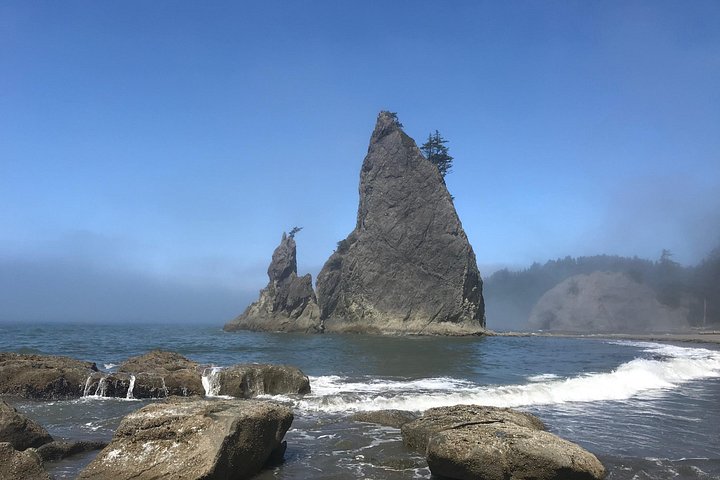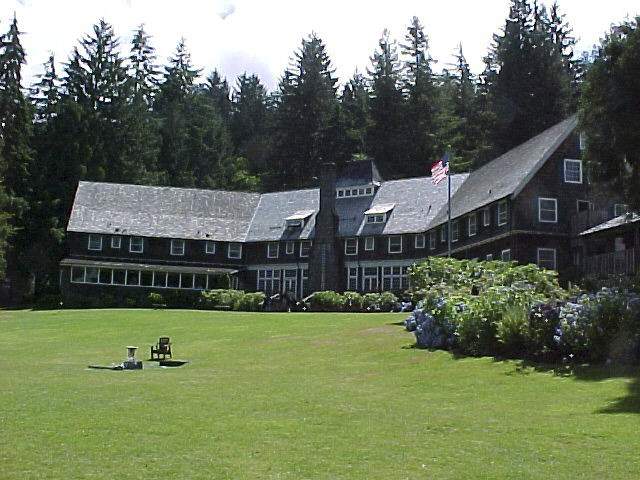
Ruby Beach and Kalaloch are the coast's roadside showpieces, a stretch of the Olympic shoreline where US 101 swings close enough to the Pacific that several beach trails start just steps from the highway. At Ruby Beach, a short, steep path from the parking area leads down to a crescent of gray sand scattered with polished stones, towering driftwood logs and tall sea stacks offshore. A creek meets the surf at the south end, and on a clear evening the sunset behind Abbey Island is among the most photographed scenes in the park. Kalaloch, a few miles south, has a campground, a historic lodge area and a series of numbered beaches with their own character, from easy picnic spots to tide pool beaches.
Visiting is straightforward, which is its main appeal. Ruby Beach has a small lot and restrooms, a path of a few hundred yards, and then you are among logs the size of buses. Take time to walk the length of the beach, climb over driftwood (carefully) and look for sea stars and anemones on the rocks at low tide.
Offshore, on a clear day, you may see Destruction Island with its lighthouse. Like all of the Olympic coast, the surf is powerful and the logs are unstable, so watch the waves and stay clear of the surf zone.
A short drive south, the Kalaloch area offers more things to see. The Tree of Life, a Sitka spruce growing over a gap eroded under its roots near Kalaloch Beach 4, has become famous for clinging on in an apparently impossible position. Local lore treats it as a wonder, and photographers come for the way the roots form a cave over the water.
Tide pools at Beach 4 are good at low tide. A large old western red cedar in the Kalaloch area, known as the Big Cedar, is also worth a short stop for its girth.
Timing is the key to a good visit, as with any beach on this coast. Tides determine what you can reach and what you can see, so check a tide table before you set out. Low tide exposes pools and lets you walk beyond headlands, while high tide turns many beaches into narrow strips under the cliffs.
Fog is common in summer mornings and often burns off by midday. For sunset, arrive an hour early, bring a flashlight, and plan your return before dusk. Dress in layers, as the coast can be cold and windy even in July.
If you are staying the night, the lodge at Kalaloch and the campground are popular, so book well ahead. Otherwise, the beaches make an easy half-day stop between the Hoh Rain Forest and Lake Quinault, or between Forks and the southern peninsula. Cell service is patchy and the nearest full services are in Forks or Amanda Park, so fill your tank and buy food in advance. As elsewhere in the park, collecting rocks, shells and animals is not allowed, and fires on the beach follow park rules.
If you are building a day around the coast, a sensible order is to start at the Hoh Rain Forest in the morning when it is quiet, have lunch in Forks, and reach Ruby Beach for the late afternoon light, finishing at Kalaloch for dinner or an overnight. That sequence avoids the worst of the midday crowds, matches the usual tide pattern for evening pools, and keeps your driving to under two hours between stops. Even in a short visit the contrast between towering forest and open Pacific is memorable.
What to expect
The experience
Roadside beach stops along US 101 with short trails to the shore, sea stacks and tide pools; free with park entry.
Best time
Sunset for photographs, low tide for tide pools, and summer for the best chance of clear weather.
How long
One to three hours depending on how many beaches you visit.
Tips
Check a tide table, wear sturdy shoes, and keep clear of the surf and loose logs.
Quick picks
- Best for
- Anyone who wants Pacific beach scenery without a long hike.
- Families
- Short trails and open beaches suit kids, who love the giant logs; watch them near the waves.
- Couples
- One of the best sunset spots on the coast.
- Pair with
- Lunch in Forks or a night at Kalaloch.
- Time needed
- Two to three hours.
Good questions
Where is Ruby Beach?+
On US 101 north of Kalaloch, about 27 miles south of Forks. The parking area is signed and the trail down to the beach is short.
What is the Tree of Life?+
A spruce near Kalaloch Beach 4 whose roots hang over a gap carved by erosion. It is a favorite photo spot near the Kalaloch lodge area.
Can I swim?+
Not recommended. The water is cold, waves are powerful, and drifting logs add risk. Wading near the shore is as far as most people go.
Do I need a park pass?+
Yes, the beaches are inside the national park and require an entrance fee or valid pass.
Can I see whales?+
Gray whales migrate along the coast in spring and autumn, and sometimes you can spot them from shore with binoculars.