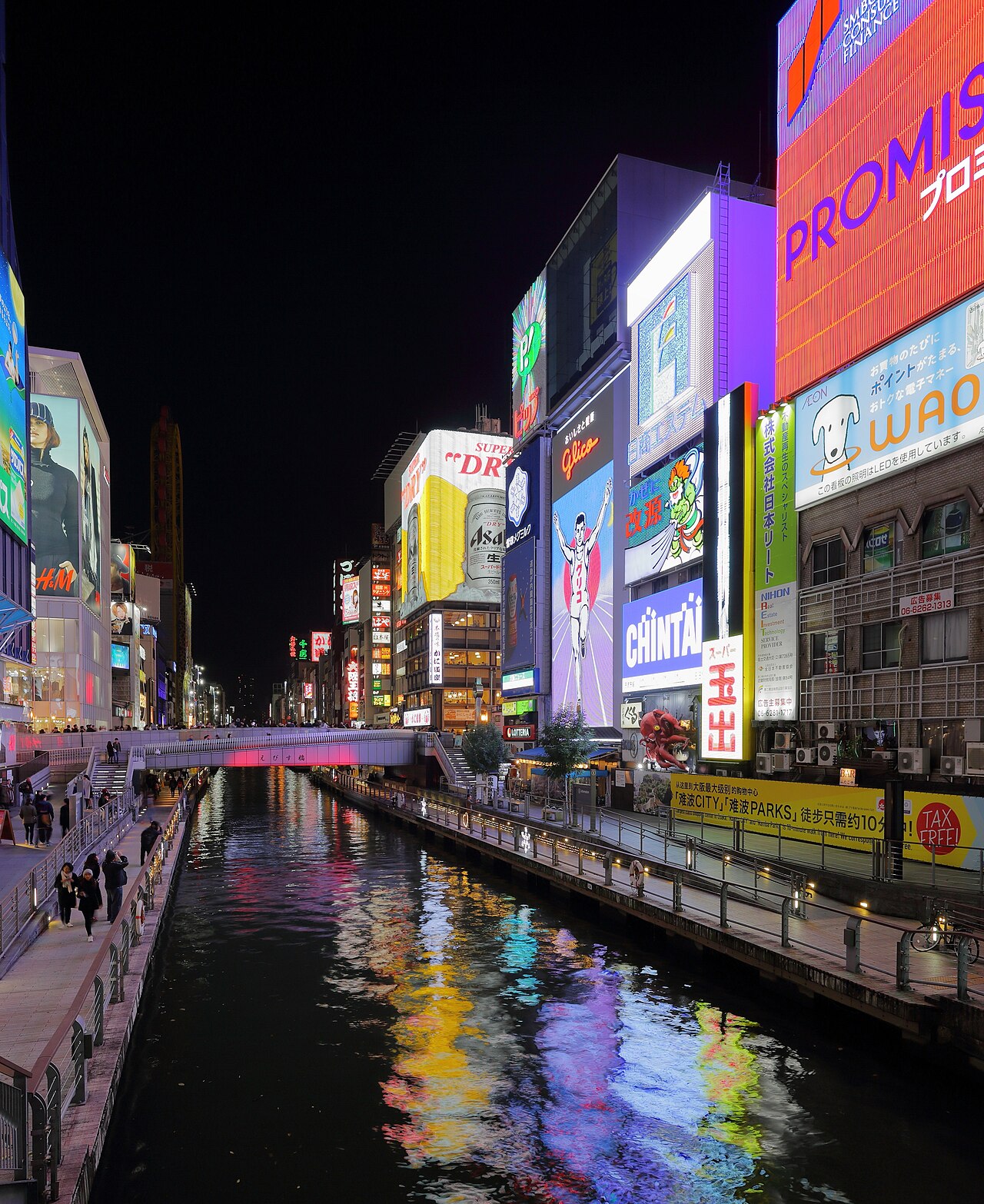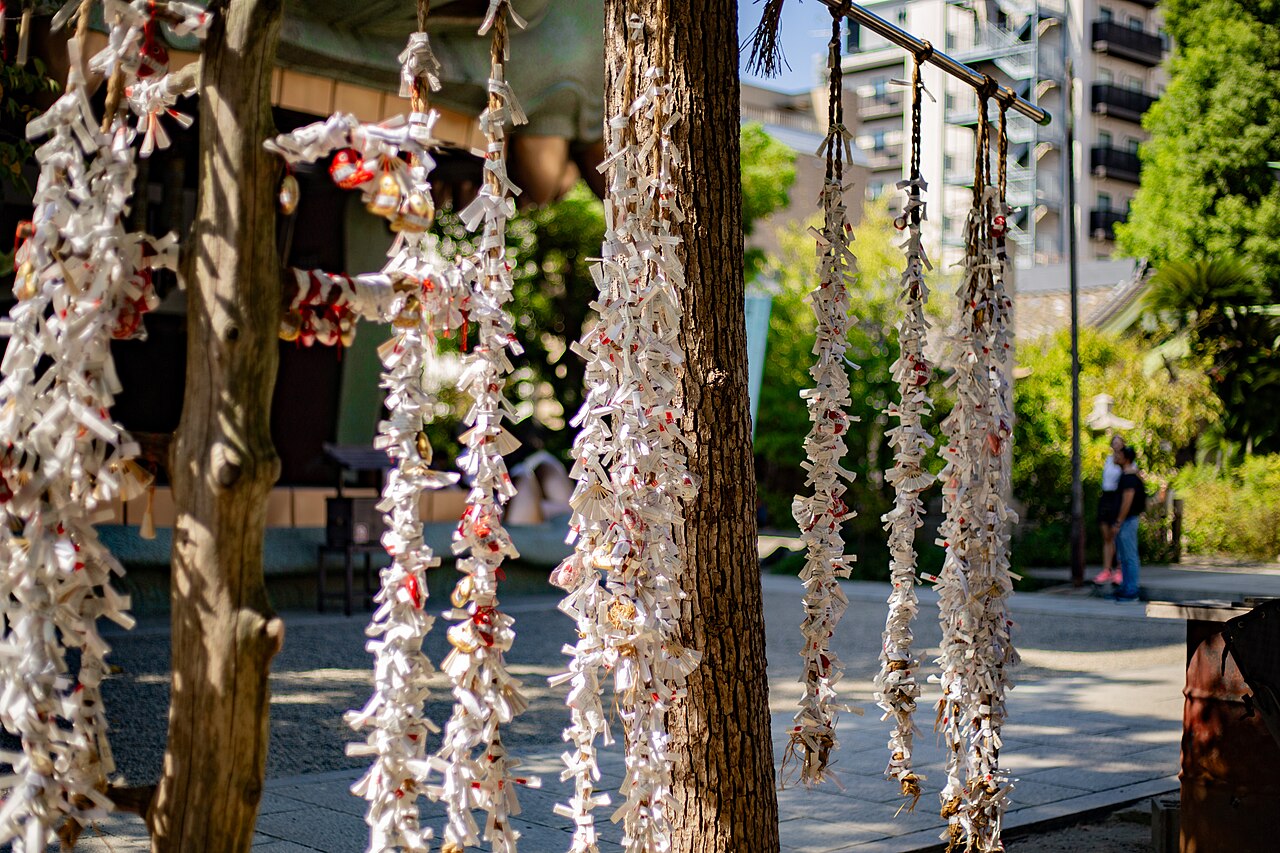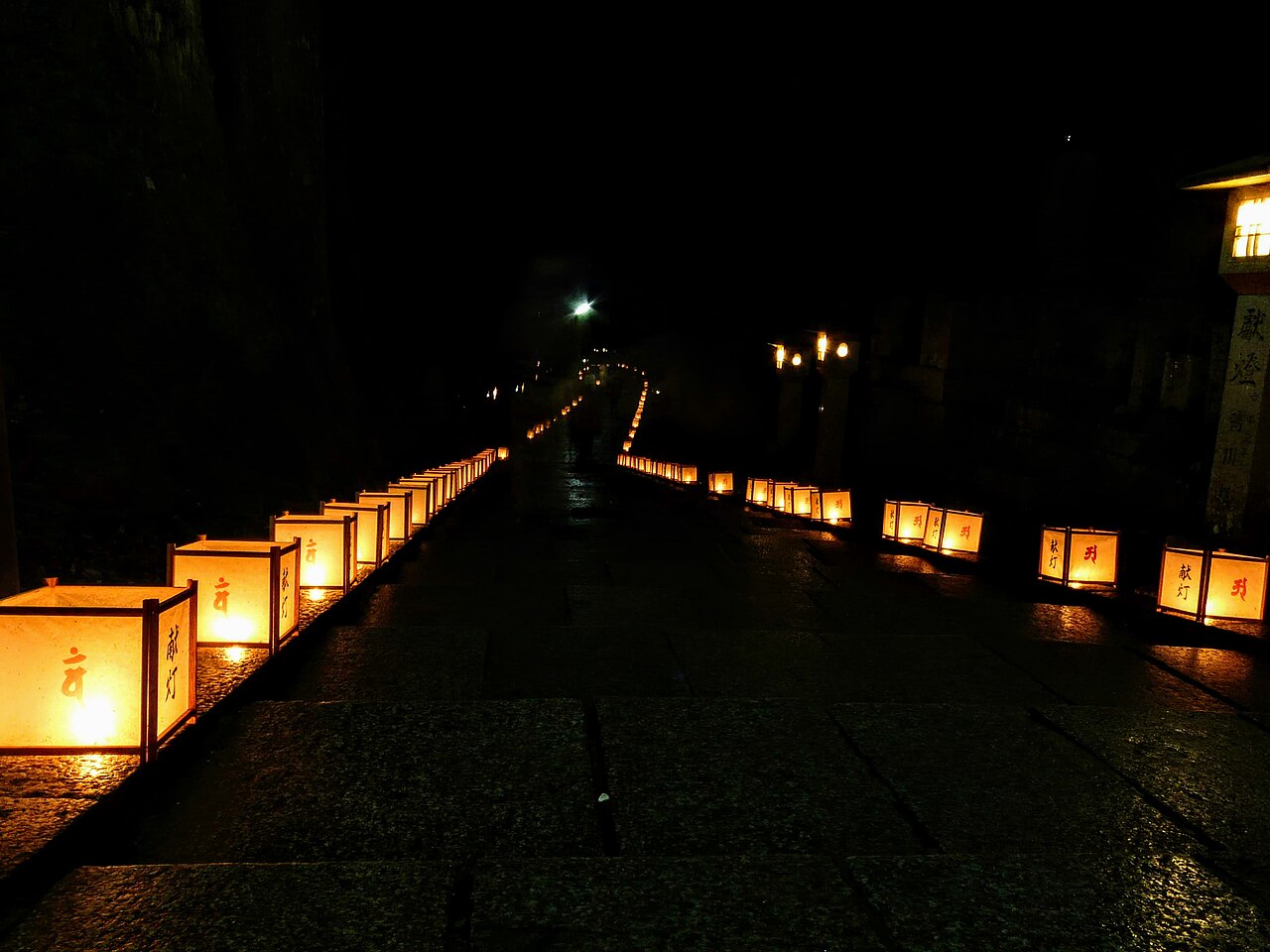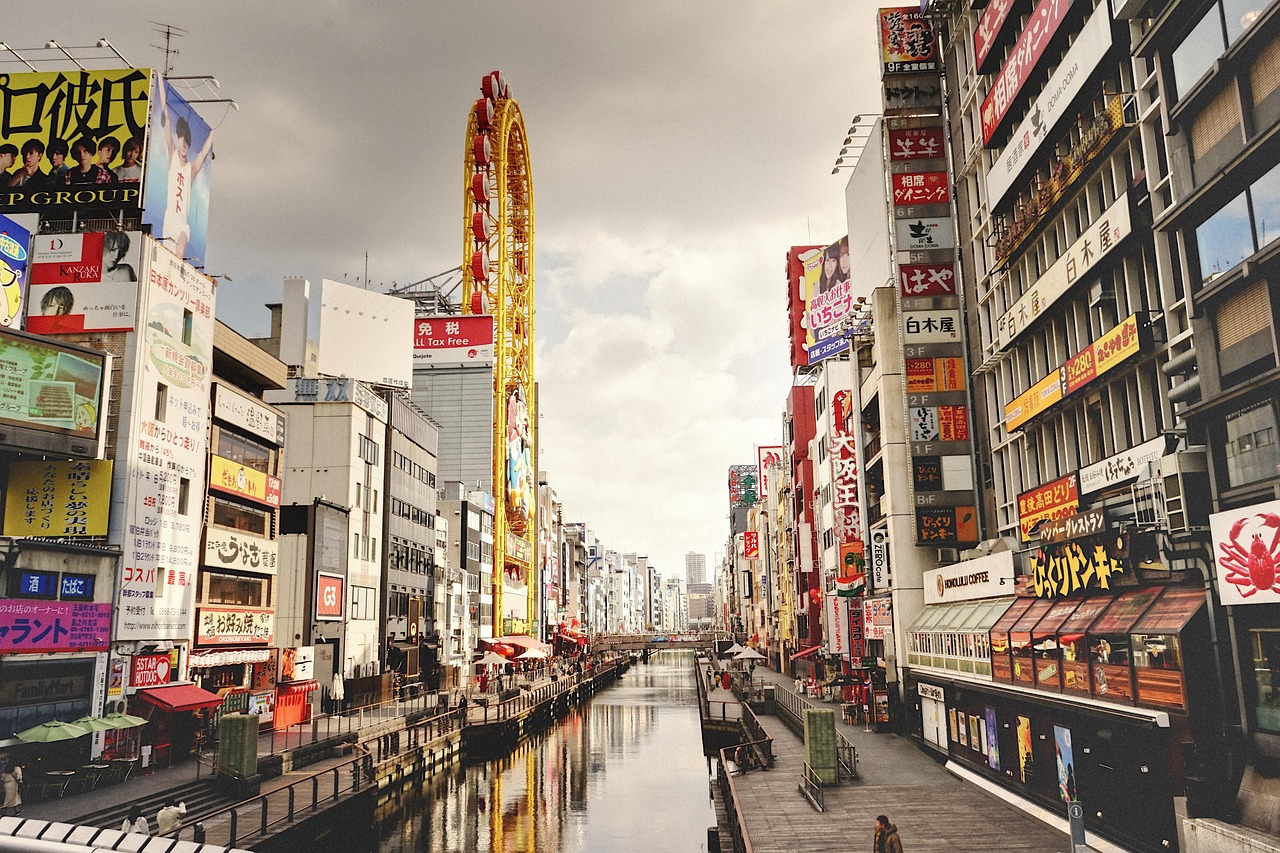
Step one block south of Dotonbori's canal-side crowds and you find a different Osaka. Hozenji Yokocho is a pair of narrow alleys, about eighty meters long and only three meters wide, paved with stone and lined with low wooden buildings, paper lanterns and hand-painted signs. It grew up around Hozenji, a small temple whose grounds once lay at the heart of the old theater district, and for centuries theatergoers and performers ate and drank here. The temple and the alley were destroyed in air raids in 1945 and rebuilt after the war, and the alley has since survived two fires at the nearby Naka-za theater site, each time restored with care by local businesses, which is why its old atmosphere feels genuine rather than staged. Today it holds dozens of restaurants and bars: long-established kappo counters serving refined Japanese cooking, okonomiyaki and kushikatsu shops, a celebrated old-fashioned sweet shop known for zenzai, red-bean soup, and small bars where a handful of regulars fill the room. At the center of the temple precinct stands Mizukake Fudo, a statue of the fierce Buddhist guardian Fudo Myoo, entirely covered in thick green moss. The moss has grown because worshippers have, since the postwar years, poured ladles of water over the statue as they pray, a custom that continues today: take a ladle from the stone basin, splash the statue gently, and make your wish. The temple grounds are free and open early to late, and the shrine lanterns glow in the evening.
Visiting well. Hozenji Yokocho is at its best in the evening, when the lanterns are lit and the stone glistens, especially after rain, and it is noticeably quieter than Dotonbori a minute away. Walk through slowly, look at the menus displayed outside, and choose a counter that suits your budget; some kappo restaurants are expensive and expect reservations, while okonomiyaki and kushikatsu shops are casual and reasonable. Many places have English menus now, but a few are regulars-only bars, so if a door looks private, it probably is. Daytime is good for photos without crowds.
Temple etiquette. Mizukake Fudo is an active place of worship, not a photo prop. Join the small line, bow, ladle water onto the statue, put your hands together briefly and step aside. Small offerings are welcome. Avoid climbing on stones or touching the statue directly, and keep noise down; residents and businesses live with crowds every day. Smoking is restricted throughout central Osaka streets, so use designated areas.
Around the alley. Hozenji is a natural stop between Dotonbori and Namba, five minutes from Namba Station on the Midosuji and Nankai lines. Take the Tombori River Cruise at dusk, eat your way along Dotonbori, then retreat to Hozenji for a quieter dinner or a drink. The Namba Grand Kagetsu comedy theater and Kuromon Market are both within ten minutes' walk.
What to expect
The experience
A stone-paved alley of traditional restaurants and bars around a small temple with a moss-covered Fudo statue that visitors splash with water.
Best time
Evening, when the lanterns are lit; early morning for quiet photos.
How long
Thirty minutes for a walk and the temple, longer if you eat.
Tips
Ladle water gently onto Mizukake Fudo and keep the line moving. Check menus outside before entering. Some bars are for regulars.
Quick picks
- Best for
- A taste of old Osaka steps from the neon.
- Families
- A short, interesting stop; children like splashing the statue respectfully.
- Couples
- Dinner at a lantern-lit counter after the canal cruise.
- Pair with
- Dotonbori, the Tombori River Cruise and Namba Yasaka Shrine.
- Time needed
- Thirty minutes, or a whole dinner.
Good questions
Where is Hozenji Yokocho?+
One block south of the Dotonbori canal, about five minutes' walk from Namba Station on the Midosuji, Sennichimae, Kintetsu and Nankai lines.
Why is the statue covered in moss?+
Worshippers have poured water over the Mizukake Fudo statue as they pray since after the war, and the constant water has covered it in thick green moss.
How do I make a wish at Mizukake Fudo?+
Take a ladle from the basin, splash water gently on the statue, put your hands together briefly and step aside for the next person.
Is Hozenji Yokocho expensive?+
It varies. Some kappo counters are high-end and need reservations, but okonomiyaki, kushikatsu and sweet shops are casual and reasonably priced.
Is it free to visit?+
Yes. The alley and temple grounds are free; you pay only for food and drink.