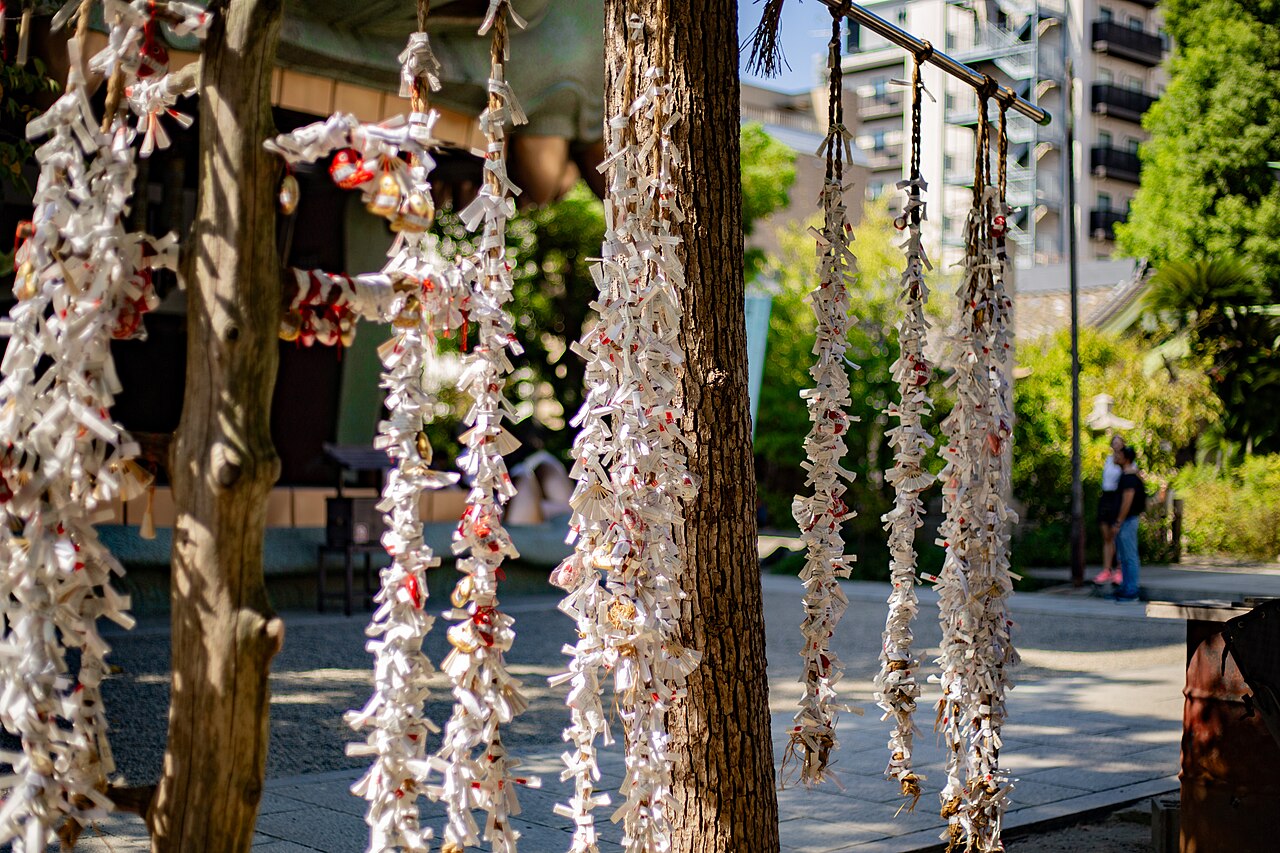
Namba Yasaka Shrine is one of those places that makes visitors laugh out loud the first time they see it. In a quiet residential corner a few minutes' walk from the bustle of Namba, past a stone torii gate and a modest worship hall, stands an enormous lion's head about twelve meters high, eleven meters wide and ten deep, with wide staring eyes, flared nostrils, golden teeth and a gaping mouth large enough to hold a small stage. Officially it is the Ema-den, a votive hall, and it is used for performances and rituals during festivals. The lion is believed to swallow evil spirits, and because its mouth is wide open it is also thought to swallow victory, so students facing exams, athletes and businesspeople come to pray for success; the shrine sells charms and votive plaques with the lion's face. The shrine itself is far older than the lion, which was built in the 1970s: it is dedicated to Susanoo-no-Mikoto, the storm god who in Japanese mythology slew the eight-headed serpent Yamata-no-Orochi, and was historically the guardian shrine of the Namba district. That myth is the root of its best-known festival, the tug-of-war ritual held on the third Sunday of January, in which local people haul a huge rope shaped like the serpent, a tradition designated as Osaka City's first intangible folk cultural property in 2001. In July, the summer festival brings drums and processions. The grounds are open from early morning to early evening every day, and entry is free.
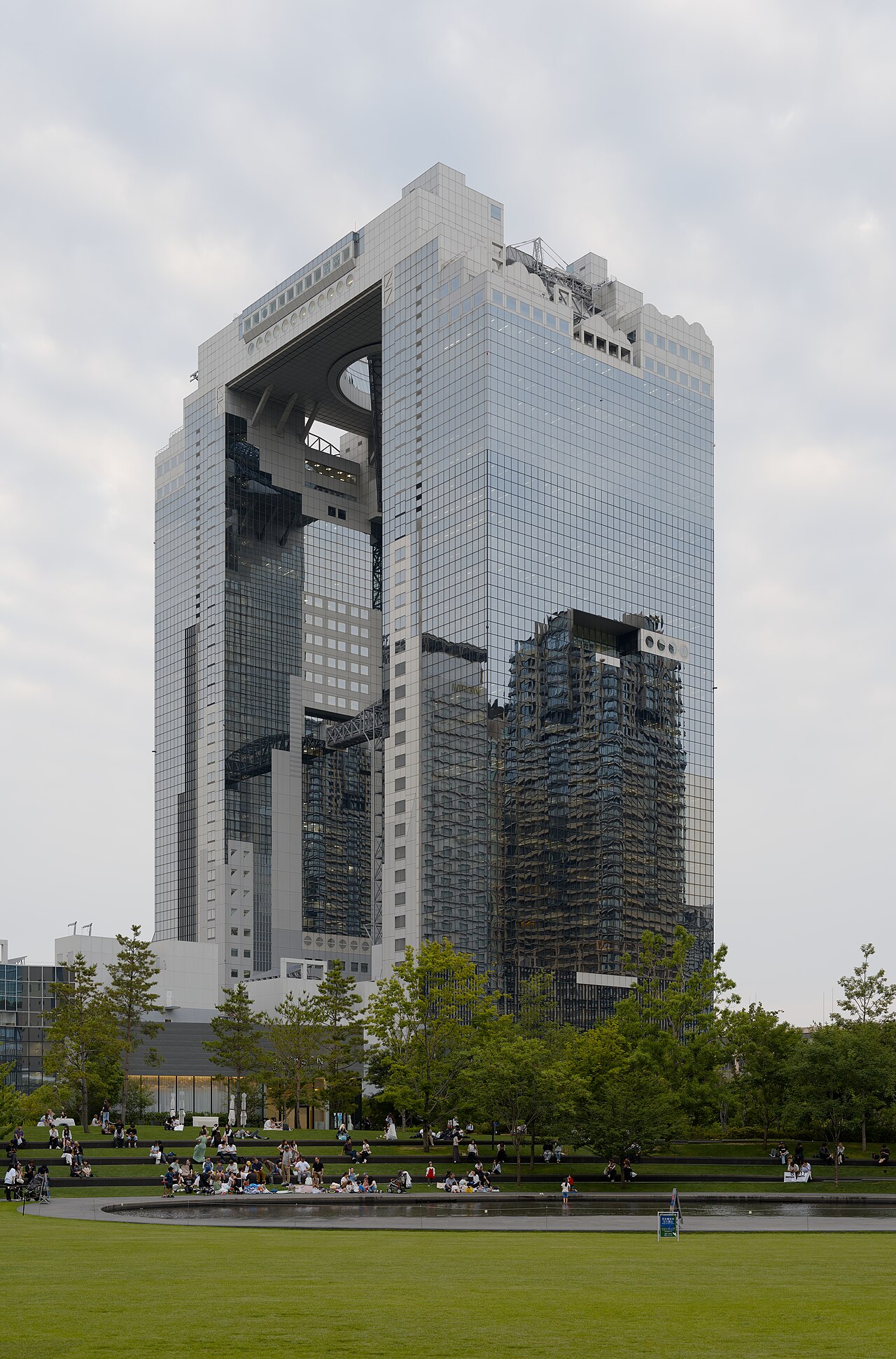
Visiting. The shrine is about six minutes' walk from Namba Station, through streets that feel far from the shopping arcades, and it is easy to combine with Namba Parks, the terraced shopping center with a rooftop garden, or with Den Den Town, the anime and electronics district to the east. Mornings are quiet and bright for photos of the lion; on weekends and around festivals there are more visitors, including groups that arrive by tour, but it rarely feels crowded for long. The office that sells charms and goshuin, the calligraphy stamps collected by visitors in special books, keeps daytime hours.
Etiquette. Bow at the torii gate, purify your hands and mouth at the water basin, and at the worship hall throw a coin, bow twice, clap twice, pray and bow once more. The lion's mouth is a stage rather than a playground, so do not climb into it, and keep photos respectful when people are praying. Tripods may be refused during festivals.
Why go. Osaka has grander shrines, like Sumiyoshi Taisha, but few are as joyfully eccentric as this one, and it shows how Shinto shrines remain part of everyday neighborhood life. It takes only twenty or thirty minutes and is a good way to step off the main tourist trail between Namba and Dotonbori.
What to expect
The experience
A free neighborhood Shinto shrine with a twelve-meter lion-head votive hall used as a festival stage.
Best time
Morning for quiet and good light; the third Sunday of January for the tug-of-war ritual.
How long
Twenty to thirty minutes.
Tips
Follow shrine etiquette at the hall. Do not climb into the lion's mouth. Combine with Namba Parks or Den Den Town.
Quick picks
- Best for
- A quirky, memorable photo stop just off the Namba crowds.
- Families
- Kids love the giant lion; it takes only a few minutes.
- Couples
- A short detour before an afternoon of shopping in Namba.
- Pair with
- Hozenji Yokocho, Dotonbori and Kuromon Market.
- Time needed
- Half an hour.
Good questions
How big is the lion head at Namba Yasaka Shrine?+
About twelve meters high, eleven meters wide and ten meters deep, with an open mouth that serves as a stage.
What does the lion head mean?+
It is believed to swallow evil spirits and to swallow victory, so people pray there for success in exams, sport and business.
Is it free?+
Yes. The grounds are free and open every day from early morning to early evening. Charms and stamps are sold at the office.
How do I get there?+
It is about six minutes' walk from Namba Station, reachable from all lines, in a residential area west of Namba Parks.
What festivals are held there?+
The tug-of-war ritual on the third Sunday of January, based on the myth of Susanoo defeating the eight-headed serpent, and a summer festival in July.