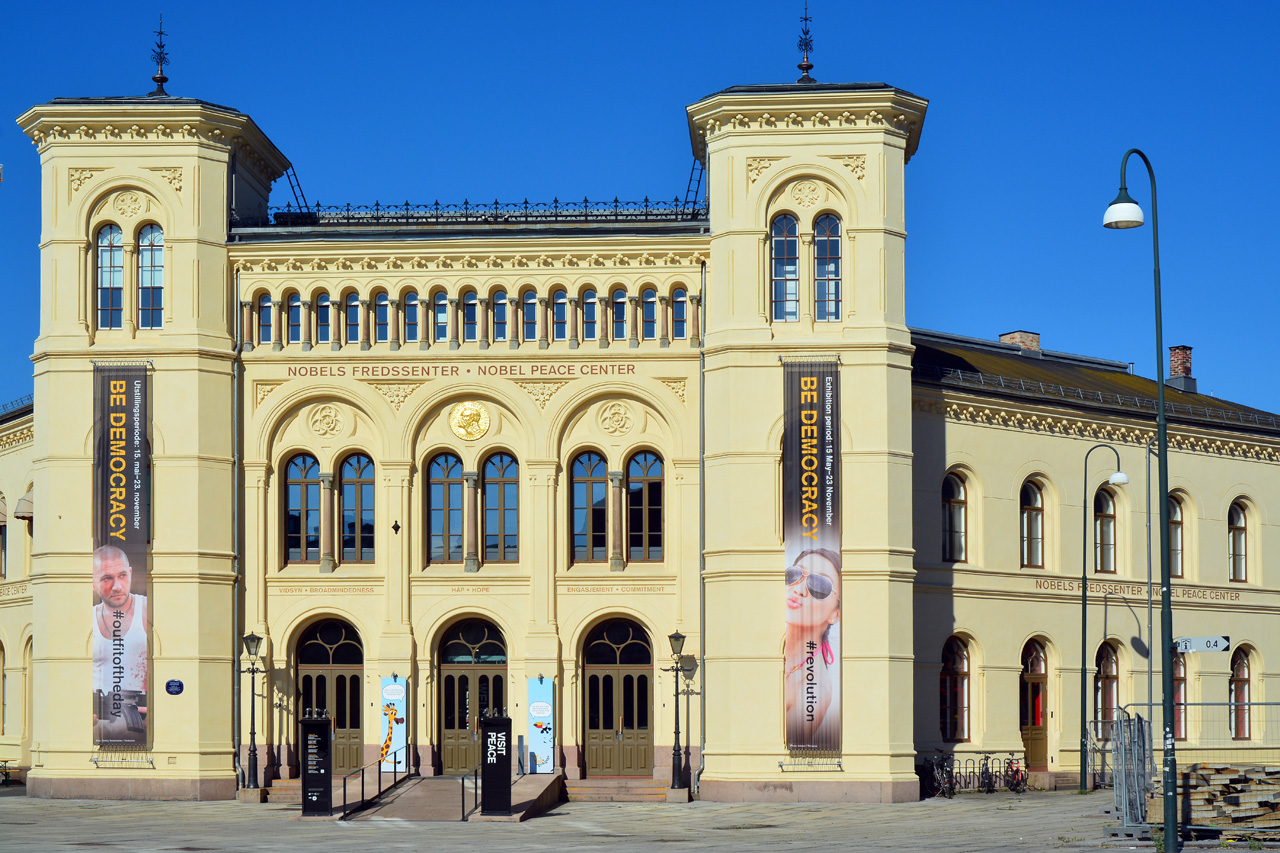
Oslo City Hall, or Rådhuset, is the building most visitors photograph without knowing what is inside. Its two plain red-brick towers dominate the harbour front, and the interior was inaugurated in 1950 after a long construction that began before the Second World War. It was designed by the architects Arnstein Arneberg and Magnus Poulsson, and it is a deliberate showcase of Norwegian art, with monumental murals and sculptures by leading modern artists of the period, including Henrik Sørensen, Alf Rolfsen and Per Krohg, covering walls and ceilings with scenes from Norwegian history, work and folklore. The Main Hall is the heart of the building and the stage for the Nobel Peace Prize ceremony each year on 10 December, when the laureate receives the medal and diploma in the presence of the Norwegian royal family. Seeing the room on an ordinary day, with its huge murals and tall windows, gives an extra feeling for the event. The other halls and galleries are used for civic occasions and meetings, so access to some rooms can vary, but a visit through the main spaces is usually straightforward and free. Outside, the square, Rådhusplassen, opens onto the fjord, with sculptures along the harbour front and the pier where the cruises depart. One of the towers holds a carillon whose bells ring over the harbour, and the whole area is pleasant to walk. It suits anyone interested in architecture, art or the Nobel Prize, and it is an easy, free first stop before the Nobel Peace Center next door.
How to visit well
Walk in during the day and look first at the Main Hall, then circle the other public rooms as access allows. Free guided tours in English are often offered in the warmer months, usually on a first-come basis, so check the schedule on the day. Visit on a weekday morning to avoid groups, and look up at the ceiling and the huge mural on the east wall.
Timing
The building is a working civic centre, so some rooms close for meetings, ceremonies or events, and access around the December Nobel events is restricted. If you plan a visit near 10 December, expect extra security and limited access. Allow about an hour, plus time to walk the harbour front outside, where the pier, statues and the water make a good photograph.
Pairing
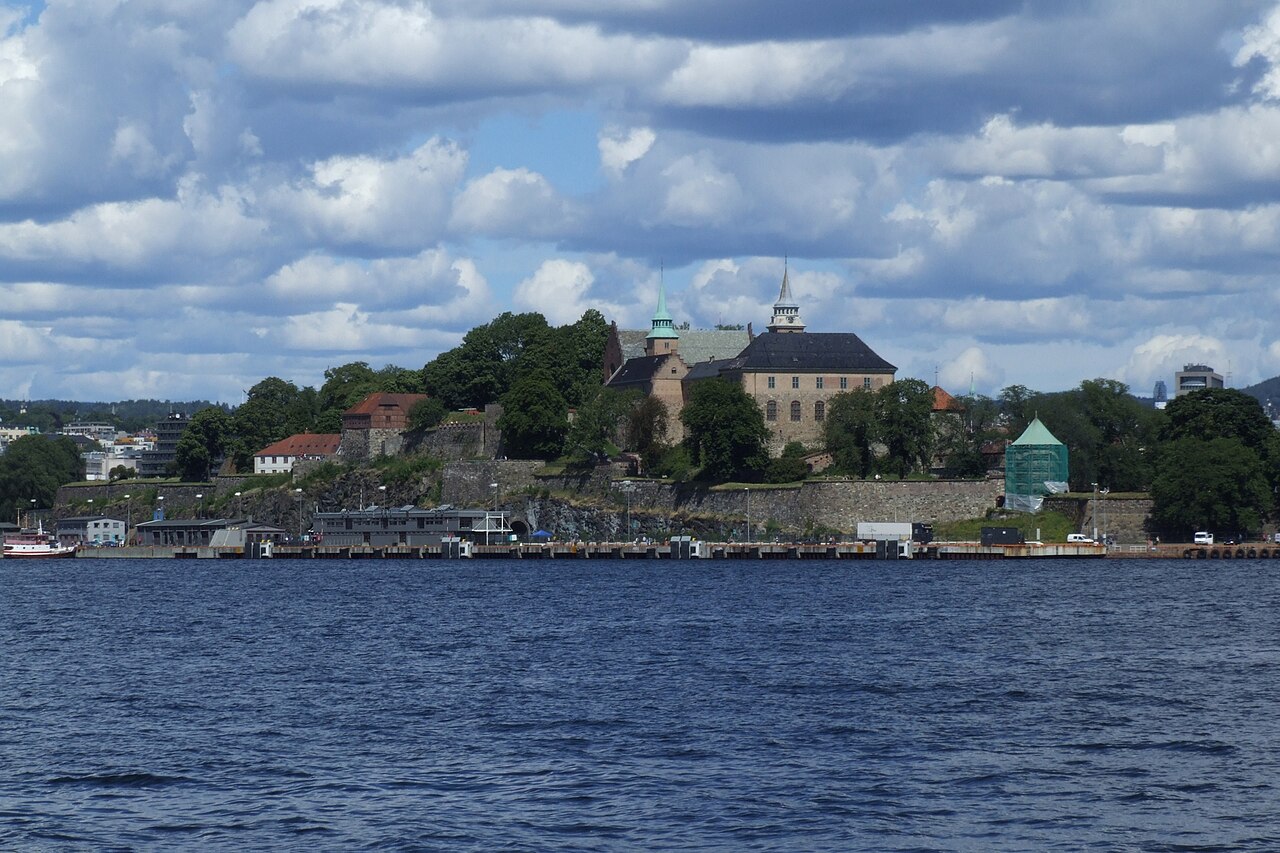
The Nobel Peace Center is directly across the square, the fjord cruise leaves from the pier in front, and the Akershus Fortress is a short walk along the harbour. Aker Brygge and Tjuvholmen are a few minutes west for lunch. It makes a natural stop in a harbour-front day, and because it costs nothing it is an easy addition when the weather turns.
What to expect
The experience
A free self-guided visit through the public halls of the civic building, with seasonal guided tours.
Best time
A weekday morning, before groups arrive.
How long
About an hour.
Tips
See the Main Hall first, expect some rooms to be closed for events, and check for English tours in summer.
Quick picks
- Best for
- Architecture, Norwegian modern art and anyone curious about the Nobel Peace Prize.
- Families
- A short, free stop that works as a break between museums.
- Couples
- A quiet harbour-side walk with a splash of culture.
- Pair with
- The Nobel Peace Center and the fjord cruise pier.
- Time needed
- One hour.
Good questions
Is Oslo City Hall free to enter?+
Yes, entry to the public areas is free, though some rooms close for meetings and events.
Where is the Nobel Peace Prize awarded?+
In the Main Hall of Oslo City Hall, in a ceremony held each year on 10 December.
When was City Hall built?+
It was inaugurated in 1950, designed by Arnstein Arneberg and Magnus Poulsson.
Are there guided tours?+
English tours are often offered in the warmer months, usually first come, first served.
What is nearby?+
The Nobel Peace Center, the fjord cruise pier, Akershus Fortress and the Aker Brygge waterfront are all within a short walk.