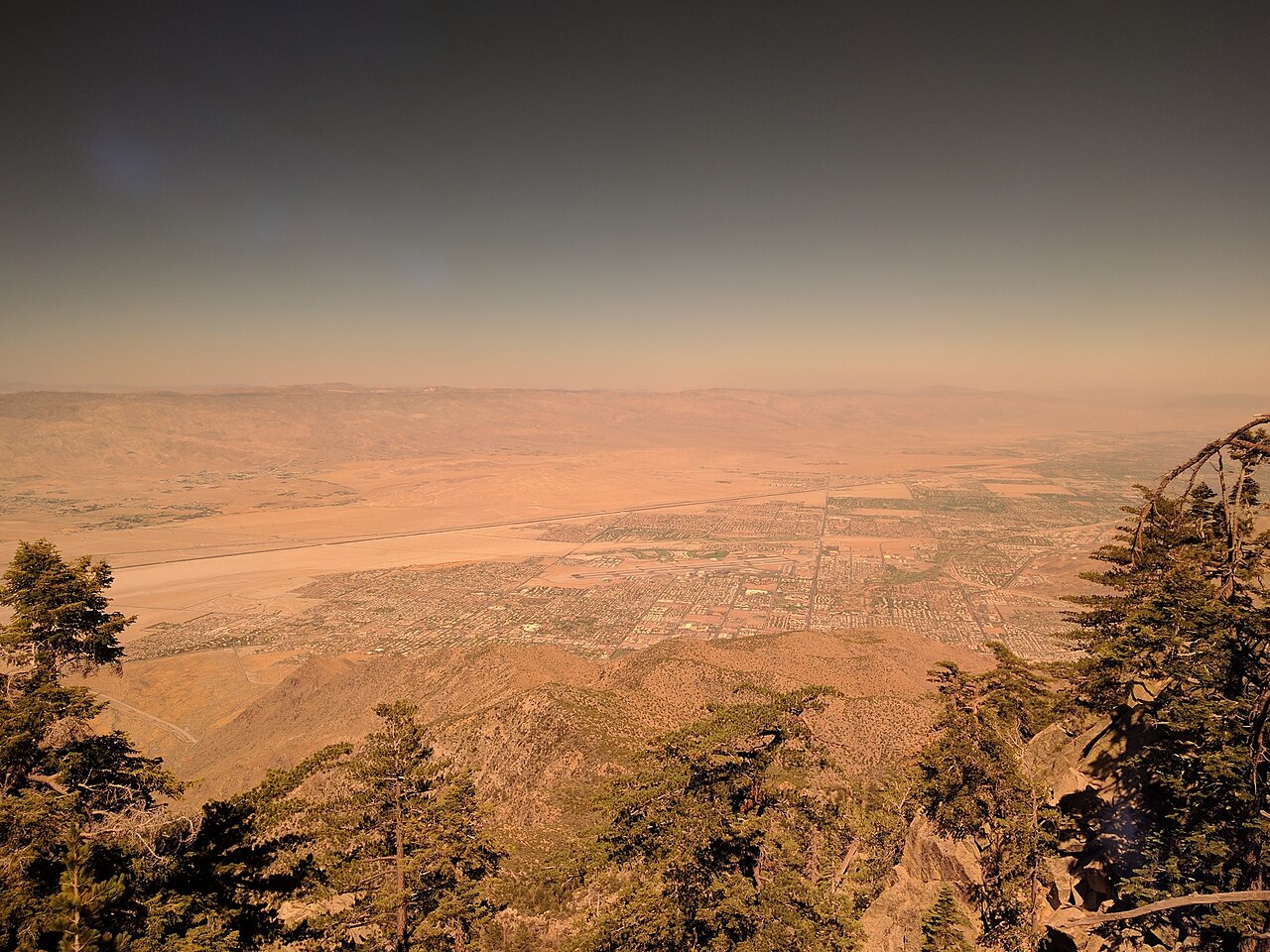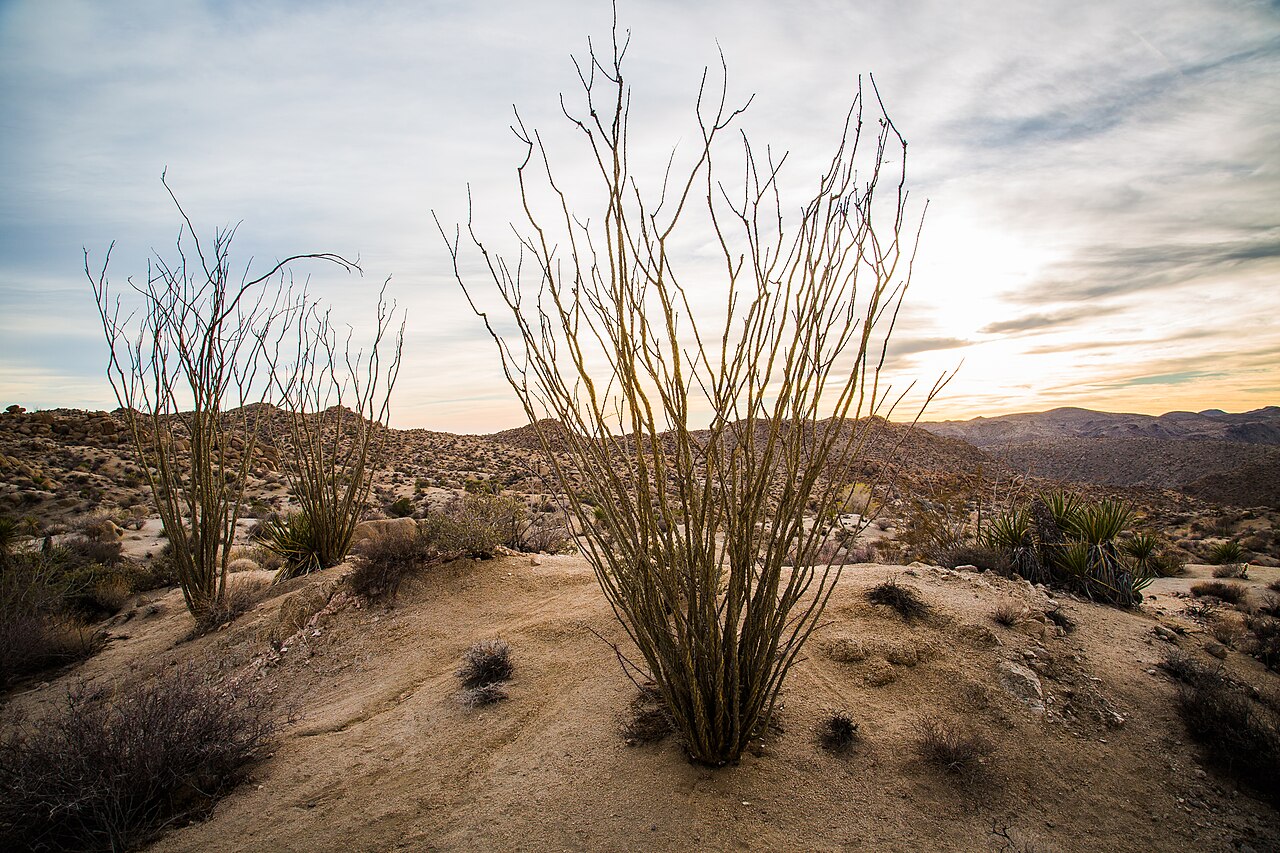
Joshua Tree National Park is the essential day trip from Palm Springs and, for many visitors, the highlight of the whole trip. It sits just north and east of the Coachella Valley, where two great deserts meet: the higher, cooler Mojave in the west, home to the twisted Joshua trees that give the park its name, and the lower, hotter Colorado Desert in the east, a sparser landscape of ocotillo, creosote and the famous Cholla Cactus Garden. Between them rise piles of golden monzogranite boulders, stacked and rounded into shapes that look sculpted, and these rock gardens — Hidden Valley, Jumbo Rocks, Skull Rock, the Wonderland of Rocks — are what make the park unlike anywhere else. From Palm Springs there are two ways in. The West Entrance in the town of Joshua Tree, reached via Highway 62 in about an hour, is the busiest; the North Entrance at Twentynine Palms and the South Entrance off Interstate 10 are quicker to get through. A classic first visit enters at the West Entrance, walks the one-mile Hidden Valley loop, takes in the reflected boulders at Barker Dam, drives up to Keys View for the panorama over the Coachella Valley and the San Andreas Fault, stops at Skull Rock, and then descends through the transition zone to the Cholla Cactus Garden at golden hour before exiting south toward I-10. The park is open 24 hours a day year-round and no entry reservation is needed. A private vehicle pass costs $30 and is valid for seven days; buying it on Recreation.gov before you arrive speeds up the line. There is no food, water or gas inside the park and cell service is very limited, so arrive with everything you need and download an offline map.
Most visitors come between October and May, when highs sit in the comfortable seventies and eighties, and the park is busiest on weekends, holidays and during spring break from March to mid-April. The National Park Service advises arriving before 8am on busy days and reaching the popular trailheads at Hidden Valley, Barker Dam and Lost Horse Mine before 9am; parking lots there and at Keys View and Split Rock close temporarily when full, and rangers ticket cars parked off the pavement. Summer is a different place altogether: highs around 100 degrees or more make midday hiking dangerous, and the only sensible plan is a very early start or a sunset drive. Winter brings cold nights near freezing and the occasional dusting of snow on the boulders, a rare and beautiful sight.
The park rewards slowing down. Rock climbers come from around the world for its thousands of routes; casual scramblers can spend hours on the low boulders around Jumbo Rocks and Hidden Valley. Ryan Mountain is the best short summit hike, about three miles round trip with a steady climb and a 360-degree view. The Cholla Cactus Garden boardwalk is short and flat, but stay on it — the cholla's spines detach at a touch and are painful to remove. Joshua Tree is an International Dark Sky Park, and staying until after sunset at Cap Rock, Quail Springs or Ryan Mountain shows a sky full of stars just an hour from the lights of Palm Springs. Pets are not allowed on trails, drones are prohibited, and desert tortoises have the right of way, which is why speed limits are low.
For a Palm Springs-based trip, the full loop — in through the West Entrance and out through the South — takes a long day of about eight to ten hours including stops and the drive. Pack a cooler with lunch and more water than seems necessary, fill the tank before leaving the highway towns, and plan dinner in Joshua Tree village, Yucca Valley or back in Palm Springs. If you prefer not to drive, Desert Adventures and other local operators run guided Joshua Tree tours from the Coachella Valley. Overnighting in the park requires a campsite, most of which are reservation-only and book out up to six months ahead in peak season; the high-desert towns along Highway 62 offer cabins and motels for those who want sunrise in the park.
What to expect
The experience
A self-drive day trip of roughly an hour each way from Palm Springs, combining short hikes, boulder scrambling and scenic viewpoints across two deserts; open 24 hours, no entry reservation required.
Best time
October through May, arriving before 8am on weekends and holidays. Golden hour at the Cholla Cactus Garden and stargazing after dark are the highlights.
How long
Eight to ten hours for the West-to-South loop with stops; a half day covers Hidden Valley, Barker Dam and Keys View only.
Tips
Buy the $30 vehicle pass on Recreation.gov in advance. No food, water or gas inside the park and almost no cell service. Stay on the boardwalk at the Cholla Garden. Pets are not allowed on trails.
Quick picks
- Best for
- Anyone who wants to see the real desert at its most otherworldly, and photographers chasing boulders and Joshua trees at sunset.
- Families
- Kids love scrambling on the low boulders at Hidden Valley and Jumbo Rocks and spotting Skull Rock; keep hikes short and start early.
- Couples
- Sunset at Keys View or Cap Rock, then a blanket under one of the darkest skies within reach of Southern California.
- Pair with
- A Desert Adventures jeep tour on another day, or a slow evening back at the hotel pool.
- Time needed
- A full day from Palm Springs; two days if you want sunrise and sunset in the park.
Good questions
How far is Joshua Tree from Palm Springs?+
The West Entrance in the town of Joshua Tree is about an hour's drive via Highway 62. The South Entrance off Interstate 10 is the natural exit back toward the Coachella Valley.
Do I need a reservation to enter Joshua Tree?+
No. The park is open 24 hours a day year-round and reservations are not required for entry. A $30 private vehicle pass, valid for seven days, is required; buy it on Recreation.gov to save time.
What should I see on a first visit?+
Hidden Valley, Barker Dam, Keys View, Skull Rock and the Cholla Cactus Garden make a classic first-day loop from the West Entrance to the South Entrance.
Is there food and water in the park?+
No. There are no restaurants, stores or gas stations inside Joshua Tree, and no water in the interior. Bring all food and plenty of water, and fill the tank beforehand.
When is the best time to visit?+
October through May for comfortable temperatures. Weekends and spring break are very busy, so arrive before 8am. Summer highs around 100 degrees make midday hiking risky.