Palm Springs is to midcentury modern architecture what Florence is to the Renaissance: a whole city shaped by a single movement, preserved and celebrated. You can enjoy the town without caring about design, but the architecture is what makes it different from every other desert resort. Here is how to understand it and how to see it.
Why here, why then
After World War II, Southern California was booming, Hollywood was rich, and a generation of architects trained in European modernism was eager to build. Palm Springs, two hours from Los Angeles, offered an extraordinary setting: dramatic mountains, endless sun and few constraints. Architects responded to the climate with flat and butterfly roofs, deep overhangs, sunscreens and breeze blocks, walls of glass oriented to the views, and indoor-outdoor living around the pool. Celebrities wanted private retreats, developers wanted stylish weekend homes for the middle class, and the city's banks, schools and gas stations followed the same modern language.
The architects to know
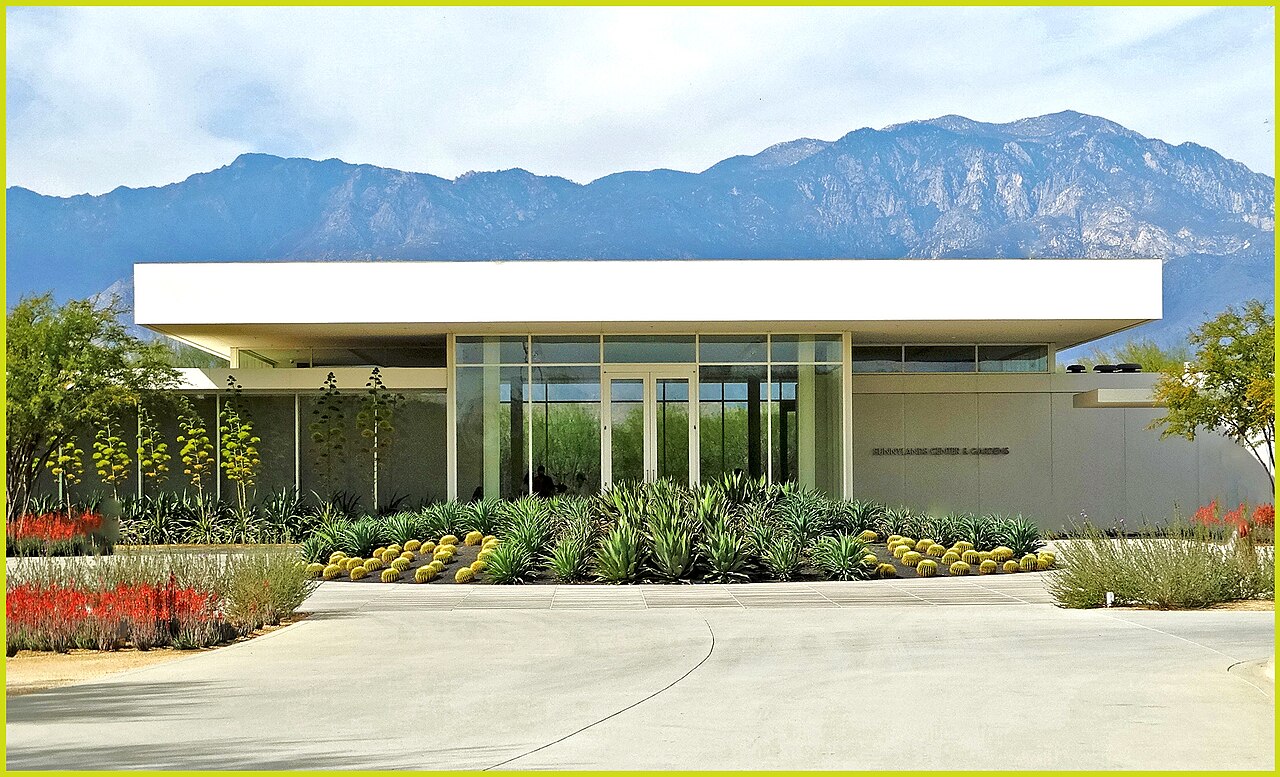
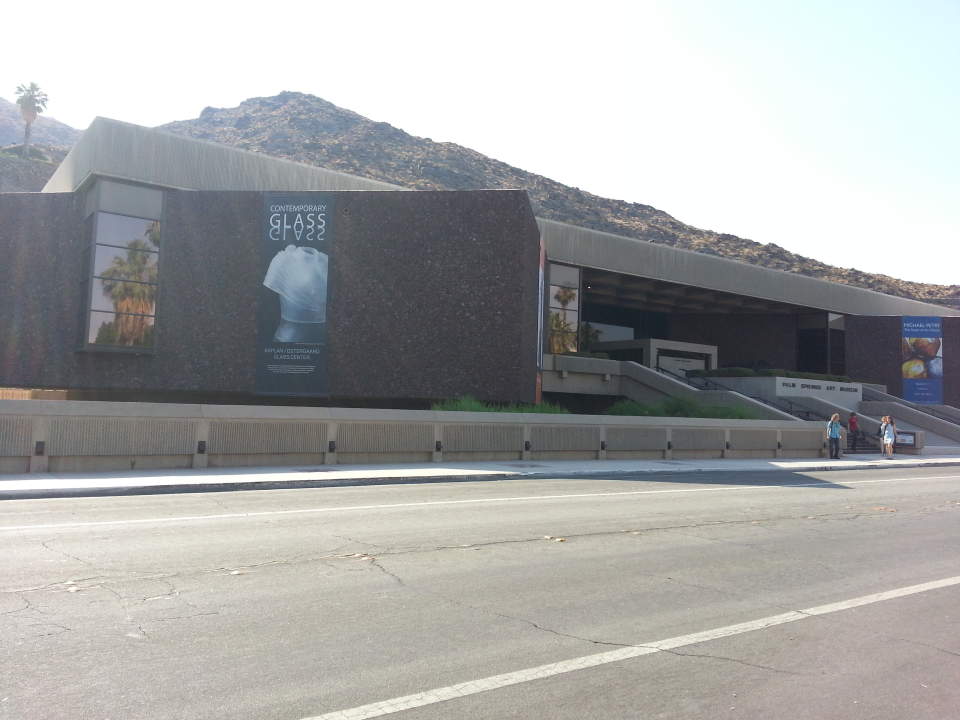
Albert Frey, Swiss-born and a former Le Corbusier assistant, was the movement's pioneer in the desert; his Tramway Gas Station, designed with Robson Chambers, now houses the Palm Springs Visitor Center, and his own hillside Frey House II belongs to the Palm Springs Art Museum, though it is temporarily closed. E. Stewart Williams designed Frank Sinatra's Twin Palms, the Santa Fe Federal Savings building that now houses the art museum's Architecture and Design Center, and the main art museum building. Donald Wexler pioneered steel houses and designed civic buildings, and William Krisel created the butterfly-roofed tract homes built by the Alexander Construction Company that brought modernism to whole neighborhoods. Richard Neutra's 1946 Kaufmann Desert House is one of the most famous houses in America, and John Lautner's Elrod House is a dramatic concrete dome on the hillside. A. Quincy Jones designed the Annenbergs' Sunnylands estate in Rancho Mirage.
Neighborhoods to explore
Twin Palms Estates is full of Alexander homes with butterfly roofs and backyard pools. Vista Las Palmas, in the foothills, combines Alexander houses with celebrity homes. Racquet Club Estates offers more modest modern houses in a relaxed neighborhood. Deepwell Estates has larger custom homes on generous lots, and the Movie Colony, just east of downtown, mixes Spanish Revival and modern homes once owned by stars. The Historic Tennis Club area, on the slope west of downtown, preserves some of the oldest buildings in town. Visit Palm Springs publishes self-guided tours, including bike routes through Deepwell and South Palm Springs. Drive slowly, park legally and remember these are private homes: view from the street and never enter driveways or gardens.
Buildings you can enter
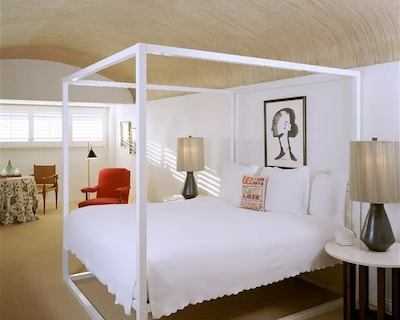
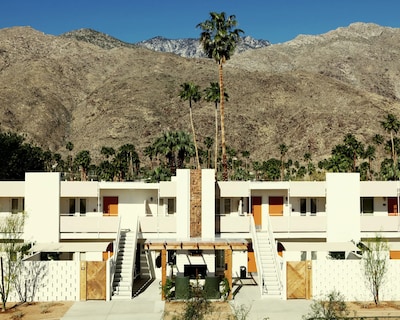
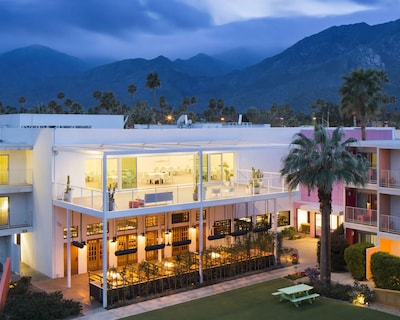
The Visitor Center in the former Tramway Gas Station. The Architecture and Design Center, whose glass-and-steel building was restored using Julius Shulman's photographs and Williams' original drawings, and whose vault now holds a design store. The Palm Springs Art Museum. Sunnylands, where the 90-minute historic house tour takes you inside A. Quincy Jones' 25,000-square-foot masterpiece; book on the 15th of the month before your visit. And many midcentury hotels, from the Parker, with Jonathan Adler's playful interiors, to the restored boutique motels of South Palm Springs like the Ace and the Saguaro.
Modernism Week
Each February, the nonprofit Modernism Week festival opens doors that are closed the rest of the year. The 2027 edition runs February 11 to 21, with more than 400 events: home tours of private houses, double-decker bus tours, walking tours of historic neighborhoods and boutique resorts, talks, films, parties and a range of unique experiences. Tickets went on sale November 1, 2026, and the famous home tours sell out quickly, so decide early what you most want to see. A smaller fall edition runs each October. Book accommodation as early as possible; February is peak season.
How to plan an architecture day
Start at the Visitor Center for maps, then drive the self-guided tour north through Vista Las Palmas and the Movie Colony. Mid-morning, visit the Architecture and Design Center downtown, then the Palm Springs Art Museum. After lunch, explore Twin Palms and Deepwell by bike or car. Late afternoon, cocktails at a midcentury hotel. The next morning, drive to Rancho Mirage for a Sunnylands house tour and a walk through its gardens.
Preservation matters
Many of these buildings survive because local preservationists fought for them, and Modernism Week ticket proceeds support local preservation, neighborhood and community groups. When you visit, respect residents' privacy, stay on public property and consider supporting the organizations that protect the city's design heritage. The reward is a city where everyday streets feel like an open-air museum of optimistic, sun-drenched design.
Photographing it well
Morning light is kindest to the white walls and pastel doors of Palm Springs modernism, and it comes with cooler temperatures and quieter streets. Shoot from the sidewalk with a moderate wide-angle lens, wait for passing cars to clear, and include the mountains behind the rooflines, which is what makes these houses distinctly Palm Springs. Famous front doors attract lines of photographers, so be quick, quiet and courteous to residents; never step onto lawns or driveways for a better angle. The commercial landmarks, such as the Visitor Center's soaring roof or the Architecture and Design Center's glass facade, are easier to shoot without disturbing anyone, and they look superb at dusk when the interiors glow. Finally, look down as well as up: original breeze-block walls, terrazzo, decorative screens and vintage signage are details that reward attention, and they tell the story of the era as clearly as any famous house.