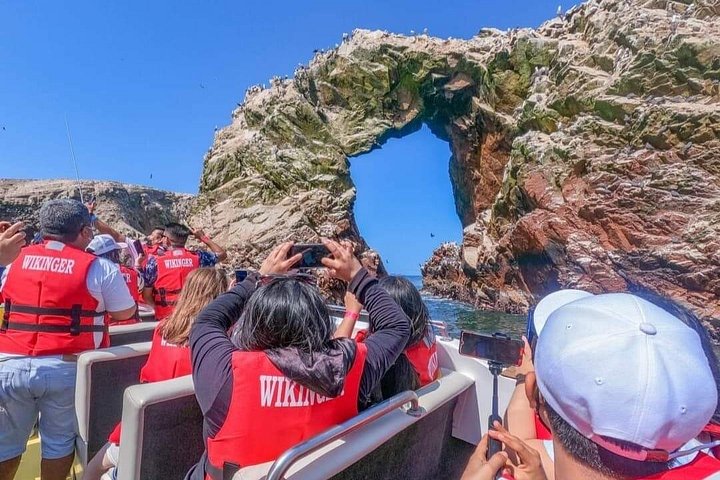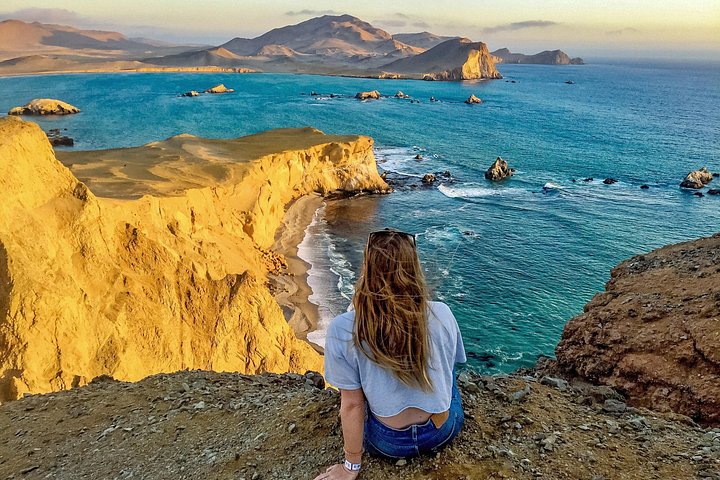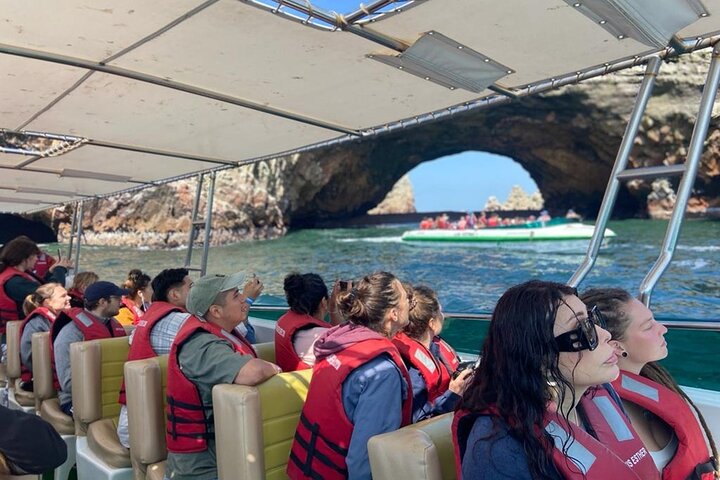
The Ballestas Islands are the reason most travellers come to Paracas, and the standard boat tour is the simplest way to see them. Boats leave from the pier at El Chaco, the little harbour at the edge of town, and run out across Paracas Bay to a cluster of rocky islets sculpted by wind and sea into arches and caves. The group is handed life jackets, seated in a covered speedboat and taken first past the Candelabra, a huge figure scratched into a sandy hillside whose origin is still debated, and then out to the islands themselves. There, sea lions pile on the ledges, Humboldt penguins perch near the waterline, and tens of thousands of seabirds, from Peruvian boobies to cormorants and pelicans, crowd the cliffs. Landing is not allowed, so the viewing is done from the boat, which keeps the wildlife undisturbed and the whole trip to about two hours.
The islands are often called the poor man's Galapagos, a label that is a little unfair but not entirely wrong. They sit in the cold, nutrient-rich Humboldt Current, which feeds an enormous food chain of anchoveta, birds and marine mammals. For centuries the birds' droppings built up into guano, a fertiliser that once made Peru rich, and the islands are still protected as part of the national reserve system.
Guides explain this history in Spanish and English, point out the species by name, and slow the boat beside the best ledges so everyone gets a clear photograph. Expect a strong smell of guano, a constant noise of barking and bird calls, and a good chance of seeing dolphins in the bay on the way back.
Practical details make the difference. Departures run through the morning, and the earliest slots usually have the calmest water and the clearest light, while the afternoon wind in Paracas can roughen the bay. Wear layers, because the open boat is cold and splashy even on a sunny day, bring a hat and sunscreen, and keep your camera strapped to your wrist. A small entry fee for the islands and a port or pier fee are normally paid in cash at the dock, in addition to the tour price, so carry some soles.
Port authorities can suspend sailings when the sea is rough, so build a spare day into your plans if you can. Children are welcome in life jackets, and the short duration makes it a good first excursion for families.
Understanding what you are seeing makes the trip richer. The islands are part of the Paracas reserve system and are home to colonies that change with the seasons. Peruvian boobies and Inca terns nest on the ledges, Humboldt penguins shelter in crevices near the waterline, and sea lions haul out in noisy harems during the breeding months.
Guano harvesting is now tightly controlled, and visitors are kept to the water so that nesting is not disturbed. Many guides also mention the cold current that drives the food chain and the El Nino years that can disrupt it, which helps explain why bird numbers move up and down.
Families often ask about comfort on the water. The boats are covered, seats are bench style, and life jackets are provided and must be worn throughout. The ride out is quick, then the skipper slows near the rocks so passengers can look and photograph. Bring a rain jacket or poncho in case of spray, and keep valuables in a zipped bag.
What to expect
The experience
A covered speedboat from the El Chaco pier past the Candelabra geoglyph to the Ballestas Islands, with a bilingual guide and no landing on the rocks.
Best time
Early morning for the calmest sea and best light; the wind rises through the afternoon.
How long
About 2 hours.
Tips
Layers and a windproof jacket, cash for the island and pier fees, and a camera strap. Sit on the side facing the rocks on the outbound run.
Quick picks
- Best for
- Anyone who wants easy, close wildlife in a short outing.
- Families
- Great for children who can sit still for an hour or two in a life jacket.
- Couples
- Pair with a sunset in the reserve for a relaxed first day.
- Pair with
- Paracas National Reserve tour, Candelabra viewing, or a sunset trek.
- Time needed
- Half a morning including the pier and transfer.
Good questions
Can you land on the Ballestas Islands?+
No. Landing is not permitted, so everything is seen from the boat, which protects the colonies and still brings you very close to the sea lions and birds.
What animals will I see?+
Sea lions, Humboldt penguins, Peruvian boobies, pelicans, cormorants and terns are the regulars, with dolphins sometimes in the bay. Sightings depend on the season and the day.
Is the boat ride rough?+
The bay is usually calm in the morning and choppier later. People prone to seasickness should take the earliest departure and sit toward the middle of the boat.
Are there extra fees on the day?+
Yes. A small entry fee for the islands and a pier or port fee are normally paid at the dock in cash, on top of the tour price. Check what your booking includes.
When is the best time to go?+
Mornings are best year round. The December to March summer is warmest and brightest, while winter brings cooler air and morning haze but the wildlife is still there.