The covered passages are Paris's time machine: the glass-roofed shopping arcades threaded through the Grands Boulevards quarter — the early 19th century's retail revolution (150 of them once; around 20 survive), built so the fashionable could browse gaslit shops without touching mud or weather, and preserved now as the most atmospheric free walk on the Right Bank: Galerie Vivienne the queen (1823, off the Palais-Royal — Pompeiian mosaics underfoot, caryatids and rotunda skylights above, the Librairie Jousseaume's book nooks since the beginning, wine at Legrand Filles et Fils's historic counter, and the tea-room tables under the glass), Passage des Panoramas the liveliest (1799, the oldest survivor — stamp-and-postcard dealers' windows unchanged in a century beside the bistronomy wave's tables: the passage eats as well as it browses), Passage Jouffroy across the boulevard (the Musée Grévin's flank, the Pain d'Épices toy shop's two floors of wonder, Hôtel Chopin's lobby glowing at the elbow turn, and the print dealers toward the exit into Passage Verdeau's quieter books-and-cameras stretch), Galerie Véro-Dodat the dandy (1826, neoclassical black-and-white marble, Louboutin's ateliers and the café at the end), and the connoisseur's extras (Passage du Grand-Cerf's three-story glass height in the 2nd, Passage Brady's Indian quarter, the Choiseul's workaday charm). The craft is the route: the classic chain — Véro-Dodat, Vivienne via the Palais-Royal gardens, Panoramas, Jouffroy, Verdeau — walks the Right Bank's 19th century in two hours ending at the Grands Boulevards; weekday afternoons run everything-open (Sundays shutter some galleries; evenings light the glass but close the shops), rain is the passages' weather (the original point — Paris's best wet-day walk), and the food layer (Panoramas's bistros, Vivienne's tea, Jouffroy's gingerbread toys and crêpe corners) makes it lunch-shaped. Free entirely; the passages are public streets wearing glass.
The passages' history is retail inventing modernity: post-Revolutionary Paris had money, mud and no sidewalks — the arcades (speculative builds threading private land between boulevards) offered gaslight, glass weather and window-shopping, and for forty years they WERE fashionable Paris: Balzac set scenes in them, the flâneur was born under their glass, and Walter Benjamin later built his Arcades Project on their ruins' meaning. Haussmann's sidewalked boulevards and the department stores killed them (the Bon Marché's 1850s scale made arcades quaint), the 20th century let them rot, and the 1970s-on restorations saved the survivors — reading the chain today is reading consumer culture's first draft: the mosaics and caryatids were the original retail theater, the stamp dealers are the fossil stratum, and the bistronomy tables are the current tenancy of a 200-year lease.
The passage-by-passage craft
Vivienne for the architecture hour (the mosaic signatures of Facchina, the rotunda, the bookshop's ladders — and the Palais-Royal gardens as its anteroom), Panoramas for lunch (book the bistro tables; the stamp windows between courses), Jouffroy for the family turn (Pain d'Épices's toy floors, the wax museum's flank, Hôtel Chopin's time-capsule lobby), Verdeau for the quiet collectors (old books, cameras, prints), Véro-Dodat for the ten-minute jewel, and Grand-Cerf for the glass-height photograph. The practical notes: hours are shop hours (roughly 9-to-7 weekdays; Sunday is patchy), the passages close overnight (they are gated private streets), and the quarter pairing writes itself — Palais-Royal's gardens and columns south, the Grands Boulevards' theaters north, Galeries Lafayette's dome fifteen minutes up for the retail lineage's next chapter.
Practicals and fit
Start at Palais-Royal (Métro Palais Royal-Musée du Louvre) or Grands Boulevards and walk the chain either direction; free; two hours with lunch; rainy days ideal. Fit: the history chip's gentlest entry (Belle Époque at strolling pace), foodies (Panoramas lunches), families (the toy shop alone), couples (Vivienne's tea under glass), and every itinerary needing a weatherproof Right Bank morning.
What to expect
The experience
The surviving glass-roofed arcades walked as one chain — Vivienne's mosaics, Panoramas's stamp-dealers-and-bistros, Jouffroy's toy floors, Véro-Dodat's marble — the 19th century's malls, free and weatherproof.
Best time
Weekday afternoons run everything open (Sundays shutter some); rain is the passages' native weather — this is Paris's best wet-day walk.
How long
Two hours for the classic chain, lunch included.
Tips
Walk the chain: Véro-Dodat, Vivienne via the Palais-Royal gardens, Panoramas, Jouffroy, Verdeau. Book a Panoramas bistro table for lunch. Pain d'Épices in Jouffroy is the toy shop of every childhood.
Quick picks
- Best for
- The history chip at strolling pace — consumer culture's first draft under original glass.
- Families
- Pain d'Épices's two toy floors, crêpe corners and the gaslit-mall wonder of it all.
- Couples
- Tea under Vivienne's rotunda, wine at Legrand's counter, the lamplit glass at closing time.
- Pair with
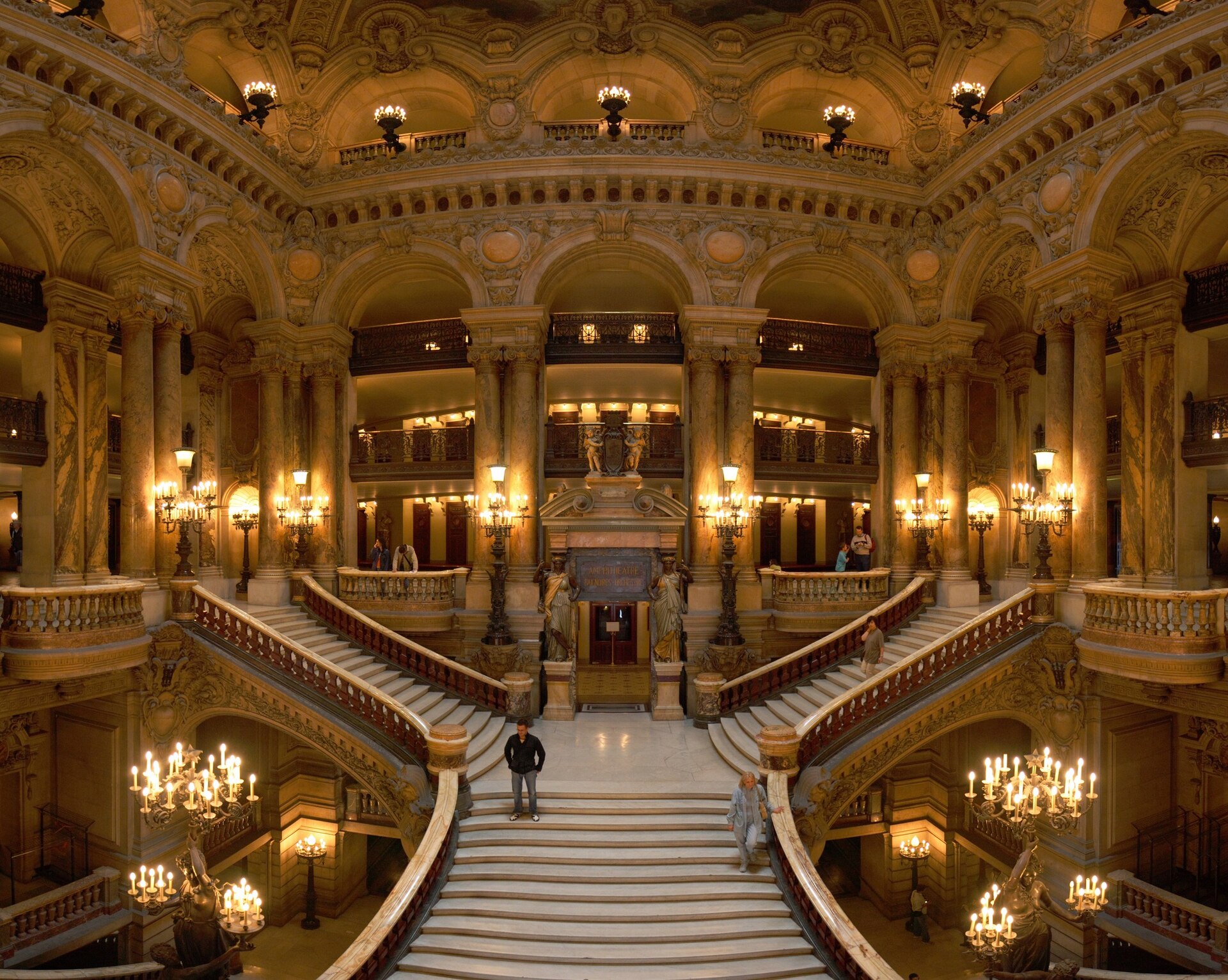
- The Palais-Royal gardens as the anteroom; Palais Garnier and the Grands Boulevards north.
- Time needed
- One weatherproof morning or afternoon.
Good questions
What are the passages exactly?+
The early 1800s' glass-roofed shopping arcades — gaslit, weatherproof retail theater before sidewalks existed — around 20 surviving of 150, preserved as gated public walks threading the 2nd and 9th.
Which ones matter most?+
Galerie Vivienne for the mosaic-and-rotunda architecture, Passage des Panoramas for the oldest glass and the bistro tables, Jouffroy for the toy shop and wax-museum flank, Véro-Dodat for the ten-minute marble jewel.
When should we go?+
Weekday afternoons keep every shop open; Sundays shutter some galleries; and rain is the point — the passages were built for it, and remain Paris's best wet-day walk.
Is there good food inside?+
Panoramas runs real bistronomy between the stamp dealers (book the good tables), Vivienne pours tea and Legrand's wines, and Jouffroy handles crêpes and gingerbread — the chain is lunch-shaped.
Are they free?+
Entirely — they are public walks on private glass-roofed streets, gated overnight and open with shop hours.