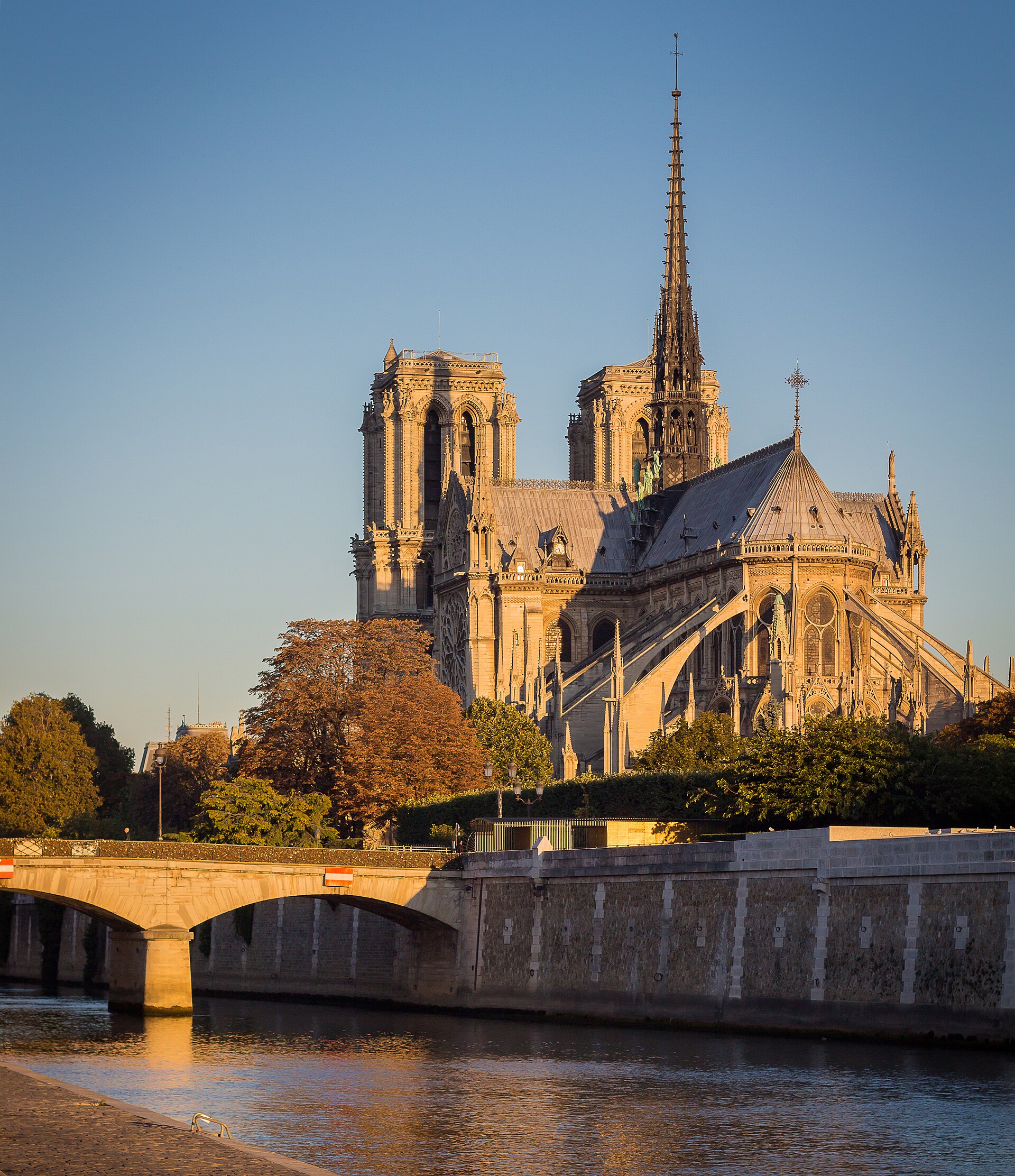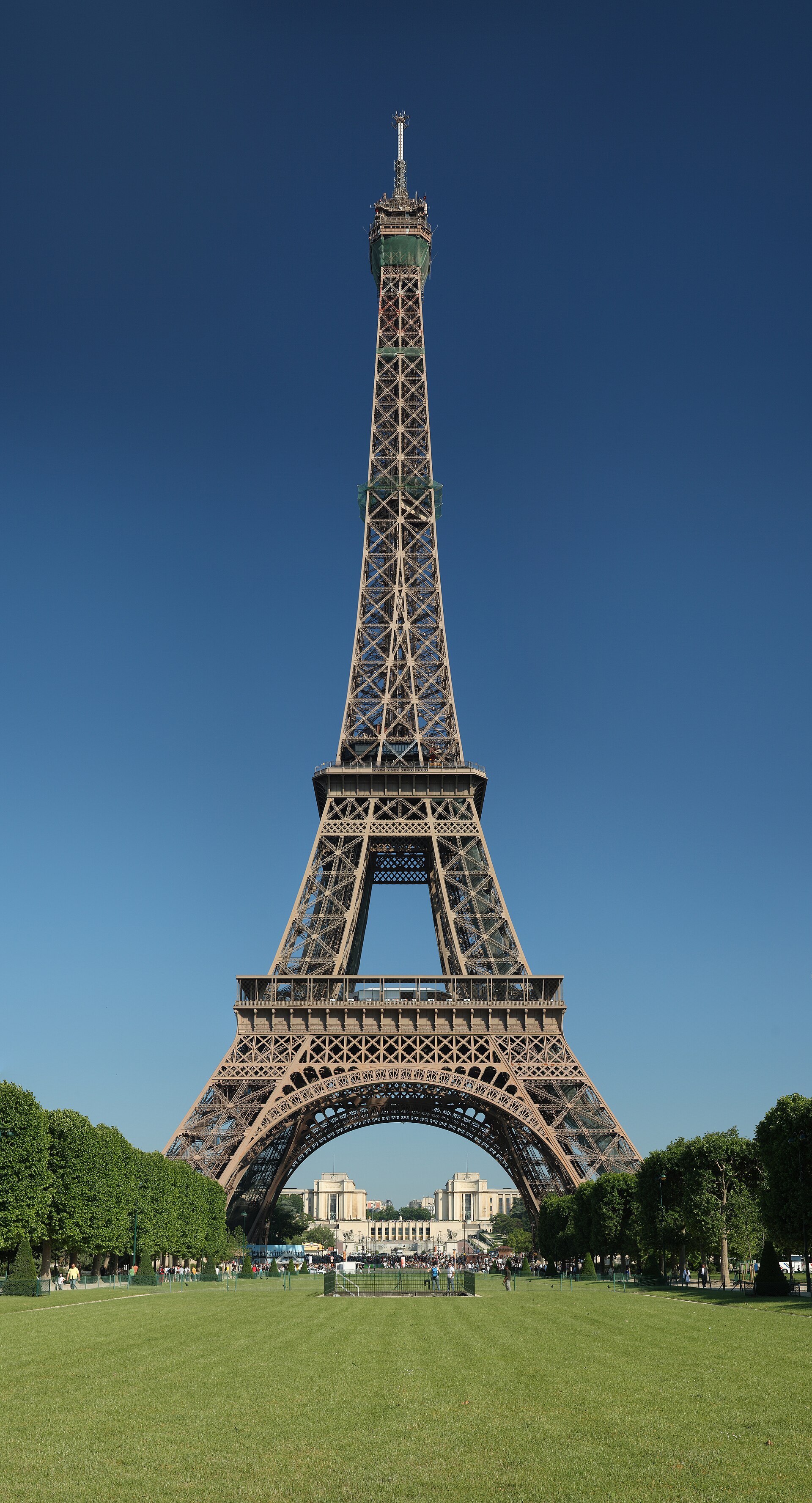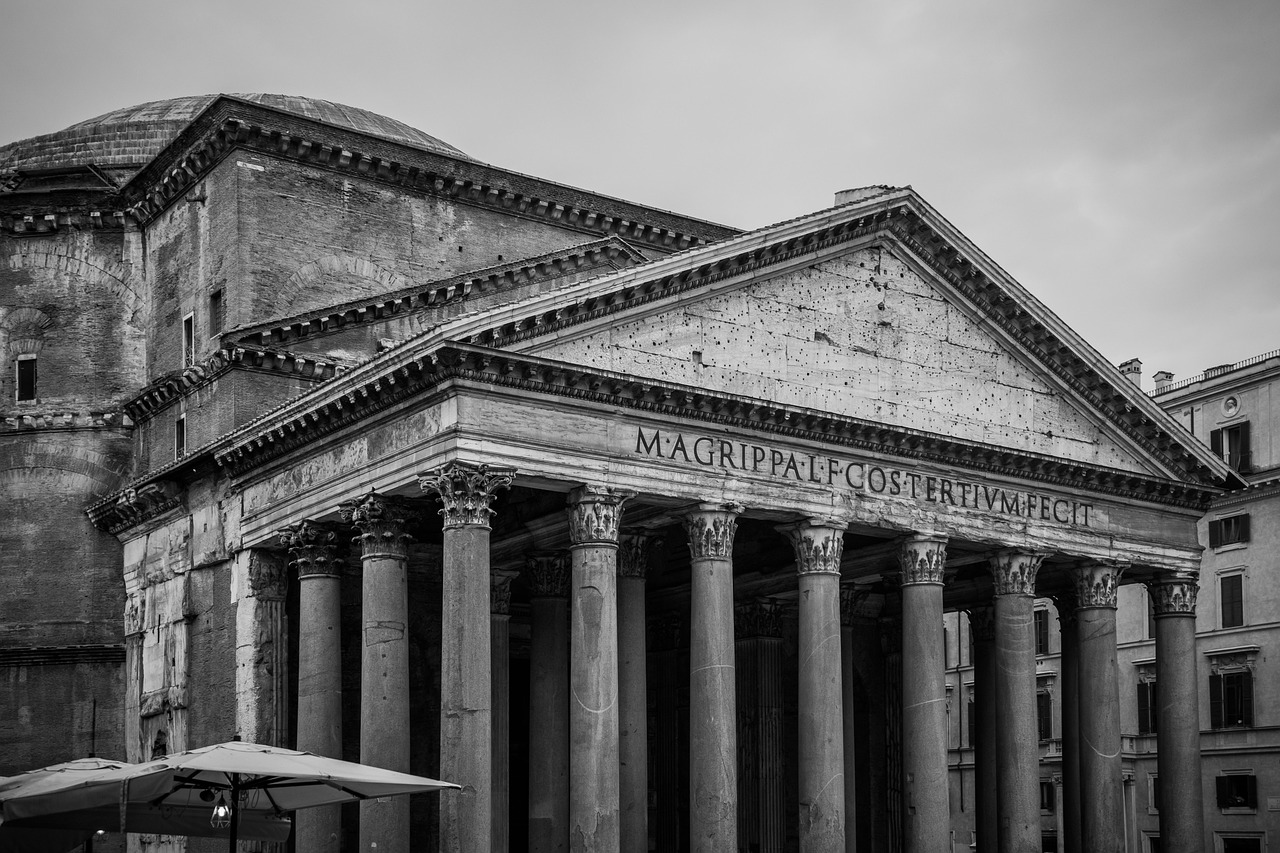
The Panthéon is where France keeps its meaning of greatness: the colonnaded neoclassical temple crowning the Latin Quarter's hill — built as Louis XV's thank-you church to Sainte Geneviève, finished in 1790 just in time for the Revolution to repurpose it as something new in the world: a secular temple to great citizens, "Aux grands hommes la patrie reconnaissante" carved across the portico (To great men, the grateful fatherland — with the pantheon of the honored slowly catching up to the women the phrase excluded). The visit runs in three registers: the vast nave — Soufflot's dome floating over Greek-cross grandeur, Foucault's pendulum swinging from the vault's center (the 1851 experiment that made the Earth's rotation visible hangs where it was first staged — watching the plane of swing creep around the dial is the building's quiet magic), and the murals of Geneviève's legend wrapping the walls; the crypt — the republic's hall of fame beneath: Voltaire and Rousseau facing each other across the entry (enemies in life, roommates in eternity), Victor Hugo (whose 1885 funeral here — two million mourners — fixed the building's modern role), Émile Zola, Alexandre Dumas, Marie Curie (the first woman honored for her own work, resting with Pierre), the Resistance heroes Jean Moulin and Joséphine Baker (2021, the first Black woman), and the plaques that read as the republic arguing with itself about who counts; and the dome colonnade — the seasonal upper walk (spring-to-fall, timed and limited) circling outside the drum with the full Left Bank panorama: the Eiffel Tower, the Luxembourg Gardens' spread, Notre-Dame's towers and all the zinc roofs of the Latin Quarter below. The craft: the pendulum demonstration explains itself on the hour-ish, the crypt deserves the audio layer, the colonnade climbs 200-ish steps and books out on clear days, and the neighborhood completes it — the Sorbonne's streets, rue Mouffetard's market tilt, and the Luxembourg Gardens five minutes west for the after.
The building's history is the Revolution in stone: begun 1757 as a votive church (Louis XV's recovery vow), completed just as the monarchy fell, deconsecrated in 1791 for Mirabeau's burial — then the pantheon's own politics began: Mirabeau expelled when his royal correspondence surfaced, Marat in and out within a year, Voltaire and Rousseau installed by rival factions, the building flipping church-temple-church through the 19th century until Hugo's funeral settled it secular for good. Reading the roster is reading France: the Curie transfer (1995) breaking the gender line, the Dumas transfer (2002) with its reckoning speech about the general's enslaved-born son, Moulin's ashes and Malraux's words, the 2021 Baker ceremony (her cenotaph — she rests in Monaco — carrying soil from four places of her life), and the names still debated for next.
The physics deserves its moment
Foucault hung his pendulum here in 1851 because the dome gave him the drop — 67 meters of wire, a 28-kilogram bob — and Paris watched the swing-plane rotate as proof the Earth turned beneath it: the demonstration continues daily (the original bob lives at the Arts et Métiers museum; the Panthéon swings a faithful copy), and the floor dial's slow creep remains the best physics lesson in any monument anywhere. Soufflot's engineering matched the ambition — the dome's triple shell and hidden iron reinforcement made the vast span possible (and its cracks kept French engineers busy for a century).
Practicals and fit
Place du Panthéon atop the Montagne Sainte-Geneviève (RER Luxembourg or Métro Cardinal Lemoine; the hilltop approach up rue Soufflot frames it best), timed entry smooths peaks, the dome colonnade runs roughly April-October with limited slots (book with the entry ticket on clear days), 90 minutes to two hours with the crypt. Fit: the history chip's cornerstone, first trips threading the Latin Quarter, literary pilgrims (Hugo, Zola, Dumas in one hall), physics-minded families — and anyone who wants France explained through the people it chose to keep.
What to expect
The experience
Soufflot's dome over the republic's hall of fame — the pendulum swinging in the nave, Voltaire to Joséphine Baker in the crypt, and the seasonal colonnade walk above the Latin Quarter.
Best time
Clear days for the dome colonnade (roughly April-October, limited slots — book with entry); the pendulum explains itself through the day; mornings beat school groups.
How long
Ninety minutes to two hours with the crypt.
Tips
Voltaire and Rousseau face each other at the crypt entry — enemies in life, roommates in eternity. Approach up rue Soufflot for the framing. Luxembourg Gardens wait five minutes west for the after.
Quick picks
- Best for
- The history chip's cornerstone — France explained through the people it chose to keep.
- Families
- Foucault's pendulum is the best physics lesson in any monument anywhere; the crypt plays as a who-is-who hunt.
- Couples
- The colonnade's Left Bank panorama, then Mouffetard's market streets downhill.
- Pair with
- The Latin Quarter around it — Sorbonne streets, rue Mouffetard, Luxembourg Gardens five minutes west.
- Time needed
- One Latin Quarter morning.
Good questions
Who is buried there?+
The republic's chosen greats — Voltaire, Rousseau, Hugo, Zola, Dumas, Marie and Pierre Curie, Jean Moulin, Joséphine Baker among them — with each transfer a national argument about who counts.
What is the pendulum about?+
Foucault hung it from this dome in 1851 to make the Earth's rotation visible — the swing-plane creeps around the floor dial through the day, and the demonstration continues exactly where it was first staged.
Can we go up the dome?+
The colonnade walk circles outside the drum roughly April through October in limited timed slots — 200-ish steps to the full Left Bank panorama; book it with entry on clear days.
Is it a church?+
It was built as one and flipped between church and temple through the 19th century — Victor Hugo's two-million-mourner funeral in 1885 settled it as the republic's secular pantheon for good.
How long does it take?+
Ninety minutes covers nave, pendulum and crypt; add the colonnade climb and the Latin Quarter around it for the natural half day.