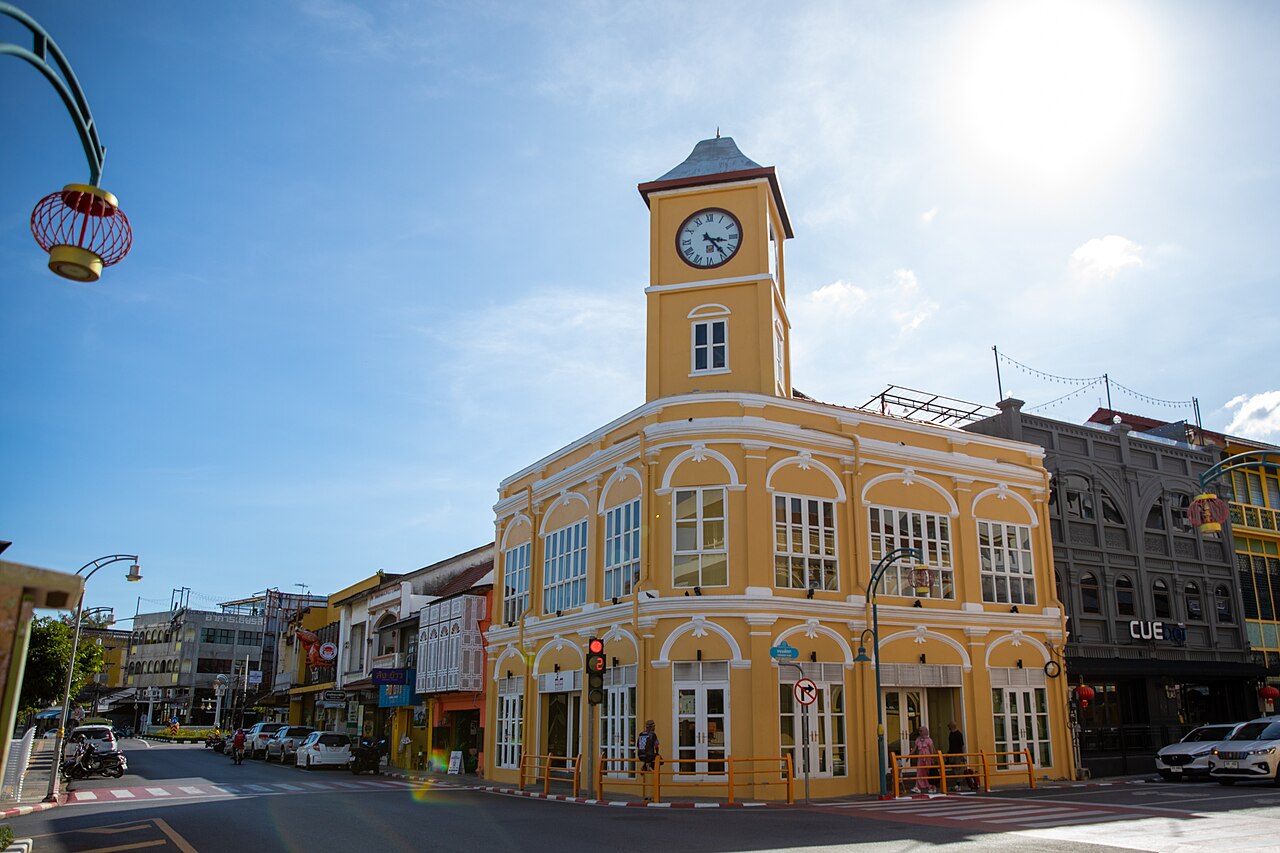
Blue Elephant is a well-known name in Thai fine dining, and its Phuket branch combines a restaurant with a cooking school in one of the town’s most photogenic buildings, a restored early twentieth-century mansion in the Sino-Portuguese style, with arched windows, tall shutters and a courtyard garden. The cooking class takes advantage of the setting, and the experience goes beyond a simple lesson. Most sessions begin with a visit to a local market, where the instructor explains the ingredients that give Thai food its character: lemongrass, galangal, kaffir lime leaves, holy basil, bird’s eye chillies and the pungent shrimp paste that sits behind many curries. Back at the school, each student has a cooking station and works through a set menu, normally a soup, a salad, a curry, a stir-fry and a dessert, with the chef demonstrating each stage first. At the end, everyone sits down to eat what they have cooked. It is a relaxed, practical class that suits beginners and keen cooks, and it is one of the best ways to understand the flavours of Phuket and southern Thailand. You also leave with recipes to try at home.
How it works
The class we link includes the market tour and the cooking lesson in a half-day format. Most sessions run in the morning, with an afternoon option on some days. You meet at the school in Phuket Town, then walk or ride to the market with the instructor, and return to cook. The menu changes from class to class and may depend on the season, and dietary needs such as vegetarian can often be arranged if you tell the school when you book.
Aprons and ingredients are provided, and you can usually take your recipe sheet home. Check whether hotel transfers are included, since the school is a short drive from most beach areas.
What to expect
The market is lively and sometimes crowded, with fish, vegetables, spices and fruit stacked on every stall, so wear closed shoes and light clothing. The instructor will explain how to choose ingredients and what each is used for, and you may have the chance to taste. In the kitchen, the atmosphere is friendly and encouraging, with plenty of time to ask questions.
The pace is relaxed, the portions are generous, and you eat the results in a dining room that is far more elegant than most cooking schools. Expect to spend about four hours in total, and do not plan a big lunch afterwards.
Making the most of it
Book early in the high season, because small classes fill quickly. Arrive hungry, and bring a camera for the market and the mansion’s architecture. If you want to continue the food theme, add a stroll through Old Phuket Town in the afternoon, a visit to a local coffee shop or the Sunday walking street if your dates fit.
The class is a good option on a rainy day, or on the day after a long boat trip when you want something gentler. It also makes a thoughtful gift or a shared activity for couples and friends, and children who are old enough to handle a knife safely often enjoy it. For a more casual alternative, ask your hotel about shorter classes in Kata and Karon.
What to expect
The experience
A half-day class that starts with a market tour, then a hands-on lesson at your own cooking station, ending with a meal of the dishes you made.
Best time
Mornings, when the market is at its liveliest, and any time of year since most of the class is indoors.
How long
About four hours including the market visit, the cooking and the meal.
Tips
Arrive hungry, wear closed shoes for the market and tell the school about any dietary needs when you book.
Quick picks
- Best for
- Food lovers who want to understand Thai ingredients and take home recipes.
- Families
- Suitable for older children who can handle kitchen tools safely.
- Couples
- A relaxed, shared activity that ends in a very good lunch.
- Pair with
- A stroll through Old Phuket Town in the afternoon.
- Time needed
- A morning.
Good questions
Where is the Blue Elephant cooking school?+
It is in Phuket Town, in a restored Sino-Portuguese mansion. Phuket Town is about half an hour from most west-coast beaches by taxi.
What do you cook in the class?+
A typical menu includes a soup, a salad, a curry, a stir-fry and a dessert. The dishes can change by day and season.
Can vegetarians join the cooking class?+
Vegetarian options can often be arranged if you tell the school when you book. Mention any allergies at the same time.
Is the market tour part of the class?+
The class we link includes a market visit before the cooking lesson. The instructor explains the main Thai ingredients and how to choose them.
Do I get the recipes?+
Yes, students normally receive the recipes to take home. Check with the school on the day if you want the full set.