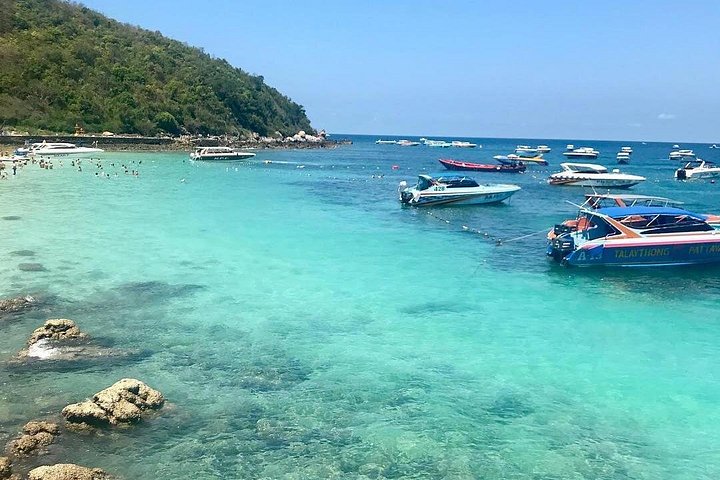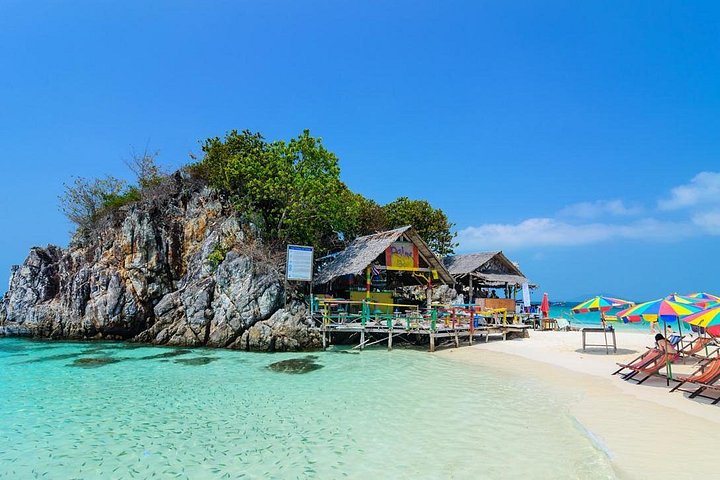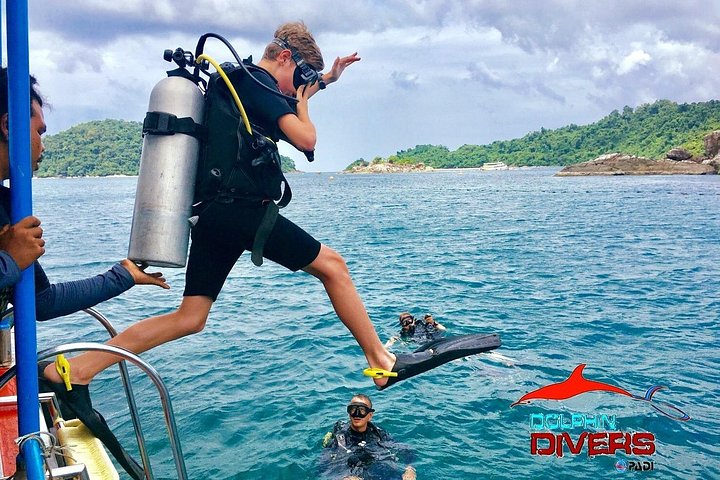
Phuket is one of Southeast Asia's best-known diving bases, and the Discover Scuba day is the easiest way to try it. The programme is designed for people who have never dived before and may be nervous about the idea. A professional instructor explains the equipment and the basic skills in a short briefing, then you practise breathing underwater in shallow water before you head out to the dive site. The dives themselves are shallow and relaxed, with the instructor holding your equipment or guiding your hand until you feel comfortable. On a good day you will drift over coral reef with schools of fish around you, and you may see clownfish, parrotfish, rays or turtles. A day on the boat includes lunch and time to swim or snorkel between dives. Many people come away from the experience wanting to complete a full Open Water course.
How it works
You are collected from your hotel and taken to the dive centre or pier, where you meet your instructor and complete a short health questionnaire. The briefing covers how scuba works, hand signals and how to equalise your ears. The boat takes you to a dive site chosen for conditions on the day, and you practise skills in shallow water before the first dive.
Instructors keep the groups small, with a high ratio of staff to participants. Between dives you rest on the boat, eat lunch and ask questions. All equipment is provided, and the staff help you with fitting.
What to expect
The first minutes underwater can feel strange, because breathing through a regulator is not natural. The instructor will go slowly, and most people relax within a few minutes. Dives are limited to a shallow depth, so the water is bright and the colours are strong. Visibility is best in the dry season, between November and April.
Sea conditions decide the site
In some weeks the boat heads to the Racha Islands, in others it stays closer to Phuket. Some people feel pressure in their ears, which is normal and eased by equalising. Anyone with asthma, ear problems, a recent illness or pregnancy should tell the centre and may not be able to dive.
Making the most of it
Sleep well and avoid alcohol the night before, eat a light breakfast and drink water on the boat. Bring a swimsuit, a towel, sun protection and any medicines you need. Do not fly for the period recommended by the dive centre after diving, which is usually at least twelve to eighteen hours after a single dive, so avoid scheduling the dive on your departure day.
If you enjoy the experience, ask about certification courses, which can be done in a few days. Photos and videos are often offered for an extra fee, and they make a good keepsake. Choose a reputable operator with clear safety standards, and do not hesitate to ask about instructor qualifications and group sizes.
Think about photography too. A waterproof camera strapped to your wrist is helpful for casual snaps, but your first dive is best spent concentrating on breathing, buoyancy and your instructor. If you want photographs, many dive centres offer a video or photo package taken by a staff member so you can stay focused on the experience.
What to expect
The experience
A full-day beginner scuba experience with a briefing, shallow-water practice and guided dives from a boat, with equipment and lunch provided.
Best time
November to April for calm seas and good visibility, though dives can run outside this window when conditions are suitable.
How long
A full day, including the transfers, the boat trip, lunch and two dives.
Tips
Avoid alcohol the night before, tell the instructor about health conditions and do not fly on the same day.
Quick picks
- Best for
- Curious non-divers who want to try scuba with expert guidance.
- Families
- Suitable for older children and teens who meet the minimum age, with a parent's consent.
- Couples
- A memorable shared adventure, and a good test before booking a full course.
- Pair with
- A relaxing massage or a sunset cruise the next day.
- Time needed
- A full day.
Good questions
Do I need to be a strong swimmer to try scuba?+
You should be comfortable in water and able to swim a short distance. The instructor will check your confidence in the shallows first.
How deep is a Discover Scuba dive?+
Dives are kept shallow, which is safer for beginners and brighter for seeing fish and coral.
Can I fly after a Discover Scuba day?+
Dive centres usually advise waiting at least twelve to eighteen hours before flying. Check their guidance and avoid diving on your departure day.
Is Discover Scuba suitable for children?+
Minimum age rules apply, often ten years or older. Check the age limit with the operator.
What health conditions prevent diving?+
Asthma, heart conditions, ear or sinus problems and pregnancy can all be reasons not to dive. Complete the medical form honestly and ask the centre if unsure.