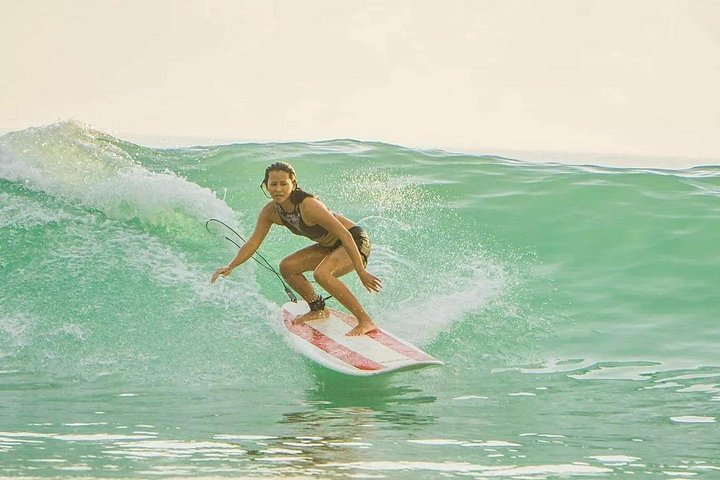
Kata Beach has long been one of the places where Thailand surfers learn to ride waves. The beach faces west, so it catches the swell that rolls across the Andaman Sea, and the sandy bottom makes falls forgiving. The two-hour lesson is set up for beginners. You start on the sand with a safety briefing and a lesson in paddling, popping up and reading the waves, and then your coach takes you into the water to practise. Boards are chosen to be wide and stable, which helps you stand up sooner, and rash vests protect against the sun and sand. There is no need to be an athlete, but you should be comfortable swimming in moving water. Many people stand up on a wave in their first lesson, which makes the session satisfying even if you only ride a few metres. Kata also has a lively beachfront with cafes, so you can celebrate with a smoothie afterwards.
How it works
You meet your coach at a meeting point on Kata Beach, where equipment is handed out. The land drill is the first part of the lesson and may take twenty minutes, covering paddling, how to lie on the board and the sequence of movements to stand. In the water the coach stays close, pushing you into waves and giving feedback after each attempt. Group sizes are small so that everyone gets attention. Lessons are timed around the tide and wind to find the best conditions on the day.
What to expect
The surf season is shaped by the monsoon. From May to October the southwest swell brings bigger waves that suit more experienced surfers, and the beach may have red flags that limit swimming. From November to April the waves are smaller and gentler, which is ideal for learners, although there are days when the water is almost flat.
The coach will tell you honestly what to expect and may adjust the time or location. The water is warm all year, so you do not need a wetsuit. Expect to be tired afterwards, because paddling uses muscles you do not normally use.
Making the most of it
Wear a swimsuit that fits securely, apply waterproof sunscreen and drink plenty of water before and after the lesson. Contact lens wearers should bring a strap for glasses or use disposable lenses. Pay attention to lifeguard flags and the coach's instructions, especially in the wetter months when rip currents are stronger. If you want more time on the board, ask about multi-day packages or follow-up lessons, because progress comes quickly with practice.
The lesson fits easily into a morning, leaving the afternoon for a viewpoint such as Karon Viewpoint, or for lunch in Kata. Children old enough to swim confidently can join under the coach's care, but check the age limit before you book.
Kata is also a good place to watch before you commit. Spend ten minutes on the sand observing the waves and the other learners, then ask a coach about the conditions for the day. If the swell is small and the lifeguard flags are green, it is usually a good time to start, and your first wave will feel less intimidating.
What to expect
The experience
A two-hour small-group surf lesson on Kata Beach with a land drill, a stable board, a rash vest and a coach in the water.
Best time
May to October for bigger waves; November to April for gentler waves that suit first-timers.
How long
Two hours including the land drill and time in the water.
Tips
Wear a secure swimsuit, use waterproof sunscreen and follow the lifeguard flags and your coach.
Quick picks
- Best for
- Beginners who want to try surfing in warm water with a coach.
- Families
- Good for confident swimming children and teens who meet the age limit.
- Couples
- A fun shared challenge that ends with a drink on the beachfront.
- Pair with
- Karon Viewpoint or a sunset at Promthep Cape later the same day.
- Time needed
- A morning or an afternoon.
Good questions
Can complete beginners take the Kata surf lesson?+
Yes. The lesson starts on the sand with a safety briefing and the basics, and the coach stays close in the water.
When are the biggest waves at Kata?+
Waves are bigger in the monsoon months from May to October. From November to April they are smaller and suit learners.
Do I need a wetsuit?+
No. The water is warm all year, and a rash vest is enough for sun and board protection.
Is it safe to surf at Kata in the rainy season?+
Conditions can change quickly, with stronger currents. Follow lifeguard flags and your coach's advice.
How many lessons do I need to stand up?+
Many people stand in their first lesson, but progress varies. Extra sessions help you ride waves more steadily.