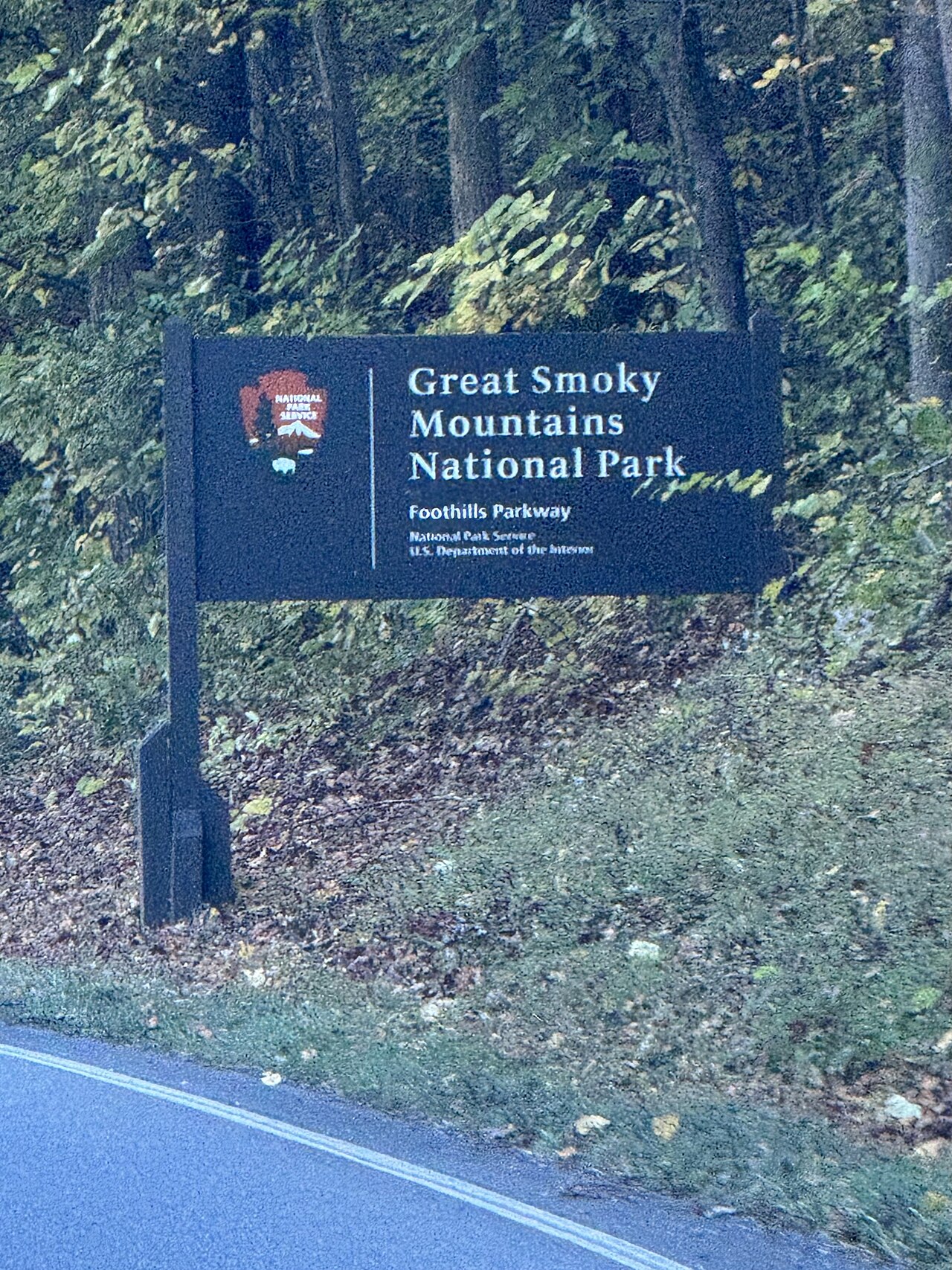
The national park is why the corridor exists, and it remains the best thing in it — half a million acres, free to enter, ten minutes past Gatlinburg's last traffic light. It's also the most-visited park in America, so doing it well is a strategy game. Here's the playbook from a Pigeon Forge base.
The three marquee drives
Cades Cove is the crown: an 11-mile one-way loop through a mountain-ringed valley of 1800s cabins, churches, and the East's best wildlife odds — black bears in the meadow edges at dawn and dusk, deer and turkeys all day. Allow 2-4 hours; summer Wednesdays go vehicle-free for bikes; dawn beats everything. Kuwohi (via Newfound Gap Road) climbs to 6,643 feet, the park's roof — a steep half-mile paved path tops the spiral tower for hundred-mile days; the road closes December-March. Roaring Fork Motor Nature Trail, minutes from downtown Gatlinburg, is the one-hour version: old homesteads, mossy forest, and the Grotto Falls trailhead on a one-way loop (closed in winter).
Hikes by honest effort
Easy: Laurel Falls (2.6 miles, paved, the family default — go early for parking), Cataract Falls from Sugarlands (flat, short), Gatlinburg Trail (walk into the park from town). Middle: Grotto Falls (2.6 miles, walk behind the waterfall), Abrams Falls from Cades Cove (5 miles to the park's biggest water volume), Andrews Bald from Clingmans (grassy summit picnic). Earn-it: Alum Cave to Mount LeConte (the park's best climb — bluffs, views, 11 miles round trip to the lodge), Chimney Tops (short, steep, dramatic), Charlies Bunion via the Appalachian Trail from Newfound Gap. Rainy weeks make waterfall weeks — the falls double and the crowds halve.
The rules that matter
Entry is free, but parking over 15 minutes requires a tag — $5/day, $15/week, online or at visitor centers — and rangers do check. Bears: 50 yards minimum, never feed, never approach for photos; use pullouts, not the roadway (the "bear jam" you're stuck in is someone ignoring this). Cell service dies past the boundary — download maps offline. Weather swings 20 degrees between Gatlinburg and Clingmans; carry layers always.
The dawn strategy
Every park problem — Cades Cove traffic, Laurel Falls parking, bear sightings, October — is solved by the same move: be at your trailhead or loop entrance at first light. The corridor's late-night rhythm leaves the park empty until 9:30am; those two borrowed hours are the best of the trip. Reward yourself with Old Mill pancakes after.
Seasons
Spring: waterfalls at full throat, wildflowers (April's the show), synchronous fireflies by lottery in early June. Summer: swimming holes (Midnight Hole, the Townsend Wye), high-elevation escapes from valley heat. October: the famous color — mid-month at elevation, late month in the valleys — with midweek dawns the only sane plan. Winter: the secret season — bare-tree views, snow-dusted cabins, empty loops; check road closures (Clingmans, Roaring Fork, sometimes Newfound Gap).
Logistics from Pigeon Forge
Sugarlands Visitor Center (maps, rangers, tags) is 15-20 minutes via the Spur; Cades Cove is an hour via the prettier Wears Valley-Townsend back way — take it at least once. Greenbrier and Cosby, the quiet eastern entrances, reward second trips. Pack the car the night before; the mountains don't hold spots.