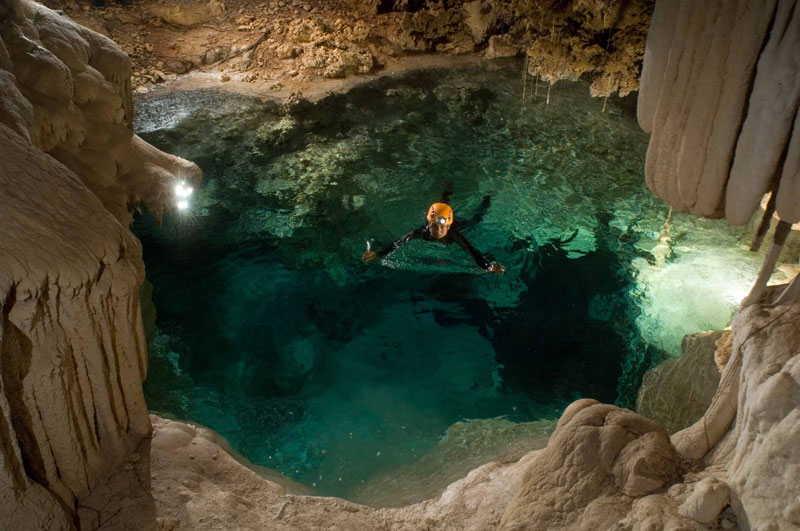
Few places have as many cenotes as the Riviera Maya, and the choice can feel overwhelming. Some are wide pools open to the sky, others are caverns with stalactites, and some can only be explored with scuba gear. This guide explains the types, helps you match them to your trip and covers the etiquette that keeps these fragile places healthy.
What a cenote is
The Yucatan peninsula is a limestone shelf with almost no surface rivers. Rain filters down through the rock, and where the ceiling of a cave collapses, a water-filled sinkhole appears. These are cenotes, from the Maya word dzonot. They connect to enormous underground systems, among them some of the longest flooded cave networks in the world, and the Maya considered them sacred gateways and sources of fresh water.
Open cenotes
These are the easiest and most photogenic. The roof has fallen away, so sunlight reaches the water, trees overhang the edge and fish gather in the shallows. They are warm in feel, good for swimming and jumping from platforms, and ideal for families. Midday light is best for photographs, though crowds peak then too.
Semi-open and cave cenotes
Here part of the roof remains, creating a mix of light and shadow. Stalactites hang overhead, shafts of sunlight pierce the water and the atmosphere is hushed. Snorkeling is rewarding, because the water is exceptionally clear and the formations are visible below. Dos Ojos is the famous example, with twin pools linked by a cavern. Mornings are best for light and fewer visitors.
Underground and cavern cenotes
Deeper in the rock, some cenotes are dark chambers reached by ladders or paths and lit by headlamps or a small opening. Guided tours of these sites are exciting but need a comfortable attitude toward confined spaces. Certified cave divers can go farther, but cave diving is a specialist activity that requires training and should only be done with qualified guides.
Cenote parks
Several parks, such as those along the Ruta de los Cenotes, gather multiple cenotes in one place with facilities, lunch and extra activities like ziplines and kayaks. They are efficient and well organized, with life jackets and guides, and are a good choice for first-timers and groups. Independent small cenotes offer a quieter, more rustic experience but have fewer amenities.
Matching a cenote to your trip
With children, choose an open cenote or a park with shallow areas and life jackets. For romance, pick an early slot at a cave cenote. For adventure, combine ziplines, ATVs or rappelling with a swim. For photography, visit open cenotes late morning and cave cenotes at opening. If you dive, a guided cavern dive introduces the underwater side safely.
Rules that protect the water
Shower before you swim to remove lotions and repellents, and use biodegradable sunscreen or none at all. Do not touch stalactites or formations, which grow incredibly slowly and are damaged by oils. Never enter without a guide where required, and follow signs about depth and jumping. Take your trash out, and do not feed the fish.
What to bring
A swimsuit, towel, water shoes and a change of clothes, plus a waterproof phone case and a small amount of cash for lockers and entry. The water is cool, around the mid-twenties Celsius, which feels refreshing in the heat but may chill small children, so bring a light layer for afterward.
Combining cenotes with other plans
A morning cenote followed by an afternoon on the beach is the classic rhythm. Inland cenotes are a good alternative when the sea is rough or seaweed is heavy. Pair a swim with an ATV or zipline tour, with a visit to the ruins at Tulum or Coba, or with a slow lunch in a nearby village. Avoid stacking too many cenotes in a single day, because after two or three they start to blur.
Choosing how to go
Tours handle transport, guides and entry, and they are the simplest option. Rental cars provide freedom to find smaller cenotes and to arrive early, but roads can be rough and parking varies. Taxis and colectivos work for the closest sites. Whichever you choose, aim to be at the entrance when it opens, because the first hour belongs to the quiet and the clear water.
A few cenotes, chosen well, will give you more than a long list. Pick one open pool for fun, one cave for atmosphere and perhaps one guided snorkel or dive for the underwater view, and leave room for a beach afternoon between them.