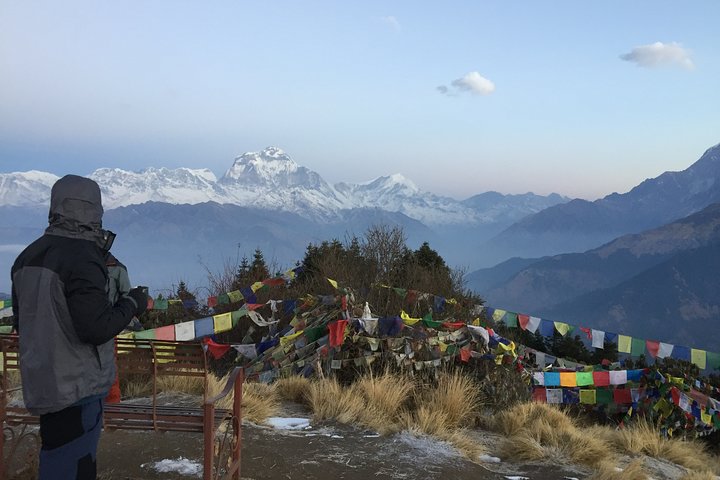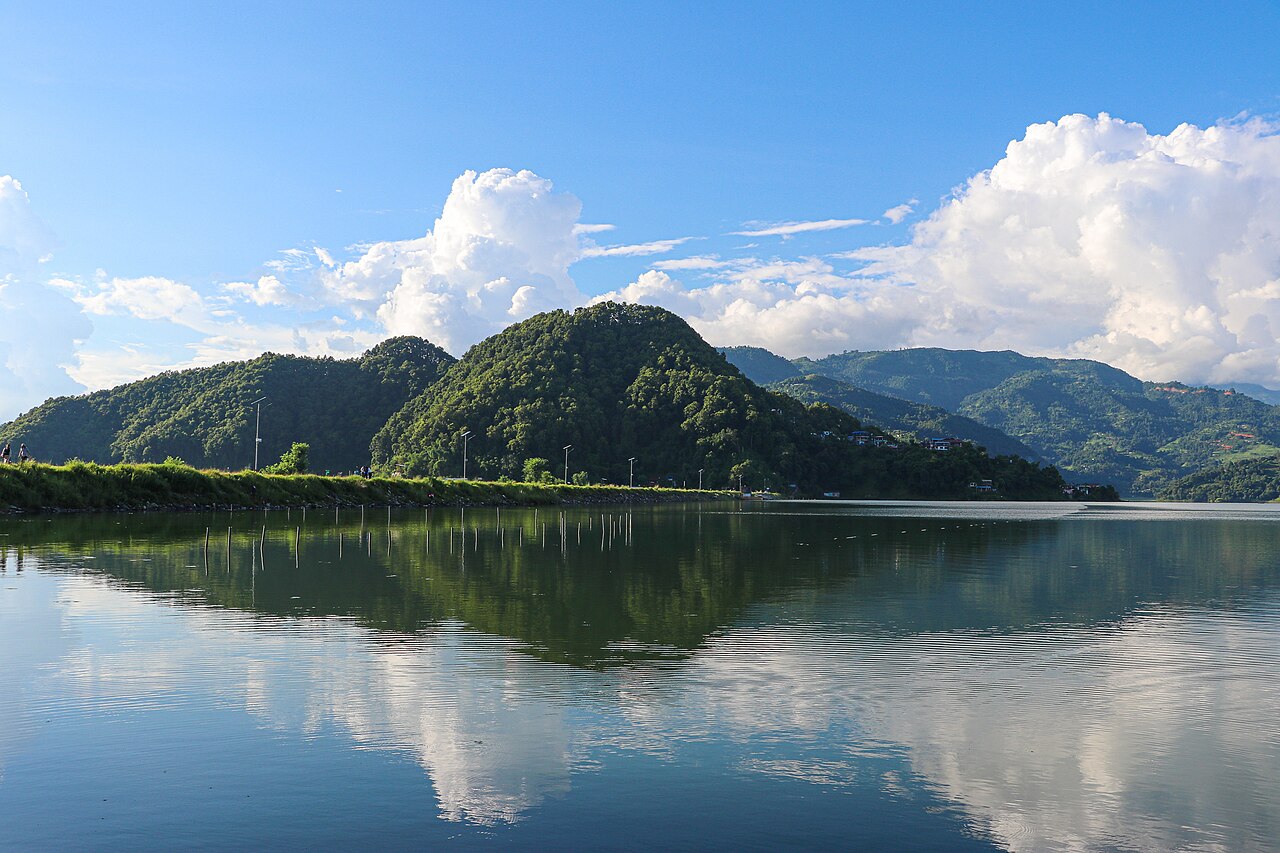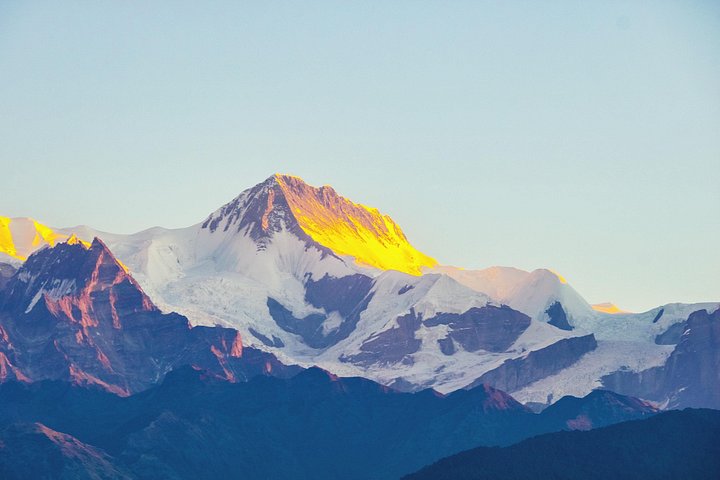
Panchase Hill is a forested ridge southwest of Pokhara, rising to around 2,500 meters, with one of the widest views of the Himalaya on this side of the valley. The area is protected for its rhododendron and oak forest, its birdlife and its religious significance, with a Hindu temple on the ridge and a pretty lake below. A two day trek from Pokhara usually begins with a drive to Bhadaure and a climb through forest to a lodge near the top, an overnight stay, then a sunrise walk to the viewpoint that frames Annapurna, Machhapuchhre and Dhaulagiri in the same sweep. Compared with Poon Hill, Panchase is quieter and cooler, and it rarely feels crowded even in the autumn peak.
The trail is gentle by trekking standards. Most days involve three to five hours of steady walking on forest paths and village trails, with plenty of stops for tea and photographs. The sunrise from the ridge is the highlight, and warm layers matter because the wind can be sharp before the sun climbs.
Bird lovers can look for pheasants, laughingthrushes and, in season, the flash of rhododendron blossom, and the Panchase region has several community homestays that welcome visitors and share local cooking. Respect the temple and any ceremonies you encounter, dress modestly and ask before taking photographs of worshippers.
Panchase suits several kinds of traveler. First-time trekkers like the modest altitude and simple logistics. Families with older children can manage it with a conservative pace. Photographers value the quiet ridge for panoramic shots, and anyone who has already done Poon Hill or Mardi Himal may enjoy the contrast of a lower, greener walk.
Because the elevation is moderate, altitude symptoms are unlikely, though cold nights mean a sleeping bag or liner is worthwhile. Permits are required for the conservation area and are normally arranged by the operator, so confirm that they are included in your booking.
Timing and packing are straightforward. October and November have the clearest skies, March and April bring rhododendron flowers, and the monsoon months are wet and cloudy. Wear sturdy shoes, bring a rain jacket, a headlamp, gloves and a warm hat, and carry water and snacks. Lodges are basic, with simple meals, hot drinks and shared bathrooms.
If you only have a short time in Pokhara but want a real night in the hills, this is a strong alternative to the busier Poon Hill route. Add a sunrise at Sarangkot on another day to compare the views, and keep a spare day in your plan in case cloud hides the range on the morning you climb.
Consider the practical details of getting there and back. The road to the trailhead near Bhadaure is partly rough, and the walk begins on forest paths that can be slippery after rain, so footwear with real tread helps. Lodges on the ridge often have limited hot water and electricity, so carry a power bank and a headlamp. If you enjoy photography, aim for the first light from the viewpoint, then wait for the second light as the sun clears the ridge, when the valley fills with soft shadows.
Bring a small notebook or a field guide if you like birds, because the forest here is lively in the early morning, and pace yourself so that you have time to sit and listen.
What to expect
The experience
A guided overnight trek from Pokhara by road and on foot to the Panchase ridge, with a lodge night and a sunrise walk to the viewpoint.
Best time
October and November for clear skies, or March and April for rhododendron blooms.
How long
Two days with one night on the ridge.
Tips
Bring warm layers and a headlamp, confirm permits and meals are included and expect simple lodging.
Quick picks
- Best for
- First-time trekkers and anyone who wants a quiet, forested alternative to Poon Hill.
- Families
- A manageable overnight for older children who like hiking.
- Couples
- A peaceful ridge sunrise away from the crowds.
- Pair with
- Australian Camp for another gentle hill hike, or Begnas Lake for a slow day afterward.
- Time needed
- Two days.
Good questions
How high is Panchase Hill?+
The ridge reaches about 2,500 meters, so altitude symptoms are unlikely, but nights are cold.
How does it compare with Poon Hill?+
It is lower, quieter and more forested, with a similar wide Himalayan view. Poon Hill is higher and busier.
Do I need a permit?+
Yes, the conservation area requires a permit, which operators normally arrange. Check that it is included.
What wildlife can I see?+
The oak and rhododendron forest supports many birds, including pheasants. Sightings depend on season and luck.
When is the best time to go?+
October and November give the clearest views. March and April add rhododendron flowers.