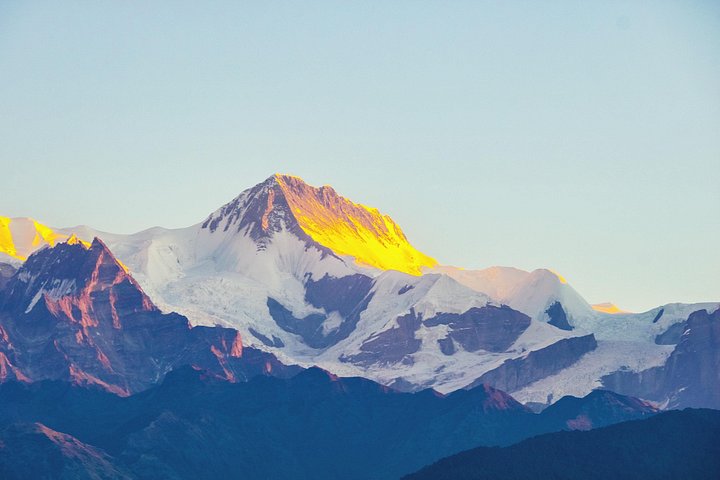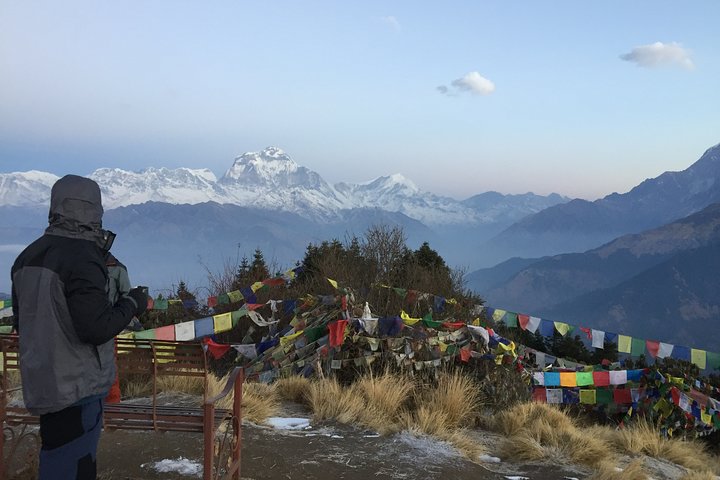
Poon Hill, at around 3,200 meters, is one of the best known short treks in Nepal because it offers a huge Himalayan panorama for a modest number of days. The trail runs through the Annapurna foothills via the villages of Ghorepani and, on many routes, Ghandruk, passing stone staircases, rhododendron forest and terraced fields. The reward is the pre-dawn climb to the Poon Hill viewpoint, where the sun rises over Dhaulagiri, the Annapurna peaks and Machhapuchhre in one sweep. This short format compresses the classic trek into a quick two-day program, which suits travelers with limited time, and the operator arranges transport, guide and lodging. It is a strong choice if you want a real mountain morning without committing to the longer five-day route.
Expect an early start, a drive to the trailhead and a climb up stone steps to Ghorepani, where simple teahouses provide beds and meals. The next morning begins in the dark, with a headlamp climb to Poon Hill to watch the sunrise with other trekkers, followed by breakfast and a return. A two-day format means you will walk quickly and use transport for parts of the route, so check exactly what the product includes, how many hours you walk each day and whether you can extend by a night if you want a gentler pace.
Peak season is here. In October and November the post-monsoon air is clear and dry and the trail is firm, but teahouses fill up, so book in advance and expect company on the trail. Nights at Ghorepani are cold, so bring a warm jacket, a hat, gloves and a sleeping bag liner. Rain gear is sensible at any time. The Annapurna Conservation Area requires a permit, which operators normally arrange, so confirm that it is included in the price and that your guide carries the paperwork.
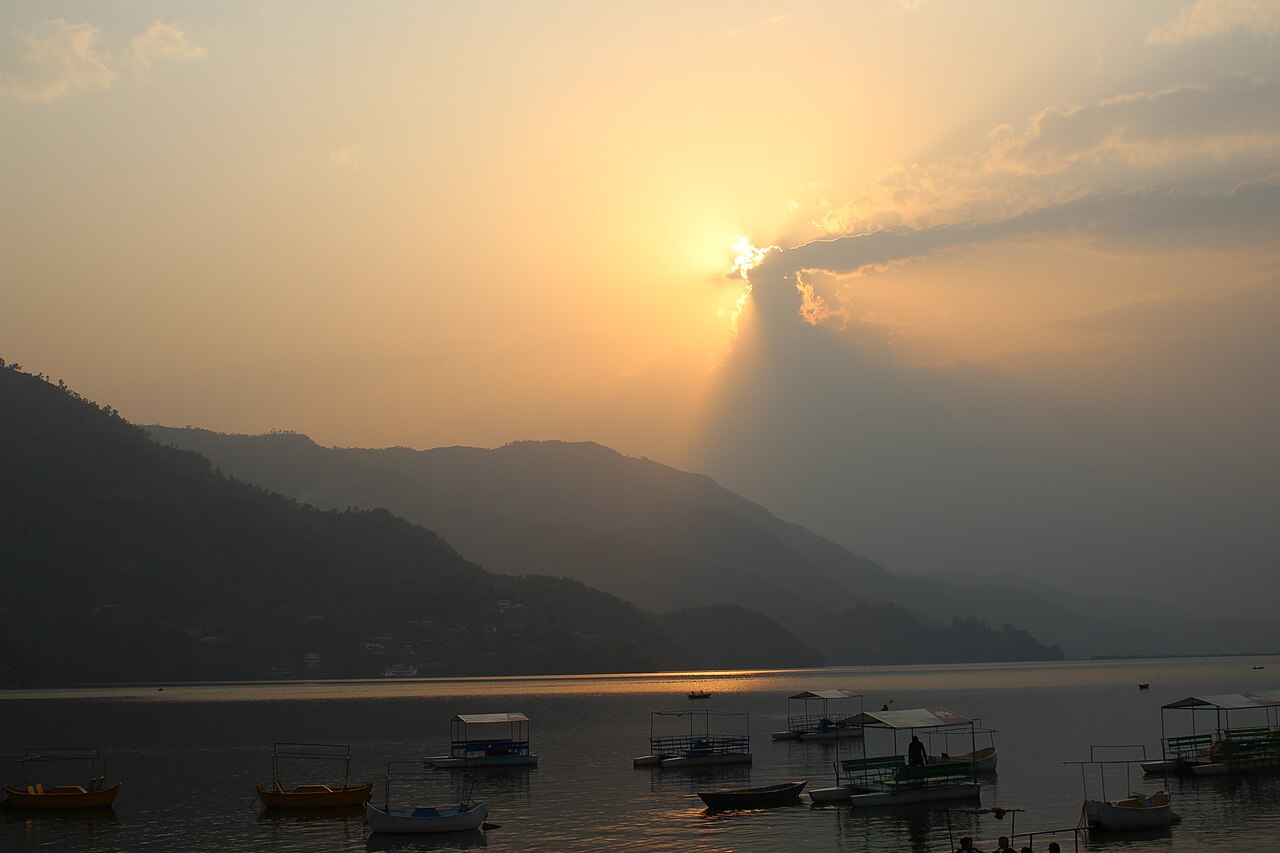
Prepare physically. The climb is steady and includes many steps, and altitude at the viewpoint is enough to cause headaches for a few people, so ascend at a moderate pace, drink water and listen to your body. Keep the luggage light and leave surplus items at your hotel in Pokhara. If your schedule allows, a longer four or five day version is more relaxed, and it often passes through Ghandruk. Whichever you choose, pair the trek with a sunrise at Sarangkot for a second view of the range from below.
What to expect
The experience
A guided short trek from Pokhara by road to the trailhead, a climb to Ghorepani, a pre-dawn walk to Poon Hill for sunrise and a return the following day.
Best time
October and November for the clearest air and firm trails, with cold nights and busy teahouses.
How long
Two days, with early starts and a night in a teahouse near Ghorepani.
Tips
Pack warm layers, a headlamp and a liner, confirm permits and transport are included, and book ahead in peak season.
Quick picks
- Best for
- Active travelers who want a real Himalayan sunrise on a trek short enough for a quick trip.
- Families
- Teenagers with some fitness can manage it, but check the walking hours and the altitude with the operator.
- Couples
- Share the cold pre-dawn climb and the sunrise, then warm up over tea at the teahouse.
- Pair with
- An easy Australian Camp hike to warm up, or a Sarangkot sunrise on a rest day.
- Time needed
- Two days, plus a rest day in Pokhara afterward.
Good questions
When is the best time to trek Poon Hill?+
October and November are peak season, with clear skies and dry trails, while spring is also popular. Expect busy teahouses and cold nights in autumn.
Do I need a permit?+
Yes, the Annapurna Conservation Area requires a permit, which trek operators normally arrange. Confirm that it is included in your booking.
How hard is the trek?+
It is a steady climb on stone steps rather than a technical route, but a short format means long days. A reasonable level of fitness is needed.
How cold does it get?+
Nights at Ghorepani are cold in autumn and the pre-dawn climb is chilly, so bring a warm jacket, hat and gloves. A sleeping bag liner helps in teahouses.
Is a longer version better?+
A four or five day route is more relaxed and often includes Ghandruk, but the short version suits limited time. Choose based on how much walking you want.