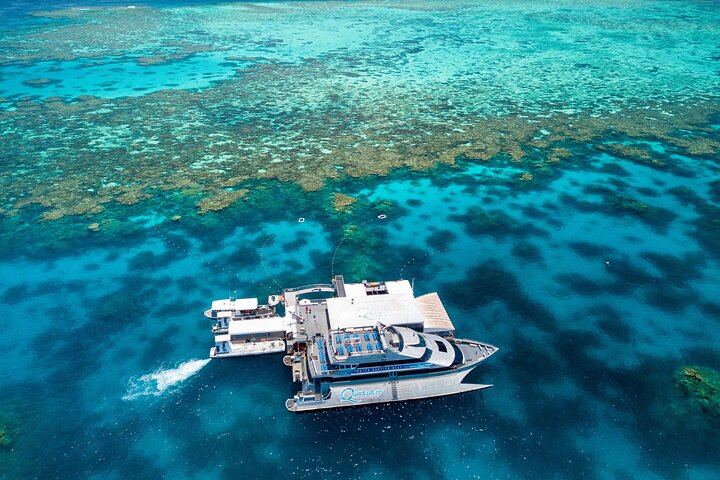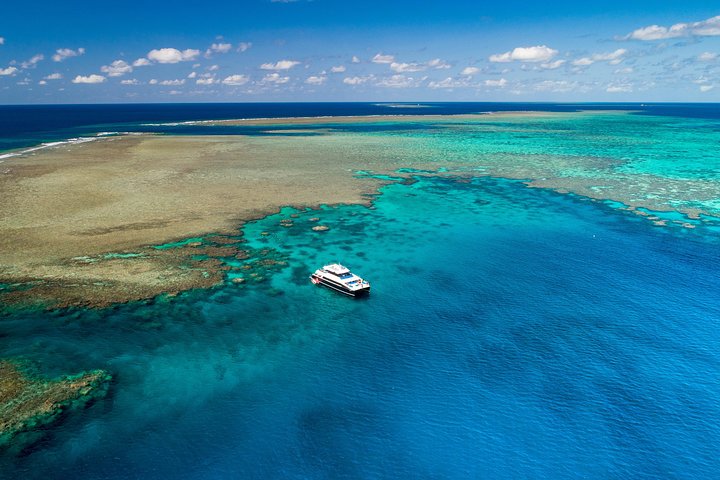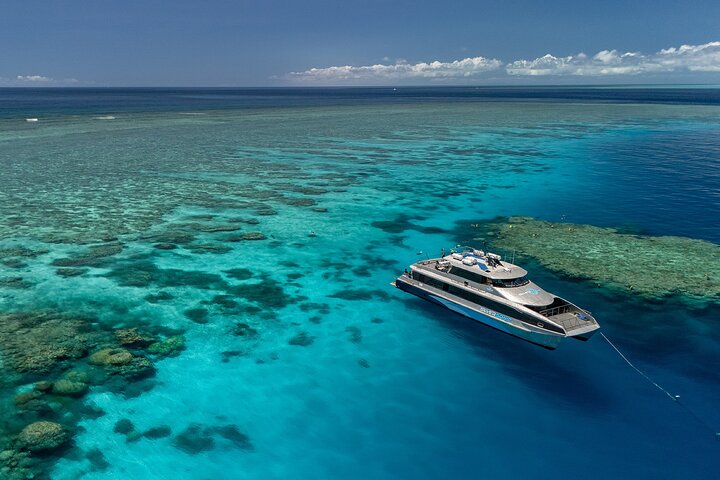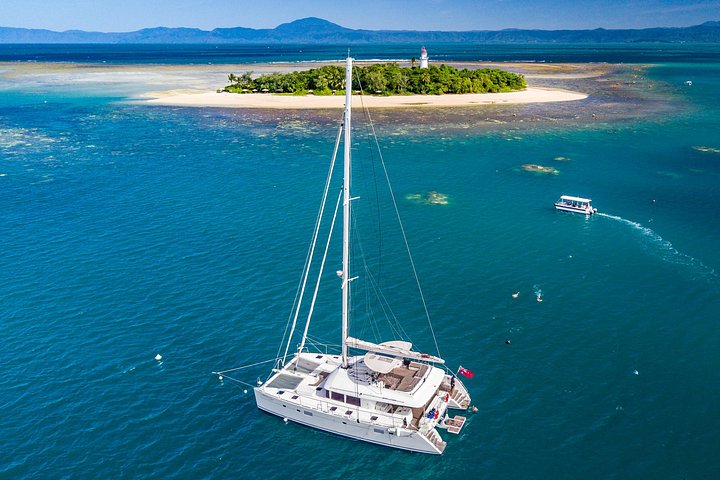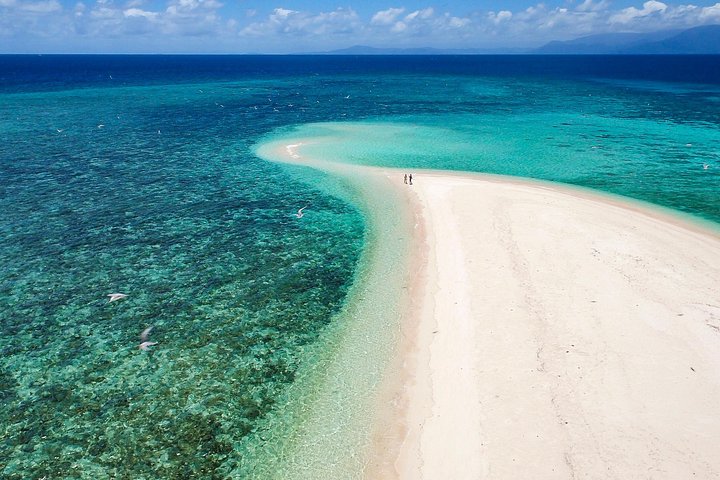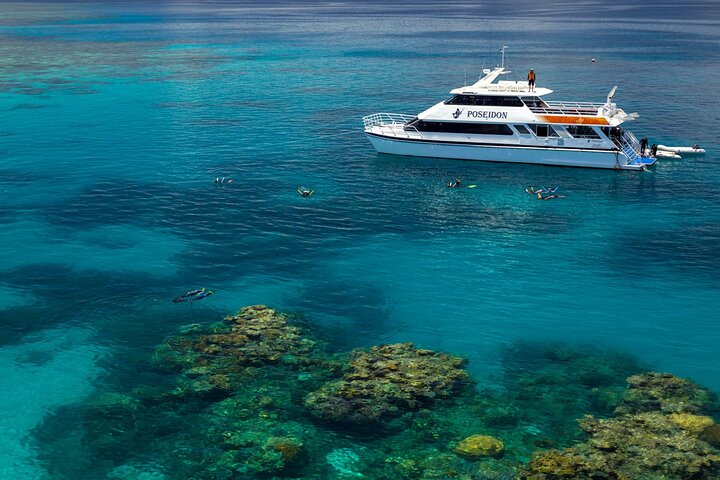
Poseidon is the choice for travellers who want the outer reef without the scale of a large pontoon operation. The boat is a modern sailing-style vessel with a limited passenger count, which means shorter queues for gear, more time in the water per person and crew who know individual guests by the end of the day. From Port Douglas the boat heads out for roughly an hour and a half to two hours to reefs along the Agincourt and Opal Reef region, where the water is clear and the coral is among the healthiest in the region. Operators typically visit two or three sites in a day and choose them according to wind and tide, which keeps the experience flexible. On board you can snorkel with a guide, take an introductory dive, or join certified dives if you hold a recognised qualification. Marine biologists or experienced guides commonly give a short briefing on reef ecology, which adds meaning to the swim and helps you spot turtles, rays and reef fish without disturbing them.
The difference you will notice is the pace. With fewer people, each snorkel stop feels less like a mass activity and more like a guided swim, and divers are grouped by ability so beginners and experienced divers each get a suitable site. Because the boat is a moored vessel rather than a fixed platform, it can move between sites, which keeps your underwater time varied and often avoids the busiest patches of reef.
Conditions matter on any outer reef day. The crossing can be rougher than the inner islands, particularly in the dry-season trade winds from May to October, so take seasickness tablets in advance if you are prone. In stinger season, roughly November to May, operators supply full-body suits, and the outer reef is usually safer than coastal water. Visibility is typically best on calm, sunny days.
Practical points
Bring reef-safe sunscreen, a rash vest, a towel, a hat and a waterproof camera. Wear swimwear under light clothes, and carry only what you need because storage on a smaller boat is limited. Lunch and snorkel gear are normally included, with extras such as introductory dives or underwater photography available for a fee. If you are choosing between several outer reef operators, Poseidon suits people who prefer a quieter, more personal day and are happy to give up some of the facilities of a big pontoon, such as an observatory or a semi-submersible.
Some extra context may help you decide. Smaller boats trade facilities for intimacy, which means you usually get a briefing that feels more like a conversation, and crew members who adjust the day to the group. If you are travelling with a mix of snorkellers and divers, the format works well, because both groups head out together and meet again at lunch. Dive groups tend to be small, so introductory divers receive closer attention than they might on a bigger vessel.
It is wise to tell the crew about any medical conditions, past ear problems or anxieties in the water when you check in, so they can place you with the right guide. After the trip, rinse your gear off, drink plenty of water and avoid flying or heading to altitude too soon after diving, following the operator's guidance.
What to expect
The experience
A full-day cruise on a smaller vessel to two or three outer reef sites, with guided snorkelling, optional diving and lunch.
Best time
Calm mornings give the best visibility; the dry season from May to October is usually the most settled.
How long
Roughly eight to nine hours including the crossing and several reef stops.
Tips
Take seasickness tablets, travel light and book an introductory dive in advance if you want one.
Quick picks
- Best for
- Snorkellers and divers who prefer fewer people and more time in the water.
- Families
- Suitable for confident swimmers, but check age rules and the water conditions on the day.
- Couples
- A quieter, more personal day on the reef than a big pontoon trip.
- Pair with
- A relaxed day on Four Mile Beach or a Daintree River cruise.
- Time needed
- A full day.
Good questions
How many sites will we visit?+
Operators normally visit two or three reef sites in a day, chosen by wind, tide and conditions.
Is it suitable for beginners?+
Yes, guided snorkelling and introductory dives are offered, though confident swimmers will enjoy it most.
How is it different from a pontoon cruise?+
The boat is smaller, so there are fewer passengers and more time in the water, but fewer facilities such as an observatory.
Are stinger suits provided?+
Yes, in stinger season from roughly November to May suits are supplied.
What should I bring?+
A towel, reef-safe sunscreen, a hat, a rash vest, seasickness tablets and a waterproof camera.