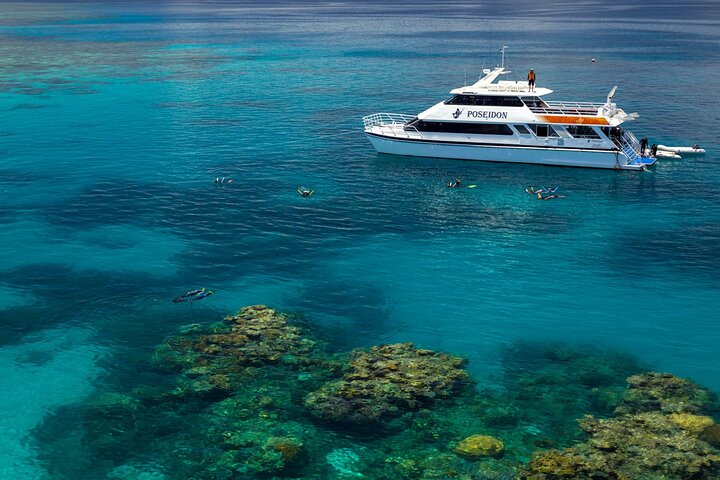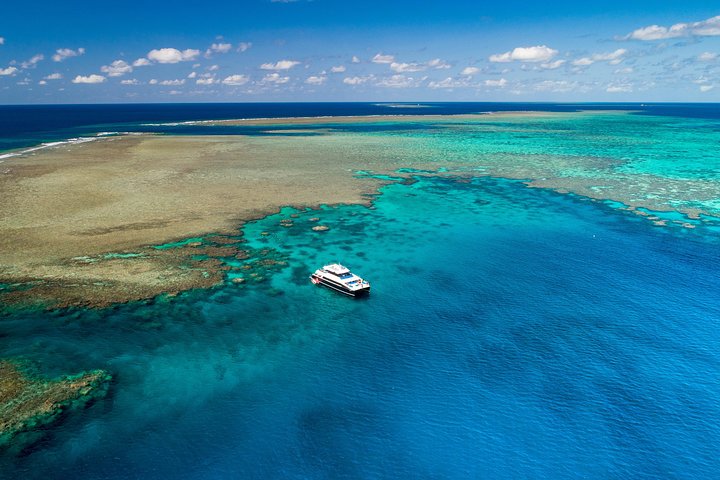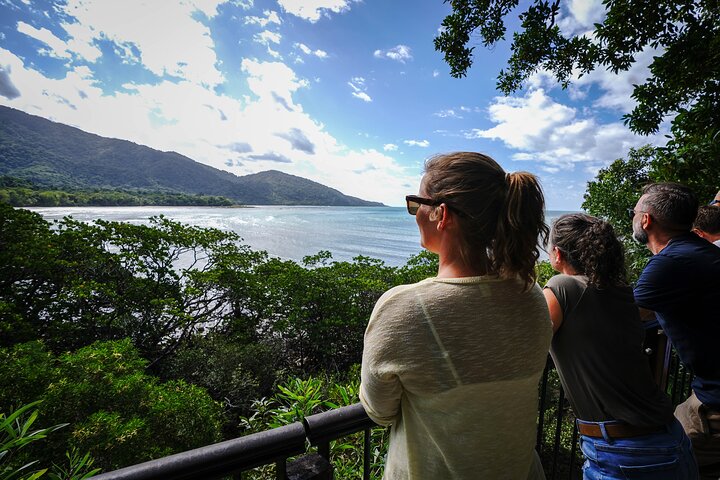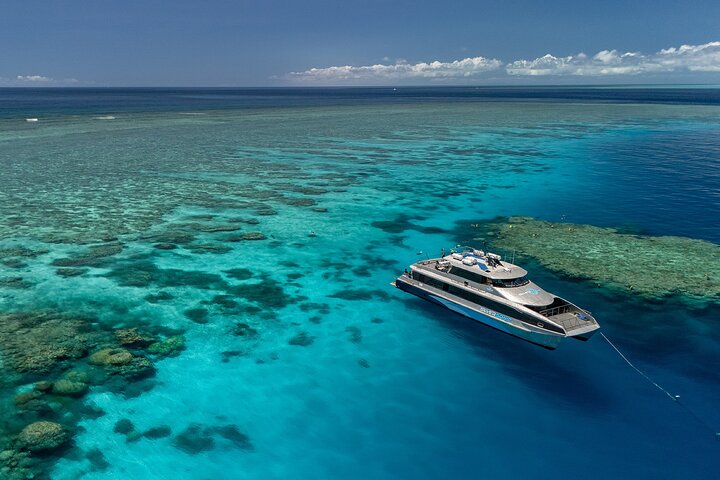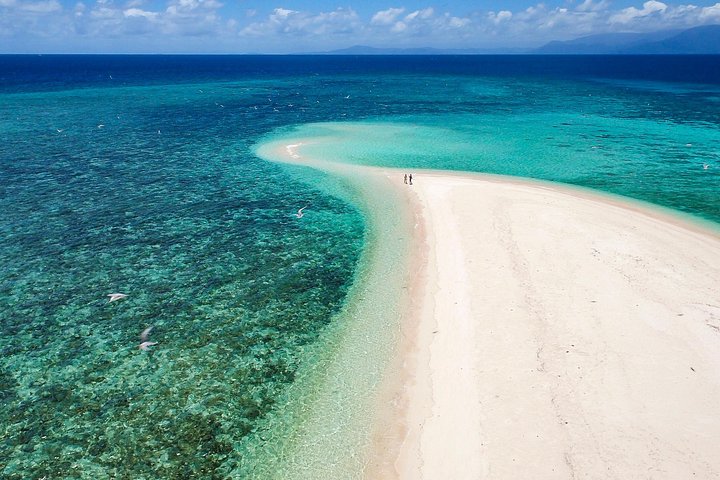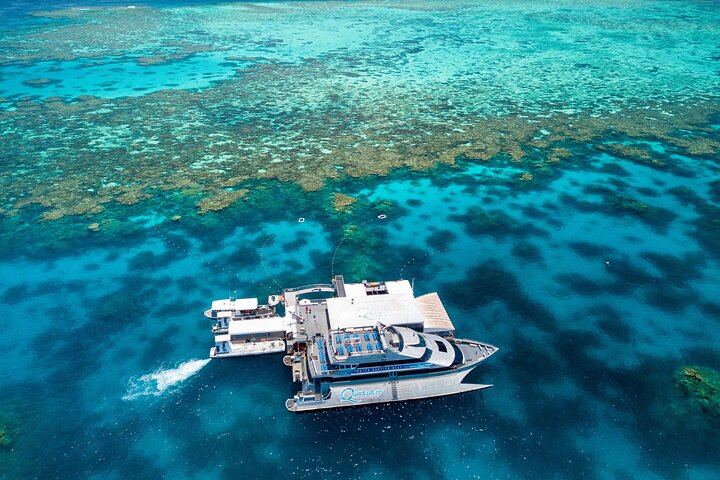
Quicksilver is the long-running reef operator that put Port Douglas on the Great Barrier Reef map, and its day cruise is the headline outer reef trip from town. A fast catamaran leaves the marina in the morning and takes about an hour and a half to reach a large pontoon moored at the Agincourt Ribbon Reefs, a chain of reefs on the very edge of the continental shelf. The water out here is deep blue, clear and rich with marine life, and the coral is healthier and more varied than on the inner reef. On the pontoon you can snorkel from a platform, take a guided snorkel safari, try an introductory dive, join a certified dive, ride a semi-submersible or watch fish from an underwater observatory. The strength of the trip is its infrastructure. Large pontoons mean shade, toilets, a lunch buffet and a stable base for families and less confident swimmers, and the crew handle everything from fins to stinger suits. The trade-off is that a bigger operator carries more passengers, so the pontoon can feel busy in the middle of the day. Look for the guided snorkel safaris that take smaller groups to quieter coral away from the platform.
The experience is easier to plan than to improvise. Check in at the marina before departure, collect your wristband, and settle in for the crossing, where a briefing explains safety, equipment and the options on offer. Once moored, you have around four hours at the reef. Choose snorkelling from the pontoon if you want the simplest option, the guided safari if you want to cover more coral, or an introductory dive if you have never breathed underwater and want a supervised first attempt.
Marine life you may meet includes giant clams, parrotfish, clownfish, reef sharks, turtles and, with luck, a Maori wrasse. Stinger season, from roughly November to May, requires a full-body suit, which is provided, and out on the outer reef the risk is lower than near the coast. Visibility varies with wind and swell, so a calm day is worth waiting for if your itinerary has flexibility.
Practical points
Take seasickness tablets before you board, because the crossing can be lively on windy days. Bring reef-safe sunscreen, a hat, a towel and a waterproof camera. If you are staying in Cairns, ask about the Cairns pickup option, which lengthens the day. Booking early is wise in the dry season from May to October, when reef trips fill up. If you can only do one reef trip, choose an outer reef day rather than the inner islands, and choose a smaller-group alternative if crowds bother you.
Think about how to spend the hours once you arrive. Many guests make the mistake of staying on the pontoon too long, when the best coral is often a short swim or a guided snorkel away. Take the semi-submersible when you want a rest from the water, since it shows the reef without getting wet and works well for grandparents or very young children. If you are certified, ask about the dive sites on the day, because crews choose them for conditions.
Underwater cameras and photo packages are often offered on board, though a simple waterproof phone case can capture good images. Eat a light breakfast, because a full stomach and a moving boat do not mix, and plan a quiet evening, as a day of sun and salt water tires everybody more than they expect.
What to expect
The experience
A fast catamaran crossing to a pontoon on the outer reef, with snorkelling, optional diving, a semi-submersible and lunch on board.
Best time
Calm, sunny days between May and October give the clearest water, though cruises run all year.
How long
Plan on a full day, with roughly four hours at the reef and an hour and a half each way by boat.
Tips
Take seasickness tablets in advance, wear a rash vest and book an introductory dive early if you want one.
Quick picks
- Best for
- First-time reef visitors who want healthy coral, good facilities and a well-run day.
- Families
- The pontoon gives children shade, a stable base and shallow snorkel areas.
- Couples
- Book the guided snorkel safari for quieter coral away from the platform.
- Pair with
- A Daintree day or a slow day on Four Mile Beach.
- Time needed
- A full day from marina departure to return.
Good questions
How long does the boat take to reach the reef?+
Roughly an hour and a half each way, depending on sea conditions and the destination reef chosen that day.
Can I dive if I am not certified?+
Yes, introductory dives are normally offered for an extra fee, and certified divers can join guided dives.
Is lunch included?+
Cruises normally include lunch and snorkel gear, but confirm inclusions when you book.
Will I get seasick?+
It depends on the weather. Take seasickness tablets before boarding if you are prone, as the crossing can be bumpy.
What is the best time of year?+
May to October is the dry season with calmer, clearer conditions, while November to May brings stingers, so suits are provided.