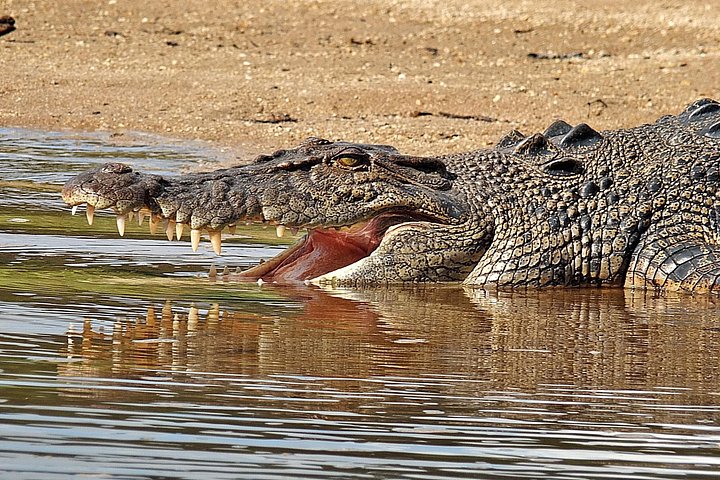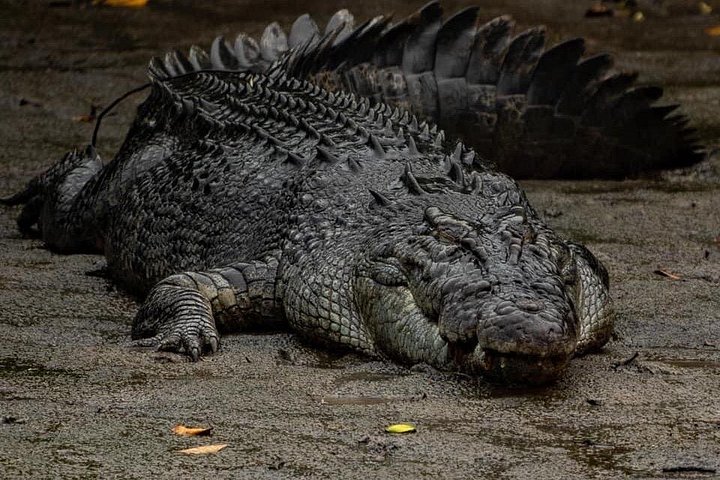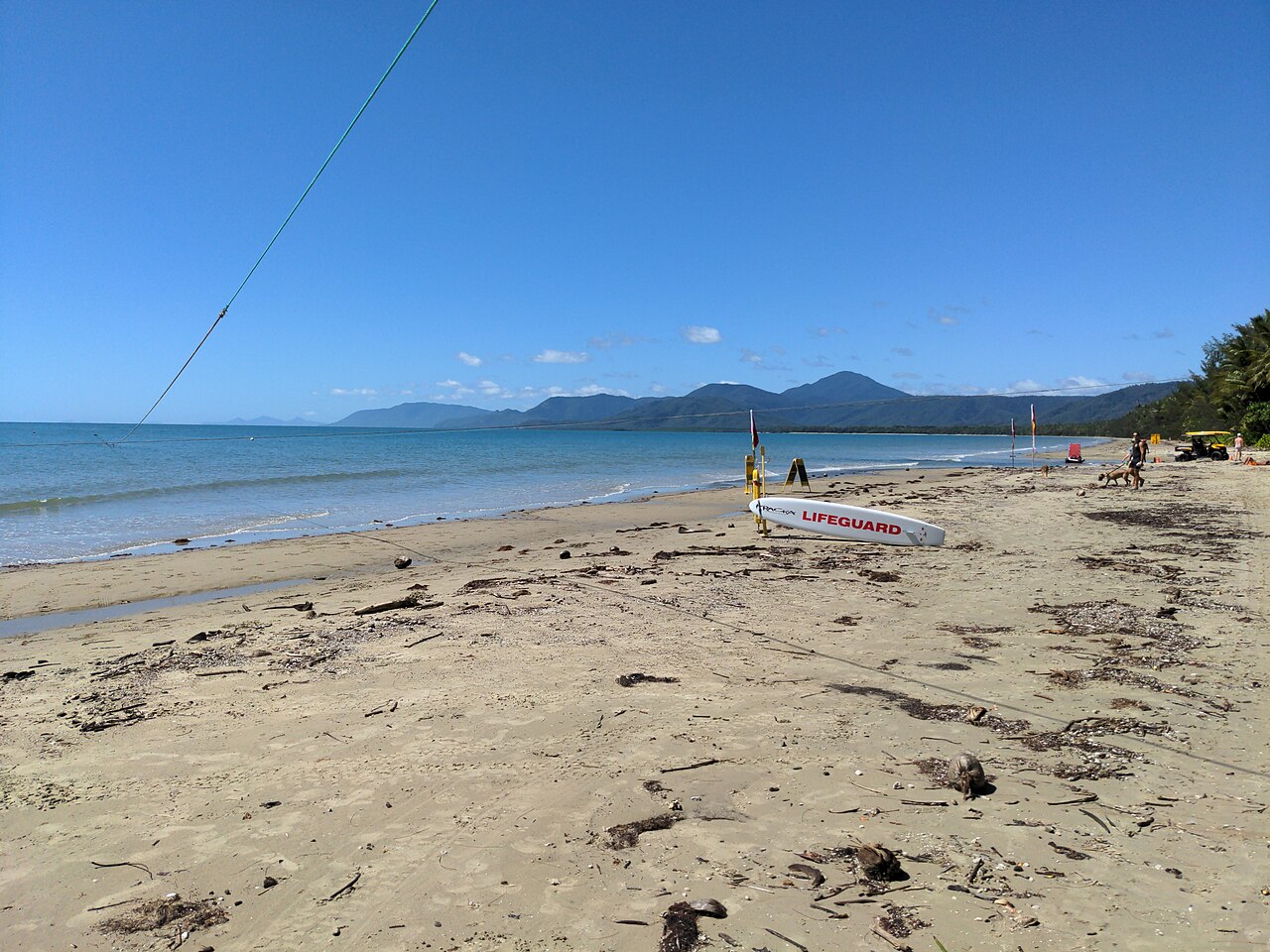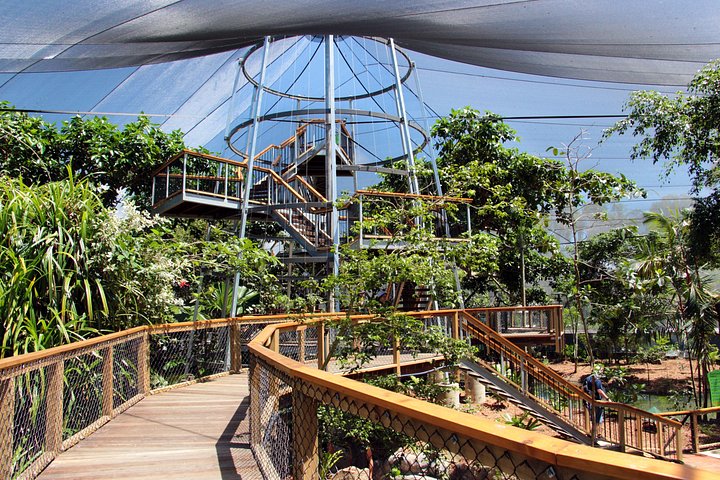
Wildlife Habitat is a purpose-built park just outside Port Douglas, designed so that visitors walk through three connected environments: wetlands, rainforest and grassy woodland. Each zone shelters the animals that live in that kind of country in the wild. In the wetlands, saltwater crocodiles, water birds and magpie geese share a lagoon, in the rainforest you meet cassowaries, tree kangaroos and pythons, and in the woodland kangaroos, wallabies and koalas rest in the shade. Many birds fly free in a large aviary, and keepers give talks and feeding sessions through the day, so you can learn about each species from people who look after them. The park has a strong conservation message and a relaxed pace. It is a particularly good stop for families with children, for travellers who would like to see a cassowary or a koala without the uncertainty of looking for one in the wild, and for anyone who wants a gentle morning before an afternoon on Four Mile Beach.
Timing makes a difference. The park opens in the morning and the best experience is early, when animals are most active and the temperature is lower. Keeper talks and feeding sessions run on a schedule, so check the day's timetable when you arrive and plan your route to catch the ones you care about most. Breakfast and lunch options with the birds are popular, and an early start gets you into the park before the tour buses arrive.
Interaction rules are straightforward. Some animals can be handled or patted, such as koalas and kangaroos, in controlled sessions, while others are viewed from boardwalks. Follow staff directions and keep a respectful distance from the cassowaries and crocodiles. Photography is welcome, but flash and sudden movements can unsettle animals.
Practical points
Wear a hat and sunscreen, bring water and wear comfortable closed shoes, since paths can be damp and wildlife is part of the landscape. The park is flat and mostly shaded, so it is easy for children, older travellers and anyone with limited mobility. It is a good wet-weather choice because much of the visit is under cover, and it makes a useful reference point for the wildlife you may see later on the Daintree River or in the rainforest.
Allow two to three hours, longer if you join several talks. Combining a morning at the habitat with an afternoon cruise or beach time makes a balanced day.
A few insider-style tips help you plan. Walk the habitat in order, starting with the wetlands, then the rainforest and the woodland, because the paths and the timetable are arranged that way. Join at least one keeper talk, since keepers know the animals as individuals and share stories that bring the species to life. Photographers will appreciate the early light in the aviary and the soft shade in the rainforest zone.
Children enjoy the chance to see animals close up, and the park usually has rules and guidance for handling and feeding, which staff will explain. The park is a good first stop for visitors who are nervous about meeting wildlife in the Daintree, as it provides context for cassowaries, crocodiles and reptiles. Combine the visit with a long lunch in town or an afternoon swim, and keep a hat and water in your bag.
What to expect
The experience
A self-guided walk through wetlands, rainforest and woodland habitats, with keeper talks, feedings and optional breakfast with the birds.
Best time
Early morning, when animals are most active and the temperature is lower.
How long
Two to three hours.
Tips
Check the talk timetable on arrival, wear a hat and closed shoes and arrive early.
Quick picks
- Best for
- Families and anyone who wants guaranteed wildlife sightings.
- Families
- Flat, shaded paths and hands-on moments suit children of all ages.
- Couples
- Go early for breakfast with the birds.
- Pair with
- Four Mile Beach or a Daintree River cruise.
- Time needed
- A morning.
Good questions
Will I see a cassowary?+
The park keeps cassowaries in a habitat where they are visible, which is far more reliable than looking for one in the wild.
Can I hold a koala?+
Koala and kangaroo encounters are offered in controlled sessions, with rules that vary, so check on arrival.
Is it good in the rain?+
Yes, much of the walk is shaded or covered, making it a good wet-weather option.
How long should I allow?+
Two to three hours, longer if you attend several talks.
Is it suitable for young children?+
Yes, the paths are flat and the animals are close.