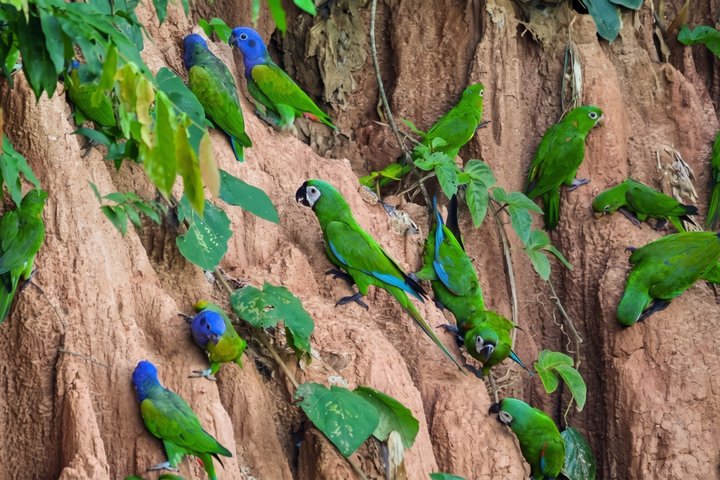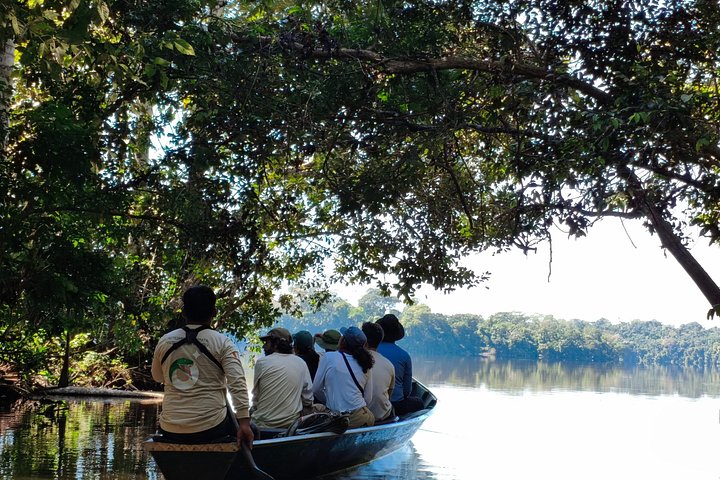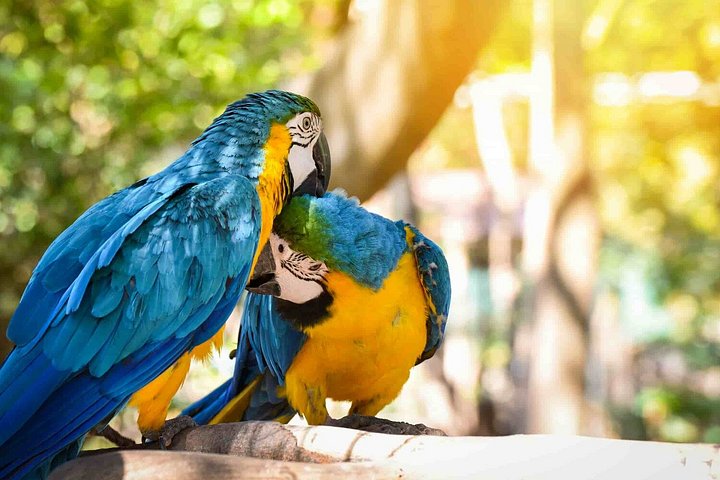
The Chuncho clay lick, known locally as a collpa, is a riverbank in the Tambopata area where parrots and macaws gather in large numbers to eat clay. Scientists still debate exactly why they do it, with the main ideas being that the clay helps neutralize plant toxins in their diet and supplies minerals such as sodium. For visitors the reason matters less than the spectacle: at the right moment the bank is covered with red-and-green macaws, scarlet macaws and many smaller parrots, and the noise and color are hard to forget. A full-day tour compresses the trip into one very long day. You leave town well before dawn, travel by road and then by boat along the Tambopata River, and reach a hide opposite the clay bank in time for the early morning activity. After the birds have had their fill you return in the same direction, usually with a meal along the way. It is demanding but it is the quickest way to reach one of the best clay licks in southeastern Peru.
Timing is everything at a clay lick. The birds tend to arrive soon after sunrise, often in waves, and activity can fade by mid-morning. They are cautious, and a passing hawk or a loud noise can send the whole flock into the air, so you wait quietly in the hide and let the show develop.
Weather matters too
On cloudy or rainy mornings fewer birds come down, and no operator can promise a peak performance on a given day. Treat a quiet morning as part of the experience and enjoy the forest birds around the hide.
The journey to reach the lick is long, so a one-day trip suits travelers who are comfortable with a very early alarm and several hours of transfers. Those who want to be at the hide with less rush often prefer a two-day version that sleeps nearby. Bring a light rain jacket, insect repellent, a hat, binoculars, a camera with a zoom lens and snacks, and wear quiet earth-toned clothing. A warm layer for the pre-dawn boat ride is useful even in a hot climate.
Check what the tour includes, such as breakfast, lunch, reserve or community fees and the transfers, and confirm the departure time the evening before. Travel conditions on the river and roads can change with the season, and the best months for clay lick activity are generally in the drier part of the year. If you have a flight out of Puerto Maldonado the same day, leave plenty of margin.
Planning notes. The clay lick sits well upriver from Puerto Maldonado, in a part of the Tambopata area reached by a long road section and then a river journey, which is why the day is so demanding. Expect to leave in the dark, eat breakfast on the way and sit in the hide for a good part of the morning before the return. Seasons matter: the drier months usually bring more reliable activity at the bank, while heavy rain can keep birds in the trees and make the road and river harder.
Do not plan anything important for the same evening, such as a flight, and keep a spare layer within reach. Photographers should bring a long lens and a fast shutter speed, because the birds explode into flight in a second. Observers without a camera may enjoy simply listening, since the noise of hundreds of macaws is half the experience. Please follow the guide on silence and movement, and never throw food or clay to attract birds.
What to expect
The experience
A full-day trip by road and river to a hide opposite the Chuncho clay lick for early-morning macaw watching.
Best time
The drier months from roughly May to October are usually best; clear mornings give the most activity.
How long
A very long day, with a pre-dawn departure and a return in the afternoon or early evening.
Tips
Wear quiet earth tones, bring binoculars and a zoom lens, and pack a warm layer for the early boat ride.
Quick picks
- Best for
- Birdwatchers and photographers who want a macaw spectacle without sleeping in the jungle.
- Families
- Possible for older children who can cope with a very early start and long transfers; check with the operator.
- Couples
- A memorable shared dawn that suits couples who love wildlife.
- Pair with
- A two-day version, Lake Sandoval or a lodge stay.
- Time needed
- One full day.
Good questions
Will the macaws definitely come to the clay lick?+
Activity depends on weather and the birds own routine, so no operator can guarantee it. Clear mornings are usually best.
Why do the birds eat clay?+
The leading ideas are that clay helps neutralize toxins in seeds and unripe fruit and supplies minerals, but it is still studied.
How early is the start?+
Very early, usually well before sunrise, so you reach the hide while the birds are most active.
Is a day trip too rushed?+
It is long but doable. If you prefer less transit pressure, a two-day trip sleeps closer to the lick.
What should I bring?+
Binoculars, a zoom lens, insect repellent, a rain layer, a warm layer for the boat and snacks.