Most first visits to Puglia stop at Bari, the trulli and the white hill towns, but the southern heel, known as Salento, deserves its own plan. It is a flatter, more spread-out land of olive groves, dry-stone walls, farm masserie and two very different coastlines: the cliffs and caves of the Adriatic side and the sandy bays of the Ionian side. Lecce, the Baroque capital, anchors the region, while Brindisi, Otranto, Gallipoli and Santa Maria di Leuca make up the main supporting cast. This guide explains how to organise a trip here and what is worth booking ahead.
Choose a base
Lecce is the best all-round base. Its golden Baroque centre is lively in the evening, restaurants are excellent and most of Salento is within an hour or so by road. Staying there lets you do day trips to Otranto, Gallipoli and Leuca and return for dinner. If you prefer the sea, Otranto and Gallipoli make beautiful bases with their own old towns, though they are quieter outside summer. A masseria in the countryside offers a third option, with space, a pool and quiet, as long as you have a car. Brindisi suits a one-night stop around a flight or ferry, and its walking tour is a good use of a few hours.
Lecce first
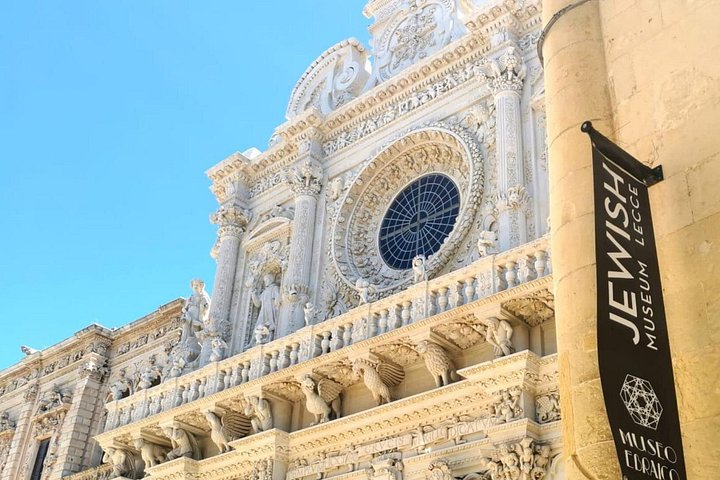
Give the city a full day. Start in the morning with the Baroque sights around Santa Croce, the cathedral square and the Roman amphitheatre, then join the food tour for lunch, trying pasticciotto and frisa. In the afternoon, try the papier-mâché workshop for something hands-on, then spend the evening in the lanes around the old town, where aperitivo hour runs into dinner. Lecce is compact and walkable, but stone paving can be slippery after rain, so wear shoes with grip.
The Adriatic coast
Otranto sits on the eastern coast and is famous for its cathedral mosaic floor and its turquoise water. From there, the coastal road runs south through Santa Cesarea Terme and Castro to Santa Maria di Leuca. The cliffs here hide sea caves, and the best way to see them is by boat. A short ride from Castro and a longer sailing from Leuca give two different views of the same limestone coast. Mornings are calmer and clearer, while the wind often rises in the afternoon, so book early and keep a spare day in case of rough seas.
The Ionian coast
On the western side, Gallipoli's island old town, joined to the mainland by a bridge, offers fish markets, a castle and a lively harbour. A boat excursion to the nearby island of Sant'Andrea, with a swim and an aperitif, is one of the nicest ways to spend a late afternoon. Beaches along this coast, such as those near Porto Cesareo and Torre Lapillo, have shallow, sandy bays, so they suit families and swimmers. In summer, parking and beach clubs fill up, so arrive early or choose shoulder-season weeks.
Food and wine
Salento is rich in simple, delicious food. Look for orecchiette and other hand-shaped pasta, fave e cicoria, fresh seafood, rustici pastries and the sweet pasticciotto. Red wine from the Negroamaro and Primitivo grapes dominates, with Primitivo di Manduria as the most famous name. A winery visit is a good way to spend a hot afternoon, and an olive oil mill tour fills a rainy morning. Make sure you arrange who will drive after a tasting.
Getting around
A car is the easiest way to explore Salento, because trains and buses link only the main towns and run less often than in the north. Roads are generally good, but narrow lanes in old towns and restricted traffic zones can catch out the unwary, so park outside and walk in. If you do not drive, base yourself in Lecce and use organised day tours for the coast and the countryside. Distances look short on a map but take longer than expected, so plan one big excursion per day.
When to go
July and August are hot, busy and expensive, though perfect for swimming. May, June and September are warm and easier, with sea temperatures that are still pleasant. Spring brings wildflowers and green fields, while autumn has harvest and mild days. Winter is quiet, with many seaside businesses closed, but Lecce remains lively and the light on the Baroque stone is wonderful. Wherever you stay, leave time for a slow lunch, because the point of Salento is not to rush.
A simple three-day shape
Day one in Lecce for the city and its food. Day two on the Adriatic coast, with Otranto, a boat ride at Castro or Leuca and lunch by the water. Day three on the Ionian side, with Gallipoli, its island old town and a late-afternoon boat to Sant'Andrea. Add a winery or an olive mill when you want a slower day, and extend with the Itria Valley if you have more time. With this rhythm you see the best of the heel without exhausting yourself.