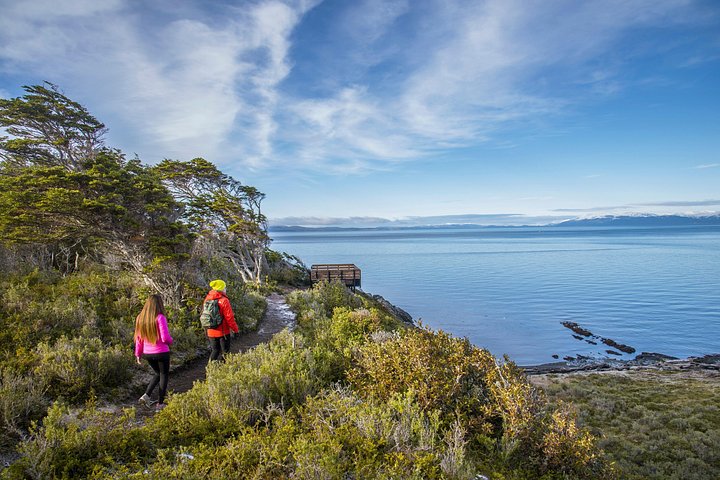
Fuerte Bulnes is the place where modern Punta Arenas began. In 1843 the Chilean government sent a small expedition to claim the strait, and the settlers built a wooden fort on a bluff south of the present city, naming it after President Manuel Bulnes. Within a few years the site proved too exposed and short of timber, and the colony moved north to the spot that became Punta Arenas. What stands today is a reconstruction of the original palisaded fort, with a flagpole, wooden barracks and cannon looking out over the strait. It sits inside the Strait of Magellan Park, a protected stretch of coast with beech and lenga forest, wild beaches and viewpoints, about an hour's drive south on the road that ends near the southern tip of the continent. Nearby are the ruins of Puerto del Hambre, the Port Famine settlement where Spanish colonists founded Rey Don Felipe in 1584 and where most of them starved, a grim story that gives the coast its name. The excursion typically takes a half day, combines history with a coastal drive, and often adds a walk along the shore or a stop at a monument. It suits travellers who enjoy stories, sea air and uncrowded landscapes.
The fort is small, and the point is the setting rather than the architecture. A short walk from the car park brings you through the gate into a compact enclosure with wooden buildings, a replica of the early garrison, and a platform with cannon aimed at the water. Information boards and the guide tell how the first colonists arrived on the schooner Ancud, how they dealt with cold and hunger, and why the settlement moved.
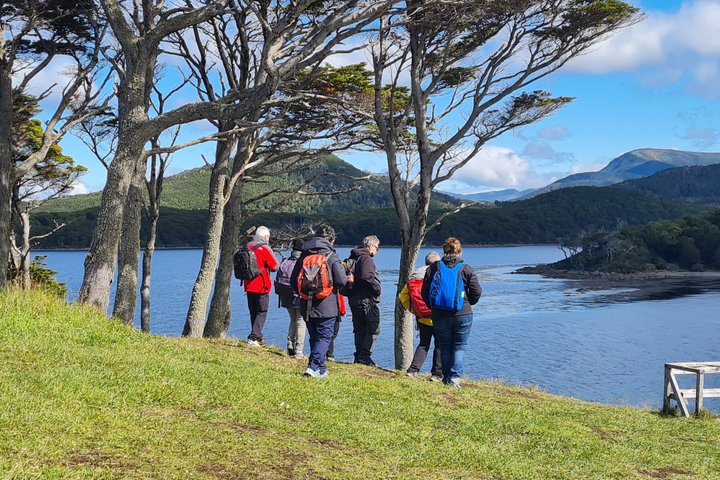
The view over the strait is the highlight: grey-green water, distant mountains on Tierra del Fuego and, on clear days, the sense of standing at a gateway between oceans.
Beyond the fort, the Strait of Magellan Park invites a longer look. Short trails lead through wind-sculpted forest and to beaches strewn with driftwood, and the road continues to Puerto del Hambre, where a monument and the remains of the Spanish settlement mark the site of one of the darkest chapters of colonial history. Tours may include a visit to a mirador, a stop at the Bahia Buena shore or a short hike, depending on weather and operator.
Wear sturdy shoes, because the paths can be muddy, and bring a windproof layer. The wind can be harsh even in summer, and weather changes quickly.Practical considerations include the opening hours of the fort, which vary by season, and the cost of entry to the park or fort, usually paid separately. Tours often run in combination with a city tour or a visit to the Magallanes reserve, which makes for a good half-day or full-day programme.
Cruise passengers frequently take this trip when their ship docks in Punta Arenas, so check timing carefully if you travel that way. If you are renting a car, the road south is paved for part of the way and then gravel, so a vehicle with decent clearance is helpful. For those without a car, the guided excursion is the simplest option and adds the context that makes the ruins meaningful.
What to expect
The experience
A guided half-day drive south of Punta Arenas to the reconstructed fort, with time to walk the coast and visit the Puerto del Hambre ruins.
Best time
Any season, though summer gives longer light and the best chance of clear views across the strait.
How long
Four to five hours including the drive.
Tips
Wear sturdy shoes and a windproof layer. Carry cash in case entry fees are paid separately, and check fort opening hours for your dates.
Quick picks
- Best for
- History fans and anyone who wants a scenic half-day close to the city.
- Families
- Open space to run and a fort to explore keep children interested.
- Couples
- Quiet shoreline walks and wide views.
- Pair with
- The Regional Museum, which tells the wider story of the region.
- Time needed
- Half a day.
Good questions
What is Fuerte Bulnes?+
It is a reconstruction of the wooden fort built in 1843 when Chile claimed the Strait of Magellan. The settlement moved north soon after and became Punta Arenas.
How far is it from Punta Arenas?+
It is roughly an hour south by road, with the final stretch on gravel in places.
What is Puerto del Hambre?+
It is the site of the Spanish settlement of Rey Don Felipe, founded in 1584. Most colonists starved, which gave the place its name, Port Famine.
Do I need a guide?+
A guided tour adds context and removes the need to drive on gravel. Independent travellers can also visit by hire car or taxi.
Is it suitable for children?+
Yes. The fort is compact and the coast offers room to explore, though the wind can be strong.