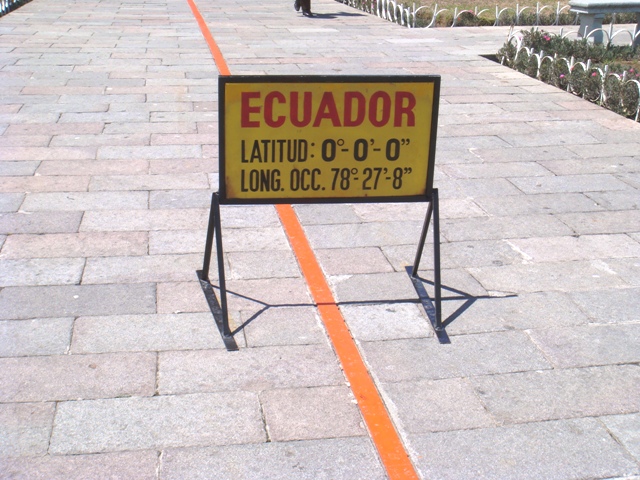
Mitad del Mundo is the equator monument that put Ecuador on the map, quite literally, since the country is named for the line that runs through it. The site sits in San Antonio de Pichincha, roughly half an hour to an hour north of central Quito depending on traffic. A tall stone monument crowns a pleasant plaza surrounded by small museums, restaurants and craft shops, and a painted line on the ground marks the equator for photographs. Visitors often learn the quirks in the telling: the line commemorated here was surveyed in the eighteenth century by a French geodesic mission, while modern GPS places the true equator a short distance away, which a nearby site museum makes a point of showing with demonstrations of the Coriolis effect, balancing an egg and walking the line. That mix of monument, science and fun makes it a good family stop. Booking here is via a Viator day trip that pairs the monument with the Pululahua crater, so transport is taken care of and you can see both without a car. Go in the morning, when skies are clearer and it is less busy, and allow around two to three hours at the site itself.
What you will see: the main monument and plaza, a museum inside the tower with an exhibition on the peoples of Ecuador, small shops, restaurants and an area that recreates a colonial-style village. The monument is the iconic backdrop, but many visitors enjoy the quirky experiments and demonstrations at the nearby private museums even more. Entry arrangements and exhibits vary, so ask your guide what is included in your tour.
Why a tour makes sense: the site is outside the city, and a day trip handles transport and timing. The Pululahua crater, a volcanic caldera that is inhabited and farmed, is usually combined with the monument because it is only a short drive away, and the views from the rim are spectacular on a clear morning. Clouds can fill the crater by midday, so mornings are the better bet.
Practical tips: wear sun protection, since you are exposed on the equator at altitude, and bring a light jacket for the wind. Bring small cash for snacks and souvenirs. If you prefer a longer day, combine the equator with the TelefériQo and the old town in a full-day city tour. Check the tour description for what is included, such as entrances, lunch or a guide, before you book.
What to expect
The experience
A guided half-day trip north of Quito to the equator monument and plaza, usually combined with the Pululahua crater viewpoint.
Best time
Morning, when skies are clearer and the crowds and clouds are lighter.
How long
Allow a half day including transport; about two to three hours at the site itself.
Tips
Bring sun cream, a light jacket and a little cash for snacks, and ask what entry fees are included in your tour.
Quick picks
- Best for
- First-timers and families who want the classic equator photograph with a bit of science.
- Families
- A hit with children thanks to the hands-on demonstrations, open plaza and easy walking.
- Couples
- Pair the monument with the Pululahua crater rim for a quieter, scenic stop.
- Pair with
- The TelefériQo, the Historic Centre, or a morning in the old town.
- Time needed
- Half a day with transfers.
Good questions
Where is Mitad del Mundo?+
It is in San Antonio de Pichincha, roughly half an hour to an hour north of central Quito depending on traffic. Most visitors go by tour, taxi or a combined day trip.
Is the monument on the real equator?+
The monument marks a line surveyed in the eighteenth century, while GPS places the true equator a short distance away. A nearby museum is known for showing the difference with demonstrations.
How long should I plan?+
Plan on two to three hours at the site, and a half day in all with transport and a stop at the Pululahua crater.
Is it good for children?+
Yes, the open plaza, the demonstrations and the novelty of standing in both hemispheres appeal to most children. Bring sun protection and snacks.
What is the best time to go?+
Go in the morning for clearer skies, fewer clouds in the Pululahua crater and smaller crowds. Weekends can be busier.