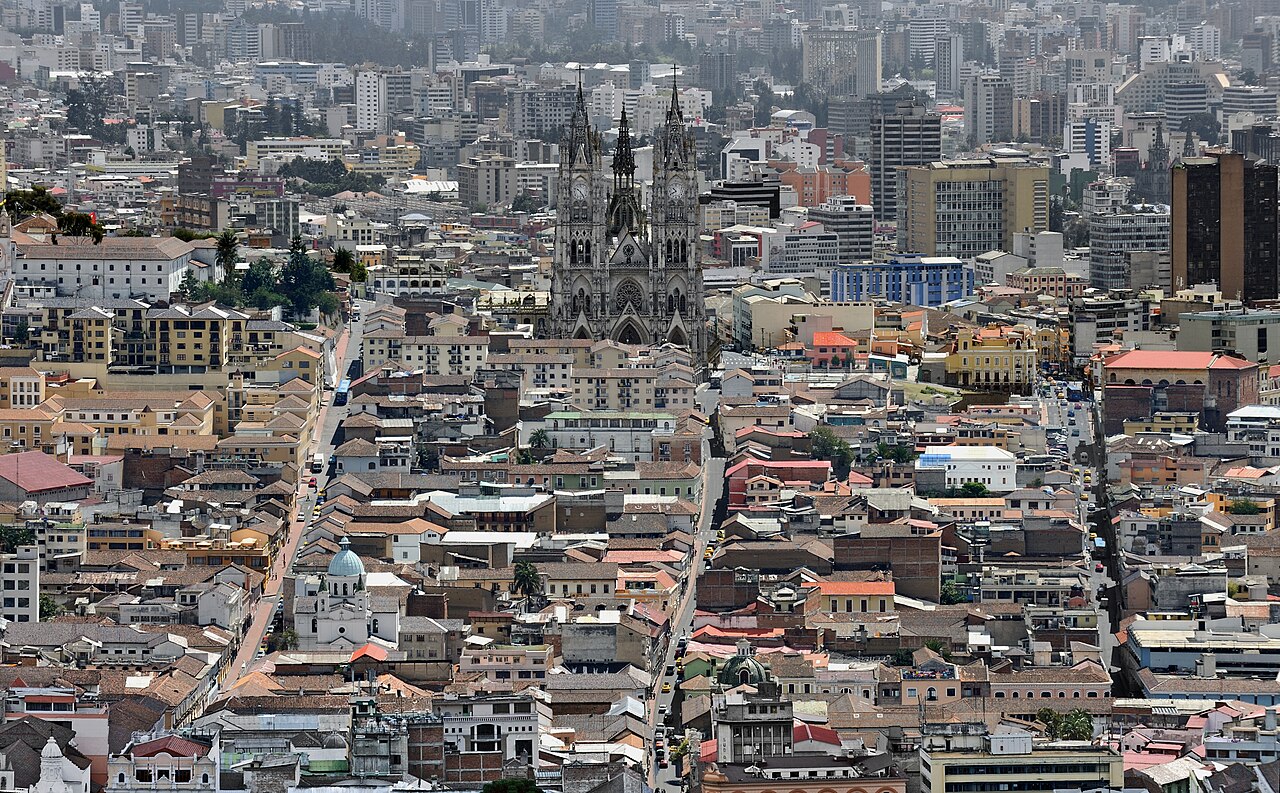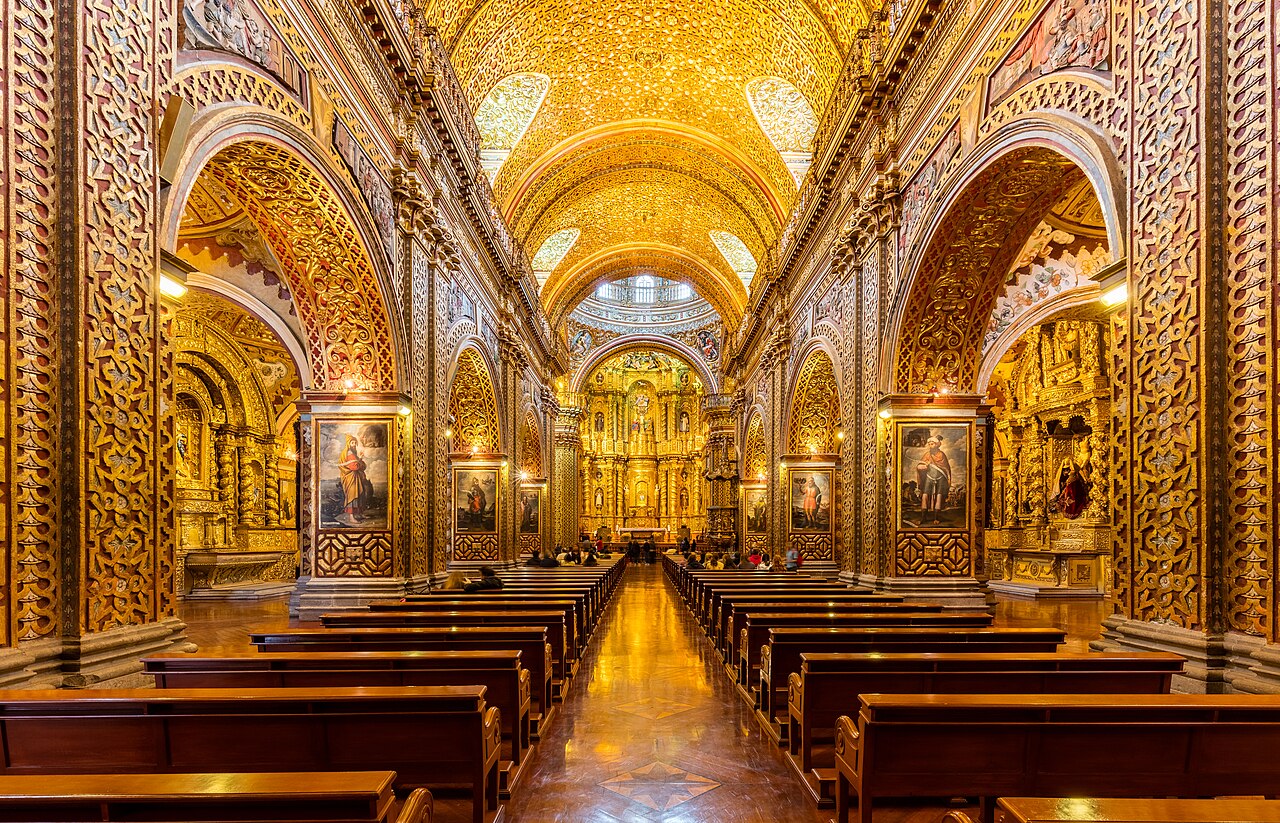
Quito's Centro Histórico is the reason many travellers come to Ecuador's capital at all. UNESCO inscribed the City of Quito in 1978, among the very first group of World Heritage listings, and the old town still reads as a working colonial city rather than a museum. Narrow streets climb between whitewashed buildings with carved wooden balconies, and the skyline is a thicket of church towers and domes. Plaza Grande, the political and social heart, is flanked by the cathedral, the Carondelet presidential palace and the archbishop's palace, and it is where you will see local families, shoe-shiners and office workers cross paths all day. Within a few blocks are the Baroque interior of La Compañía, the vast Franciscan complex on Plaza San Francisco, the pedestrian lane of La Ronda and a dozen smaller churches, convents and museums. Everything is walkable, but the altitude and the slopes are real, so pace yourself. Mornings are the best time for the plazas and churches, when the light is clear and the lanes are calm, while evenings bring a lively crowd to La Ronda. Plan on a half day at least, and a full day if you want to step inside several churches and museums.
Why it matters: Quito grew on the foundations of an Inca-era settlement and was rebuilt by the Spanish in the sixteenth century, and the Quiteña school of art, a blend of European and Andean styles, filled its churches with sculpture, painting and gold leaf. That is why the old town feels so dense with detail. Many of the buildings you pass are still homes, shops and offices, and the centre has been through decades of restoration programmes that pedestrianised streets and renewed facades.
How to see it: start at Plaza Grande, walk to Plaza San Francisco, step into La Compañía, then follow Calle Juan de Dios Morales, known as La Ronda, for a coffee or a snack. If you can, visit on a weekend when streets are closed to traffic in places and more people are out strolling. A guided walk helps with the layered history, and a food-focused tour adds markets and tastings. Bring layers, a hat and sun protection, because the sun is strong at altitude and a chilly breeze can arrive in minutes.
Good to know: keep valuables out of sight and stay on the busier, well-lit streets after dark, as in any capital. Taxis and ride-hailing are inexpensive for getting in and out. Some churches charge a small entry fee or limit photography, and opening hours vary by day, with many closing for midday or on certain holidays, so check before you plan a tight route.
What to expect
The experience
A self-guided walk through the plazas, churches and lanes of the colonial centre, with optional paid entries to individual churches and museums.
Best time
Morning for clear light and quiet churches, and early evening for the atmosphere on La Ronda.
How long
Four hours is a good minimum; a full day lets you enter several churches and stop for lunch.
Tips
Carry water, wear comfortable shoes for the slopes and take things slowly while you adjust to the altitude. Keep phones and cameras close in crowds.
Quick picks
- Best for
- Every first-timer, because the old town is the heart of the city and costs nothing to explore.
- Families
- Good for children who like plazas and pigeons, but the hills and altitude make a stroller or short stops worthwhile.
- Couples
- Wander Plaza Grande and La Ronda at dusk, then settle in for dinner in a restored colonial house.
- Pair with
- The TelefériQo for mountain views, La Compañía de Jesús, and the Basílica del Voto Nacional.
- Time needed
- Half a day minimum; a full day if you enter churches and museums.
Good questions
Is Quito's Old Town safe to visit?+
Yes, during the day it is busy and generally comfortable for visitors, with a visible police presence around the main plazas. As in any capital, keep valuables out of sight and take a taxi rather than walking quiet streets late at night.
How long do I need in the Historic Centre?+
Half a day covers the main plazas and one or two churches. A full day lets you add museums, lunch and La Ronda at a relaxed pace.
Will altitude affect me?+
Quito sits at around 2,850 metres, so some visitors feel breathless or tired on the hills during their first day. Drink water, go slowly and avoid heavy meals and alcohol on day one.
Can I go inside the churches?+
Most major churches are open to visitors, though some charge a small fee and many have limited hours or restrict photography inside. Dress modestly and check times in advance.
Is a guided tour worth it?+
A guide adds a lot to the history and the Quiteña art, and food tours add tastings and market stops. You can also see the highlights on your own using a simple loop between the plazas.