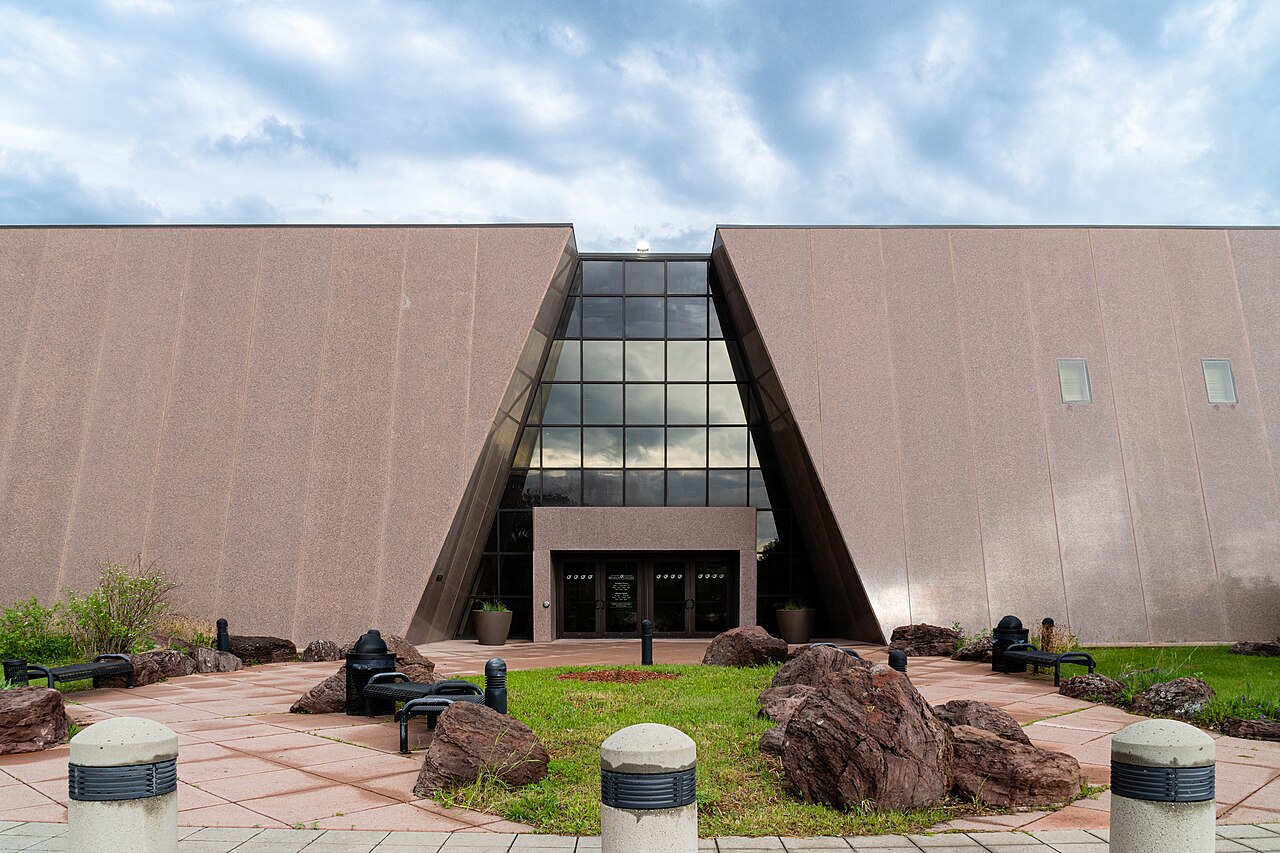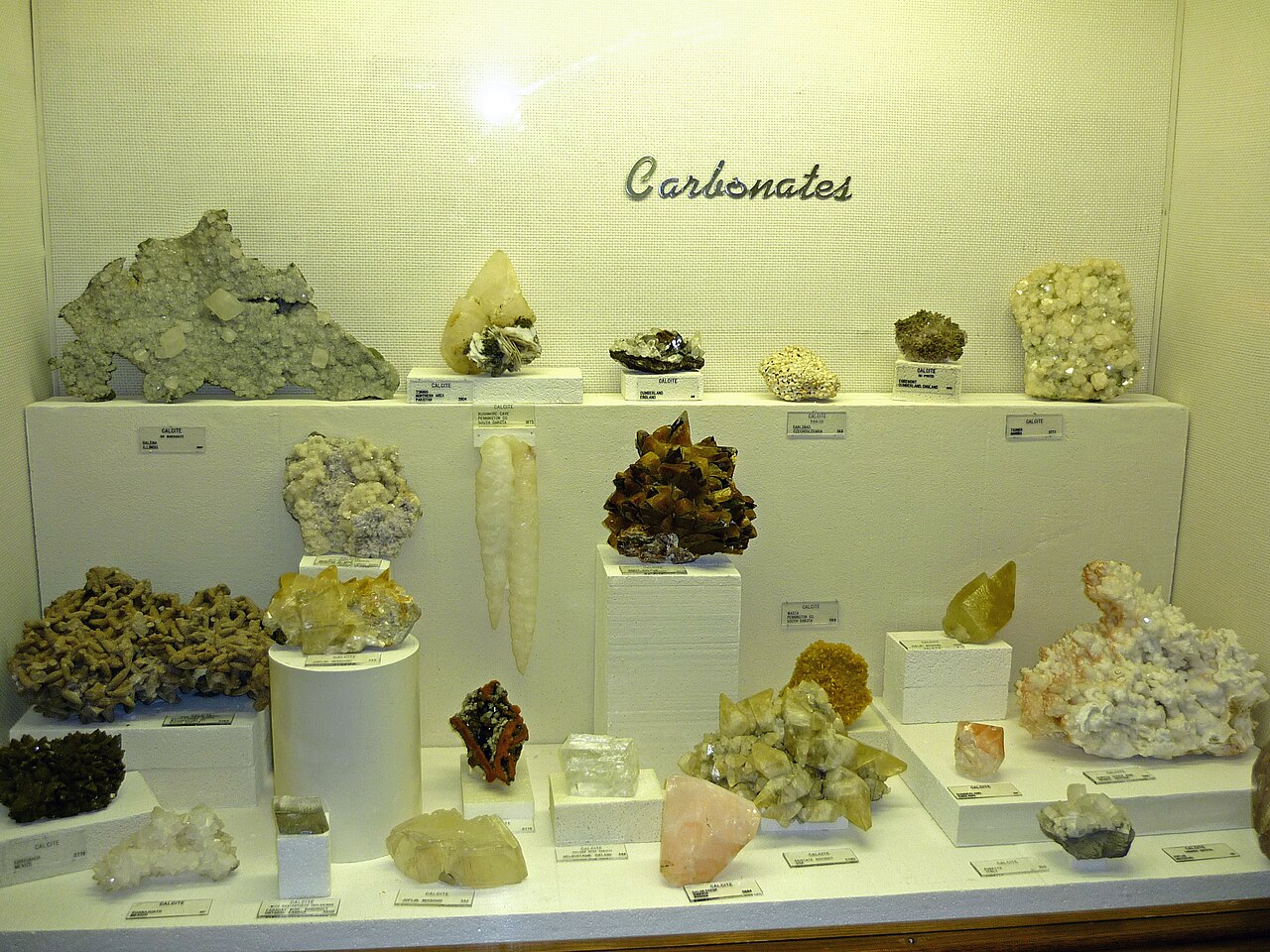
The Museum of Geology sits on the third floor of the O'Harra Building on the South Dakota Mines campus, and it has been collecting and displaying specimens since 1885, which makes it one of the oldest museums in the region. The collection is a love letter to the geology and paleontology of the West. Mounted skeletons of dinosaurs, mammals, marine reptiles and fish fill the floor, and dozens of rare fossils from the White River Badlands are arranged in time-specific dioramas that show how the ancient landscape looked and who lived in it. On the mineral side, the Hall of South Dakota Minerals showcases the state's geology, a meteorite collection reminds visitors that the story extends beyond Earth, and a fluorescent mineral room glows under ultraviolet light. The address is 501 East Saint Joseph Street, a short distance from downtown, and the museum is run by the university rather than by a tourism operator, which gives it an unpolished, scholarly character. It is a museum for people who like to look closely rather than rush past, and the fossils connect directly to the Badlands landscape many visitors plan to drive through.
Admission is a suggested donation rather than a fixed fee, and the posted figures put adults at about ten dollars, seniors and veterans a little lower and children less, with school and private tours priced separately and booked at least a day ahead. Treat those numbers as a guide and confirm them with the museum before you go.
Hours follow the academic and tourist calendar: from Memorial Day the museum opens Monday through Saturday with a longer day, and from Labor Day it shifts to shorter hours, and it is closed Sundays and on federal holidays. Because it is on the third floor of a campus building, ask about elevator access if anyone in your group needs it.
The best visit is unhurried and curious. Begin with the fossils, since the dioramas are the clearest way to understand how the Badlands formed and what lived there, then move to the Hall of South Dakota Minerals and the meteorites before ending in the fluorescent room, which tends to be a hit with children and adults alike.
Plan for about an hour, and add time if someone in your group is a rock or fossil enthusiast. The exhibits are labeled for general audiences but reward people who stop to read. If you can, visit before you drive through Badlands National Park, because the museum gives the landscape a context that makes the road trip richer.
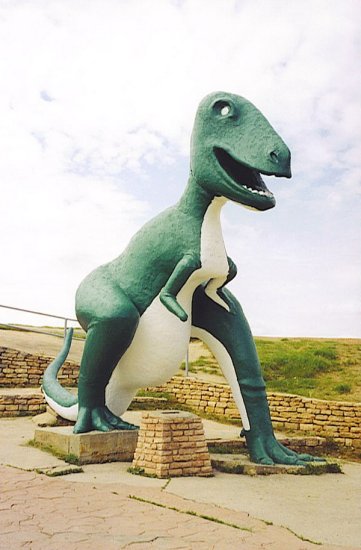
As part of a Rapid City plan, the Museum of Geology is an easy rainy-day choice and a good complement to the Journey Museum, which tells the human story of the hills. Together they form a pair of indoor stops that can fill a half day without a long drive. It is also a sensible stop for families with school-age children who are curious about dinosaurs after Dinosaur Park, and for adults who want a quiet counterpoint to the theme-park energy of the Highway 16 corridor.
Parking on a university campus can vary by day and season, so check for guidance when you plan, and consider combining the visit with a downtown meal, since the campus is close to the city center.
What to expect
The experience
A self-guided university museum with mounted skeletons, Badlands fossil dioramas, a minerals hall, meteorites and a fluorescent mineral room.
Best time
Any weekday or Saturday; closed Sundays and federal holidays. Hours are longer after Memorial Day and shorter after Labor Day.
How long
About an hour.
Tips
Visit before you drive through the Badlands for context. Ask about elevator access, since the museum is on the third floor. Admission is a suggested donation.
Quick picks
- Best for
- Fossil and mineral fans, curious families and rainy-day planners.
- Families
- Strong for school-age children, especially the skeletons and the glowing mineral room.
- Couples
- A quiet, thoughtful stop rather than a romantic one.
- Pair with
- The Journey Museum, Dinosaur Park or a downtown meal.
- Time needed
- About an hour.
Good questions
Where is the museum?+
On the third floor of the O'Harra Building at 501 East Saint Joseph Street on the South Dakota Mines campus in Rapid City.
What can I see?+
Mounted skeletons of dinosaurs, mammals, marine reptiles and fish, Badlands fossil dioramas, the Hall of South Dakota Minerals, a meteorite collection and a fluorescent mineral room.
How much does it cost?+
Admission is a suggested donation, with adults at about ten dollars and lower amounts for children, seniors and veterans. Confirm current figures with the museum.
When is it open?+
Monday through Saturday, with longer hours after Memorial Day and shorter hours after Labor Day. It is closed Sundays and federal holidays.
Is it good for rainy days?+
Yes. It is fully indoors and takes about an hour, which makes it an easy weather backup.