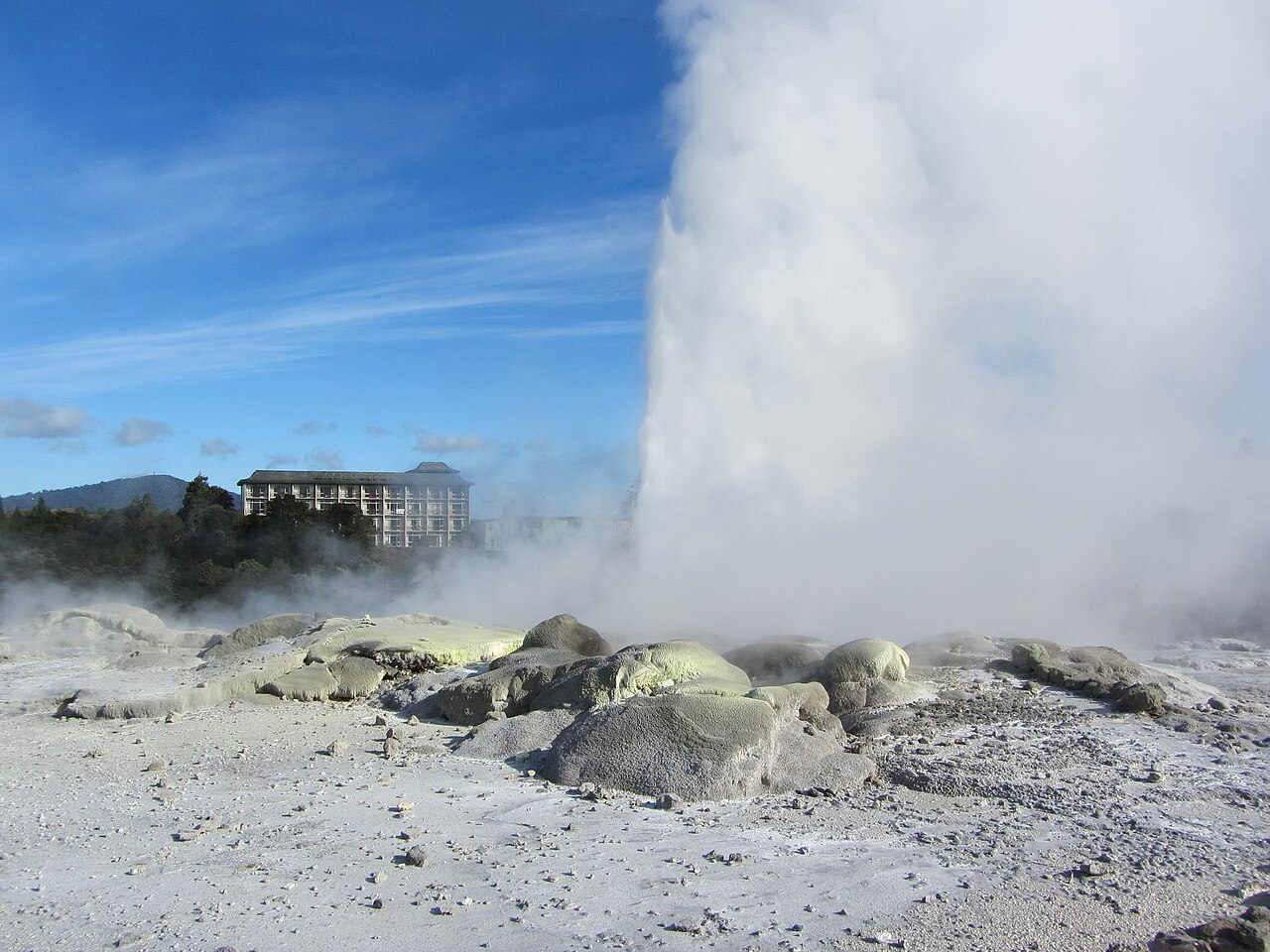
Hell's Gate, known in te reo Māori as Tikitere, is the most raw and unpolished of Rotorua's geothermal parks. Where Wai-O-Tapu is about colour and Te Puia is about culture, Hell's Gate is about heat, sound and smell. A loop track of about an hour takes you past boiling mud pools, roaring steam vents, a mud volcano, a lake of bubbling water and the Kakahi Falls, a hot waterfall that is often described as the largest of its kind in the southern hemisphere. The reserve sits about fifteen minutes from the city centre on the road towards Whakatāne, so it is easy to reach by car or on a short transfer. The name is said to have been given by the playwright George Bernard Shaw after a visit in the 1930s, and the landscape does look like the edge of something. The geothermal walk is the entry ticket most visitors start with, and it can be combined with a soak in the sulphur spa and a mud bath if you want to get properly involved.
The walk is self-guided, with interpretive signs that explain how each feature formed and what it meant to the local people. The land has long been associated with Māori healing traditions, and the mud and sulphur-rich water were used for treating skin complaints and aches. Today you can try it yourself: the mud bath involves sitting in warm, silky volcanic mud and then rinsing off in a sulphur pool, and many visitors say their skin feels noticeably softer afterwards.
It is a fun, slightly silly experience that works well for couples and groups of friends, and it is a good contrast with the more polished spa experiences in town.
Timing matters. The reserve is at its most atmospheric on cool or damp mornings when the steam hangs over the pools, and the quiet hours either side of the middle of the day are usually calmer than the middle of the day itself. If you plan to bathe, allow extra time on top of the walk, and ask whether the spa side needs a separate reservation in busy periods.
Hell's Gate pairs naturally with a drive to Lake Tarawera or a visit to the Waimangu valley, though it is a good idea not to schedule more than two geothermal parks in a day, because the smell and the heat can start to wear on younger children.
Practical points
Wear closed shoes with a good grip, because the paths can be damp and slippery near the vents, and keep to the marked trail at all times, as the ground beside the pools is hot enough to cause serious burns. Bring a towel and swimwear if you want to use the mud bath, along with a change of clothes, because the sulphur smell clings to fabric.
Water and sun protection are useful in summer. The terrain is mostly gravel and boardwalk with a few gentle slopes, so it suits most fitness levels, but strollers and wheelchairs may find some stretches awkward. Compared with the bigger parks, Hell's Gate rewards a slower pace: stop at each feature, read the stories and let the sounds and smells sink in.
Think of Hell's Gate as the thoughtful counterpart to the showier parks. There are fewer built attractions and more time to stand and listen, and the stories told on the signs about local healing traditions and the long relationship between the people of the area and the land give the visit a depth that goes beyond the steam. Anyone who has already seen one of the bigger geothermal parks will find that the mud volcano and the hot waterfall here offer something genuinely different, and the optional spa makes it easy to turn a short outing into a relaxing half day.
What to expect
The experience
A self-guided walk of about an hour around a loop track of steaming pools, a mud volcano and a hot waterfall, with an optional mud bath and sulphur spa afterwards.
Best time
Cool mornings for thick steam and fewer people, or late afternoon if you are adding a spa soak.
How long
About one hour for the walk, two to three hours with a mud bath and spa.
Tips
Wear closed shoes, bring a towel and swimwear for the mud bath, and stay on the marked paths.
Quick picks
- Best for
- Travellers who want a rawer, more hands-on geothermal experience than the larger parks.
- Families
- Children enjoy the bubbling mud and the waterfall, but keep them close on the paths and check the age rules for the spa.
- Couples
- A mud bath and a sulphur soak is a memorable, slightly silly shared experience.
- Pair with
- Waimangu Volcanic Valley or Mount Tarawera for a day exploring the volcanic landscape east of the city.
- Time needed
- Allow two hours for the walk, or half a day with the spa.
Good questions
Why is it called Hell's Gate?+
The name is said to have come from the playwright George Bernard Shaw, who visited in the 1930s and felt the steaming landscape looked like the entrance to the underworld. Its Māori name is Tikitere.
How long does the walk take?+
The loop track normally takes about an hour at an easy pace, longer if you stop to read the signs and watch the pools.
Can I try the mud bath?+
Yes, the mud bath and sulphur spa are available as an add-on to the walk. Bring swimwear and a towel, and confirm whether you need a reserved time in busy periods.
Is Hell's Gate suitable for children?+
Yes, children generally enjoy it, but supervise them closely. The ground beside the pools is hot and the paths can be slippery, so hold hands near the edges.
How far is it from central Rotorua?+
It is roughly fifteen minutes by car northeast of the centre on the road towards Whakatāne, so a taxi, rental car or tour transfer all work.