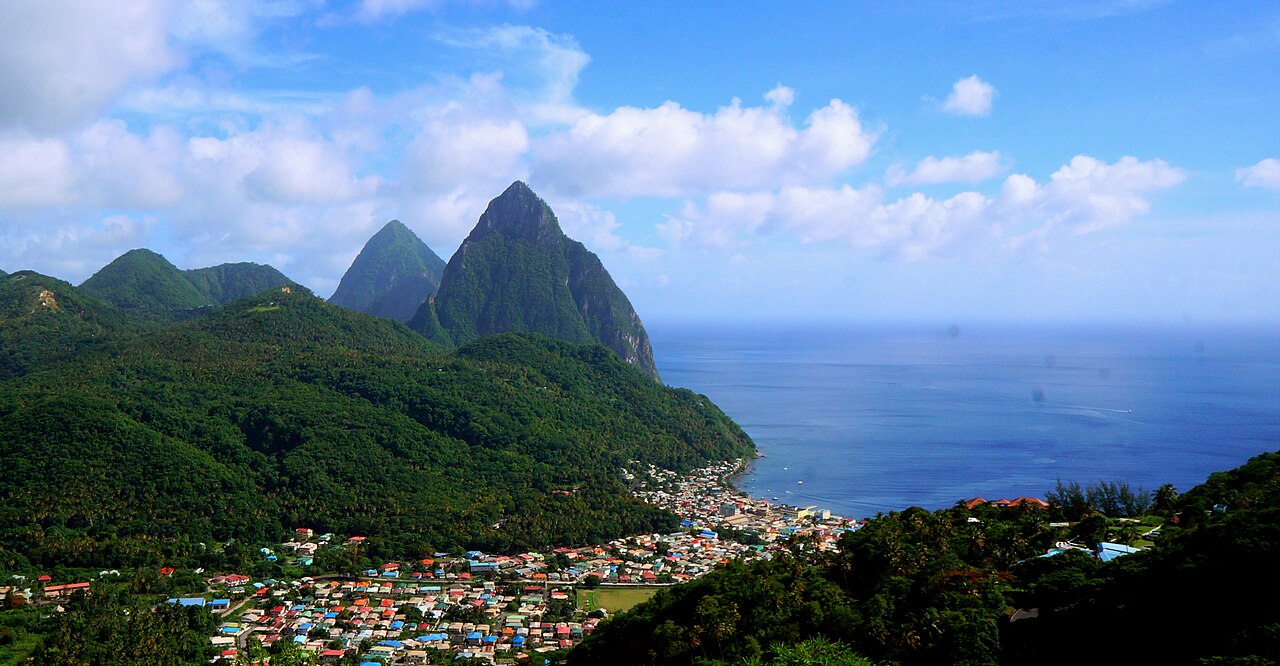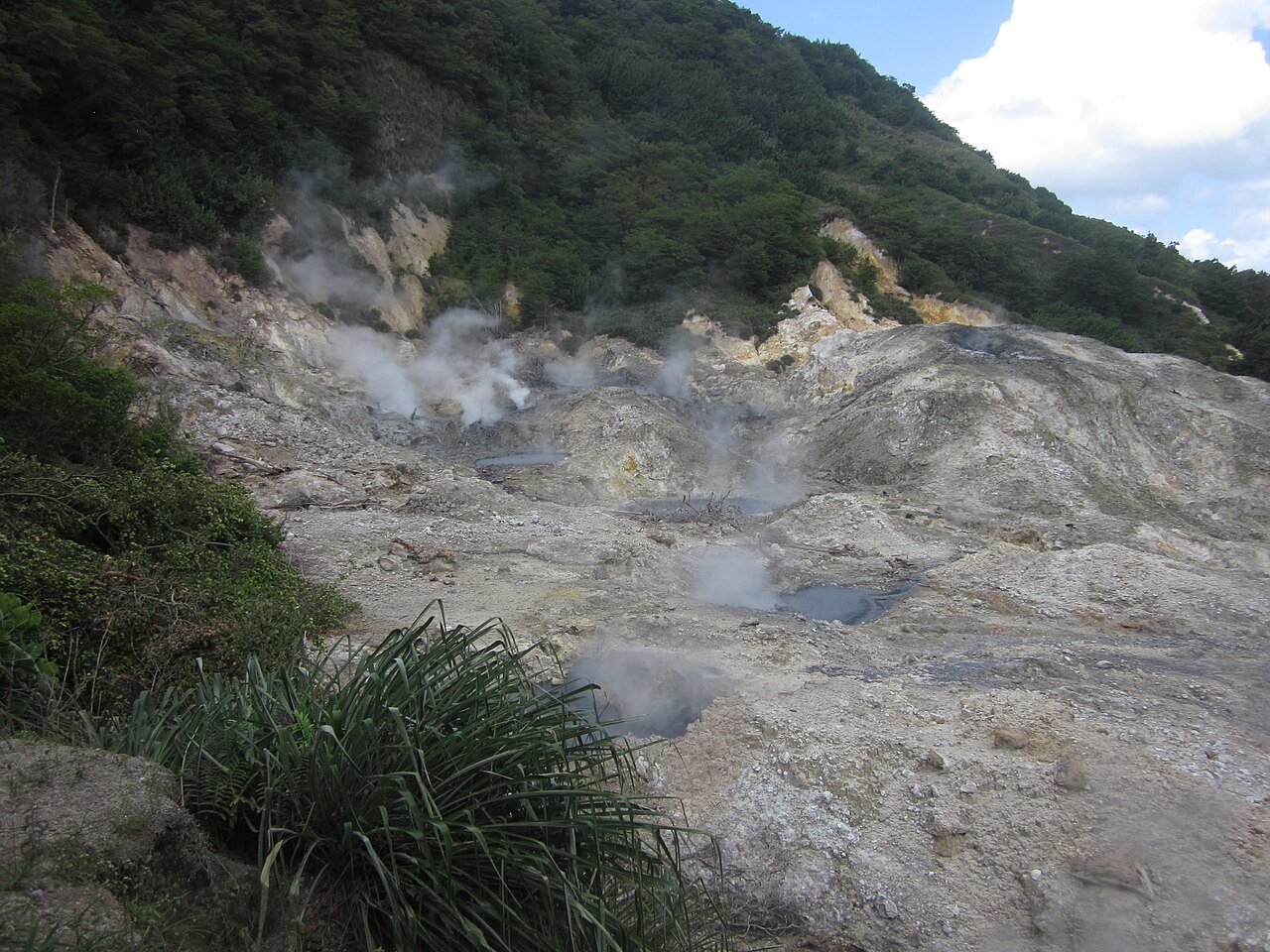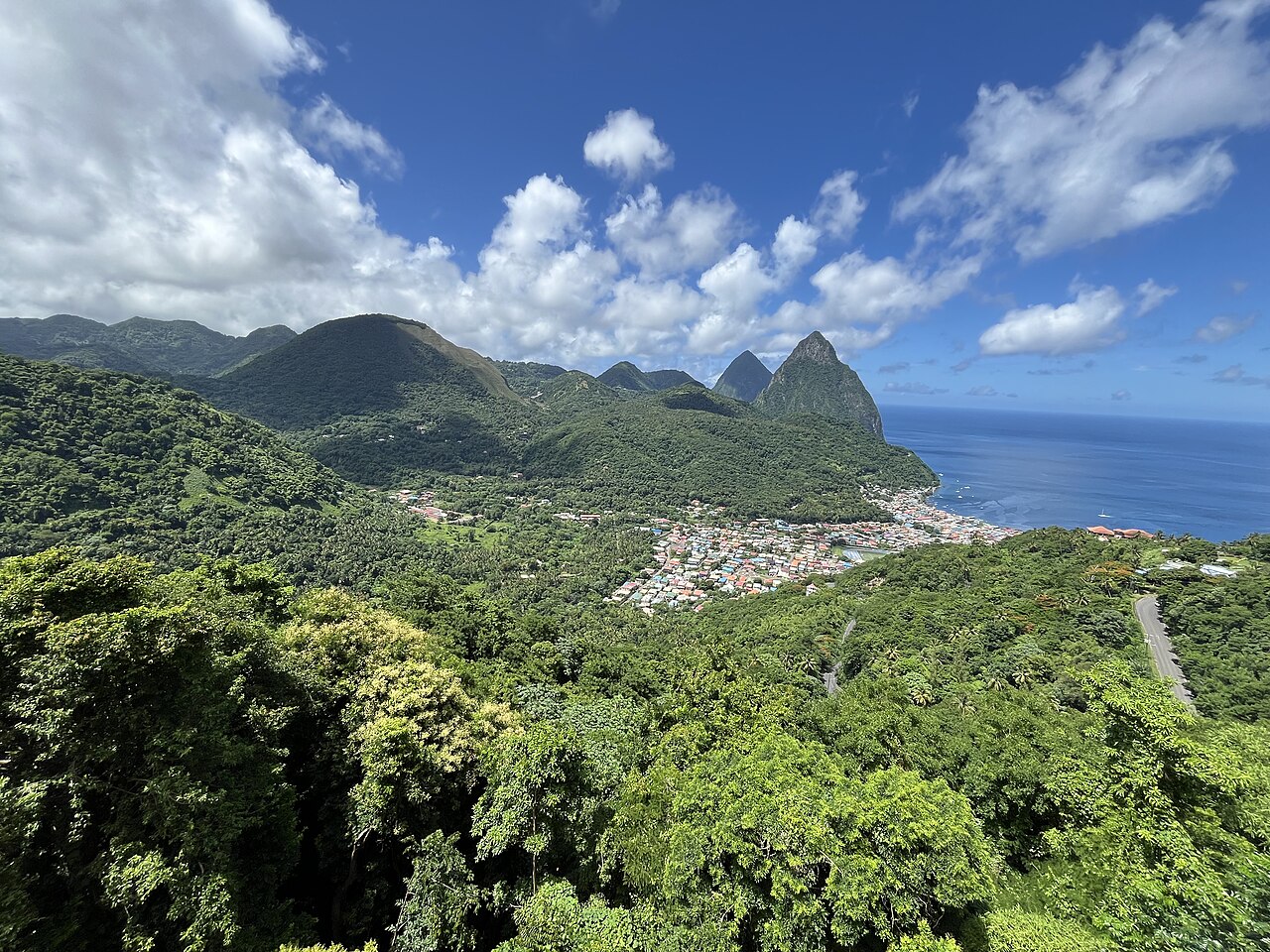
The Pitons are the image on every Saint Lucia postcard and on the island's flag. Gros Piton reaches about 770 metres and Petit Piton about 743, both rising steeply from the sea on the southwest coast, and together they sit at the heart of the Pitons Management Area, a UNESCO World Heritage site of nearly 3,000 hectares of land and sea. The listing recognises both the scenery and the geology: the spires are remnants of a collapsed stratovolcano, and the protected zone also takes in the Sulphur Springs geothermal field, forested slopes and coral reefs that cover much of the marine area. You do not have to climb anything to enjoy them. The most famous views come from the road above Soufrière, from the water on a catamaran, from the beach at Sugar Beach where the two peaks frame the bay, and from the ridge of the Tet Paul Nature Trail. Treat the Pitons as a place to look at from several angles over a few days rather than a single stop.
The geology explains the drama. The Soufrière Volcanic Centre was once a much larger volcano that collapsed, and the Pitons are the hardened lava plugs and domes left standing along its southern rim. They are not a pair of identical twins. Gros Piton is broader and more forested, with a long ridge, while Petit Piton is the sharper, narrower cone that looks almost vertical from the beach. Between them is a saddle called the Piton Mitan, and the bay beneath is one of the best-protected anchorages and snorkelling areas on the west coast.
Seeing them well is mostly a matter of choosing the angle. From the sea, a catamaran or boat trip from Rodney Bay, Marigot Bay or Soufrière shows the spires rising out of the water, and the light is best in the morning and late afternoon. From land, the viewpoints above Soufrière on the road to Fond Doux and the Tet Paul ridge give the postcard shot, while Sugar Beach and the Anse Chastanet and Anse des Pitons coastline put you directly beneath them. Cloud often caps the summits by mid-morning, so start early if the photograph matters.
Practical notes: the Pitons Management Area is a living working landscape with estates, villages and fishing communities, so stay on marked trails and use licensed guides. Only Gros Piton is climbed by visitors on a standard excursion; see our Gros Piton hike page for what that takes. The drive from Castries or Rodney Bay takes roughly an hour and a half to two hours on winding roads, so most visitors base themselves in Soufrière for a night or two or join a long day tour. Bring a rain layer, since showers blow through quickly in the hills.
What to expect
The experience
A self-guided look at the two spires from road viewpoints, the water or a beach, with the option to add a guided hike, a catamaran cruise or the Tet Paul ridge.
Best time
Early morning for clear summits and soft light, and the hour before sunset when the sea turns gold; cloud often builds around the peaks by late morning.
How long
An hour at a viewpoint is enough for the photograph; a full day gets you the views from land and sea.
Tips
Base yourself in Soufrière for a night or two if you can, take a catamaran for the sea view, stay on marked trails and use licensed guides for any hike.
Quick picks
- Best for
- Every first-time visitor, since the Pitons are the reason Saint Lucia looks like nowhere else in the Caribbean.
- Families
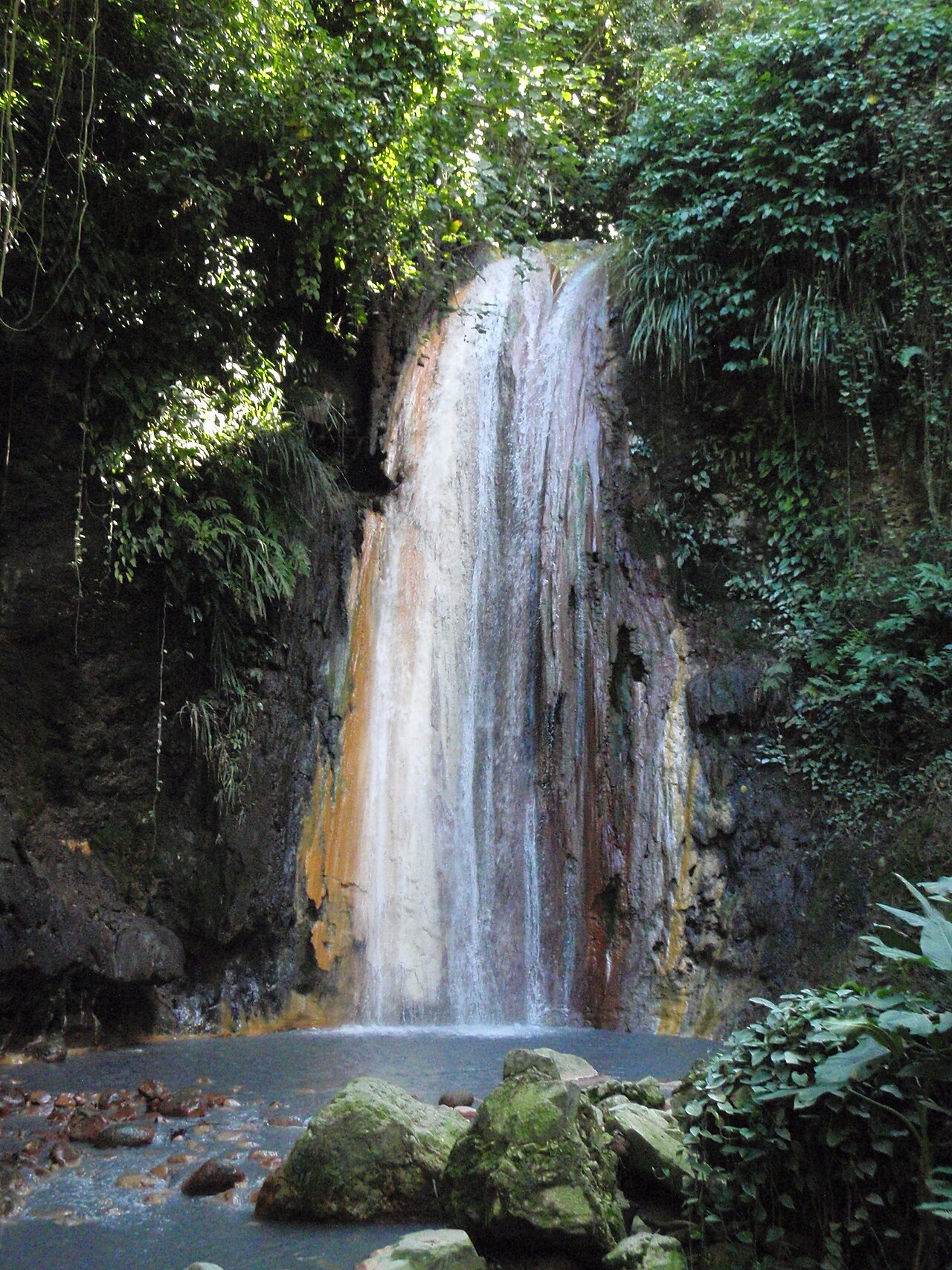
- Looking is easy with children; save the hike for older kids and pair the view with a mud bath or the Diamond Botanical Gardens waterfall.
- Couples
- Dinner or a sunset drink with the spires in view, ideally from a hillside terrace around Soufrière.
- Pair with
- Sulphur Springs, Diamond Botanical Gardens and the Tet Paul Nature Trail are all within a few minutes of each other.
- Time needed
- A morning for the views, or a full day with a hike or boat trip.
Good questions
Which is bigger, Gros Piton or Petit Piton?+
Gros Piton is the taller and broader of the two at about 770 metres, while Petit Piton is about 743 metres and noticeably steeper. Both rise directly from the sea.
Can you climb both Pitons?+
Visitors normally climb only Gros Piton, on a guided hike with a registered guide. Petit Piton is a much steeper and more technical scramble and is not part of standard visitor excursions.
Where is the best place to photograph the Pitons?+
Viewpoints on the road above Soufrière, the Tet Paul ridge and Sugar Beach all give classic frames, and a catamaran gives the view from the sea. Go early for the clearest summits.
Is there an entrance fee for the Pitons?+
There is no charge to see the Pitons from the road or the sea. Fees apply for the Gros Piton trail and for individual attractions in the area such as Sulphur Springs and the Diamond Botanical Gardens.
How far are the Pitons from the airports and resorts?+
Soufrière is roughly an hour from Hewanorra airport in the south and around an hour and a half or more from Castries and Rodney Bay on winding roads. Plan transfers rather than a rushed day trip if you can.