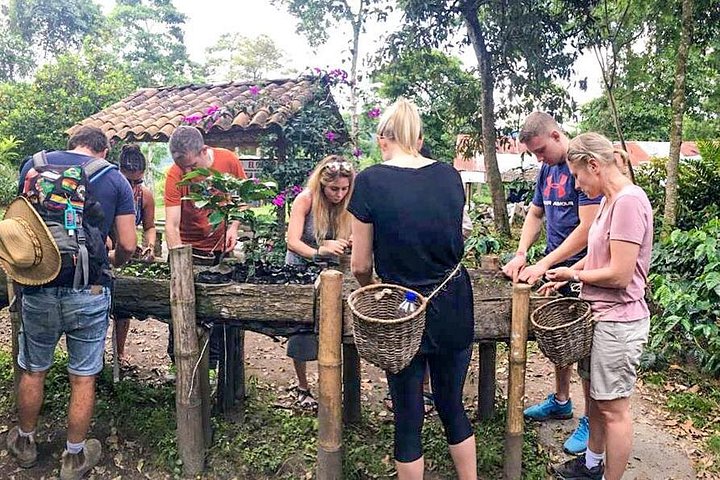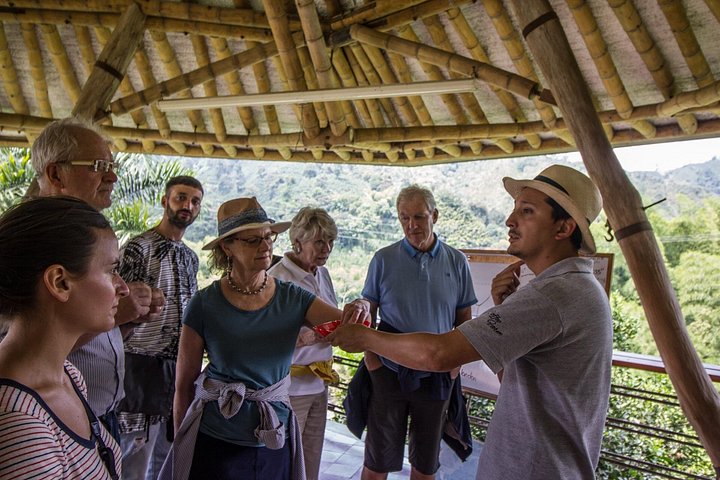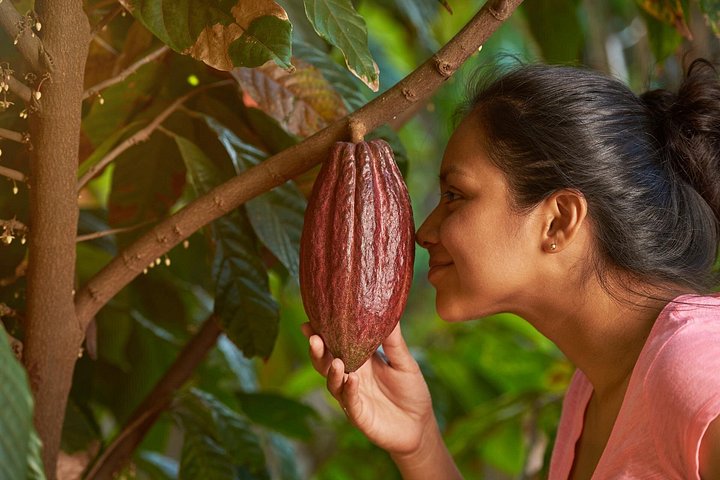
Coffee gets the attention in this part of Colombia, but cacao also thrives in the warm valleys, and a tour at a cacao farm makes a flavorful addition to a trip. The Evelyza farm experience takes you through the life of the cacao tree, from pod to chocolate, with a guide explaining each step. It is a hands-on, family-friendly outing that complements the coffee story. The tour usually includes a walk among the trees, where you see pods in different colors, and a look at how beans are fermented and dried. You then make or taste chocolate, often grinding roasted beans by hand into a rich paste.
From pod to bar
Cacao pods grow directly from the trunk and branches. Inside is a white, sweet pulp surrounding the seeds, which are the raw material of chocolate. After harvesting, the seeds are fermented, dried, roasted and ground. Each step shapes the flavor, and guides explain how origin and process make chocolate taste different. Tasting the pulp straight from the pod is often a highlight.
The experience
Expect a small group, a friendly guide and plenty of time for questions. Some tours include a drink of traditional hot chocolate and a tasting of different chocolates. You can usually buy products to take home, such as bars and nibs.
Planning
Wear closed shoes, bring insect repellent and sun protection, and expect a warm, humid climate at the lower elevations. Confirm the location and transport arrangements when you book, as farms are outside town. The tour fits well on a day without hiking and pairs with a coffee farm visit for a complete tasting of local crops. Children generally enjoy the sweet pulp and the chocolate making. If you have allergies, tell the operator in advance. See our eating and drinking guide for more on regional flavors.
Cacao and the local economy
Cacao is grown by smallholders across Colombia, and the country is gaining a reputation for fine flavor cacao used by craft chocolate makers. Visiting a farm gives you a view of the human side of chocolate, including how families work the harvest, who buys the beans and how prices vary. Guides often discuss sustainable growing methods, such as shade trees and diverse planting, that protect soil and wildlife.
Tasting notes
Try cacao at each stage, from the sweet pulp, which tastes like a tropical fruit, to roasted nibs, which are bitter and crunchy, to melted chocolate, which is rich and smooth. Compare dark chocolate with milk chocolate and ask about the percentage of cacao. Hot chocolate in Colombia is often made with water or milk, whisked until frothy, and served with cheese, bread or arepas. Some farms offer workshops where you stir the paste yourself and shape bars.
Buy small quantities to take home, because chocolate melts quickly in a warm climate, and keep it in a cool place. If you are traveling with children, check that the farm offers activities suited to their ages, such as grinding beans by hand. If the farm offers a chocolate-making workshop, ask whether you can take home your own bar, which makes a memorable and inexpensive gift.
What to expect
The experience
A guided cacao farm tour with a walk among the trees, processing demonstration and chocolate tasting.
Best time
Morning, before the heat of the day.
How long
About two to three hours.
Tips
Wear closed shoes, bring insect repellent and sun protection.
Quick picks
- Best for
- Chocolate lovers and curious families.
- Families
- Children enjoy the pulp and chocolate making.
- Couples
- A sweet, relaxed outing.
- Pair with
- A coffee farm visit.
- Time needed
- Half a day.
Good questions
Do I get to taste chocolate?+
Yes, tastings are part of the experience.
Is it suitable for children?+
Yes, most children enjoy it.
Can I buy chocolate?+
Usually yes, in the farm shop.
What is the weather like?+
Warm and humid at lower elevations.
Is transport included?+
Confirm the arrangements when you book.