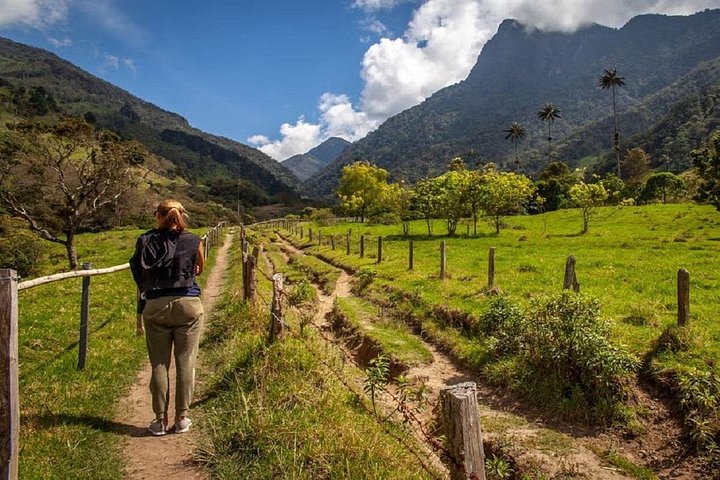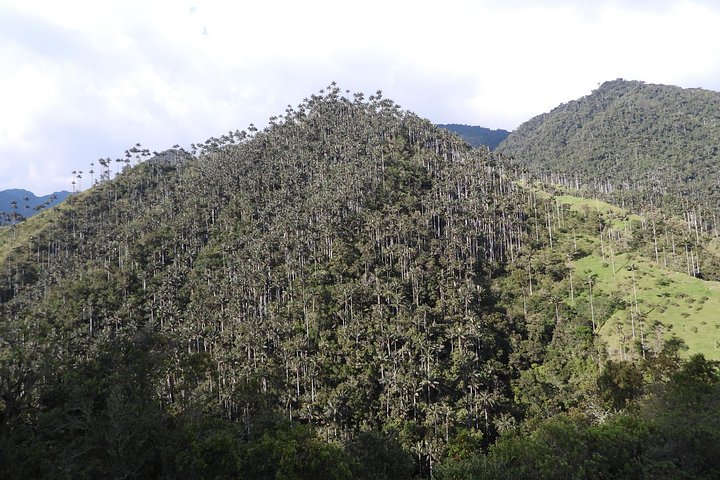
The Cocora Valley is famous, and in busy seasons it can feel crowded. La Carbonera offers a quieter alternative. This sanctuary, in the hills above Salento, protects a forest of wax palms and the cloud forest that surrounds them. The tour we link is shared, which keeps the price lower and the group small, and a local guide leads you along trails through palms, ferns and mossy trees. The experience is different from the valley: instead of palms standing in open pasture, here they rise through the forest canopy, and you walk among them rather than looking at them from a distance. The setting is peaceful, with birdsong and mist, and the guide explains how the palms live, why they are endangered and what protection efforts are in place.
The wax palm
Ceroxylon quindiuense is Colombia's national tree and one of the tallest palms in the world. It grows slowly in cool, high-altitude cloud forest, and its survival has been threatened by logging and cattle grazing. The palms were once cut for use in Palm Sunday celebrations, an issue that conservation campaigns helped reduce. Seeing them in a protected forest, with young palms growing nearby, shows how a healthy population regenerates.
The walk
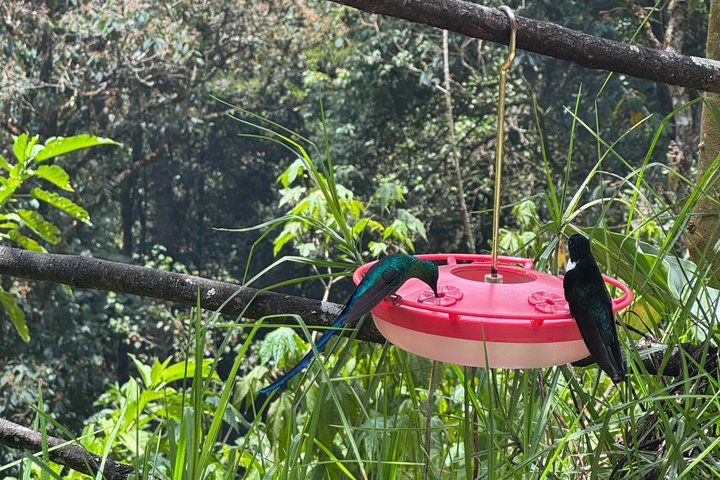
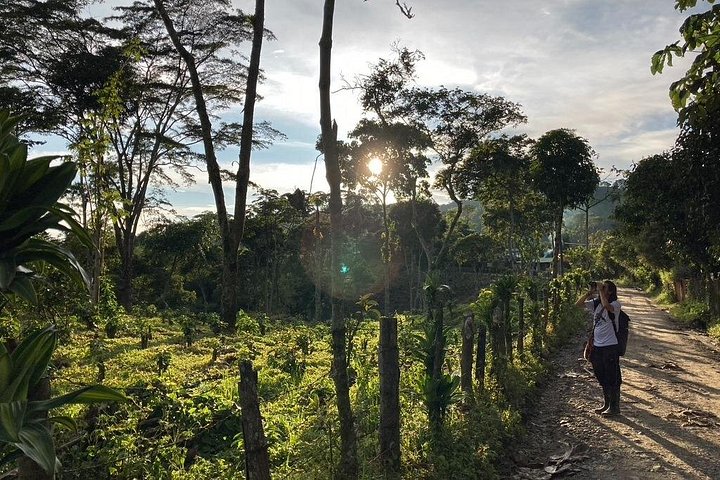
Expect forest trails of moderate difficulty, with muddy stretches and some ascents. The altitude is high, so go slowly. Guides stop at viewpoints and for birdwatching; the area is good for tanagers, toucan barbets and, with luck, the yellow-eared parrot, a species closely linked to the palms. Binoculars are useful.
Planning
Because the tour is shared, check the meeting point and departure time when you book. Wear waterproof shoes, layers and a rain jacket, and bring water and snacks. If you want both palms and views, you can combine La Carbonera and the Cocora hike over two days. For a full-day option with more stops, see our coffee towns tour. In busy periods it is worth booking ahead, as groups are small.
Conservation context
The wax palm was declared Colombia's national tree in the 1980s, and conservation groups have since worked with landowners to protect the remaining stands and plant young palms. The species is slow to mature and depends on cloud forest conditions, so habitat loss and cattle grazing, which prevents seedlings from growing, are persistent threats. Protected areas like La Carbonera give young palms a chance to establish. Some programs involve local communities in reforestation and ecotourism, so your visit can contribute to protection when it uses responsible operators.
What to wear and carry
Layers are essential because the forest is cool and damp. A light waterproof jacket, gloves for early mornings, a hat and sunscreen cover most conditions, and a small first-aid kit is sensible for blisters. Bring a reusable bottle, snacks and a plastic bag for waste. Phone signal can be weak in the forest, so download any maps or tickets before you leave.
Guides often know the best places to hear birds, so move quietly, keep conversation low on the trail and listen. If you want to see both the valley and the reserve, consider hiking one in the morning and visiting the other on a different day, rather than trying to see both in one rushed outing.
What to expect
The experience
A shared guided hike in a protected wax palm forest above Salento.
Best time
Morning, when skies are clearer and birds are active.
How long
About four to six hours.
Tips
Wear waterproof shoes, bring layers and binoculars, and go slowly at altitude.
Quick picks
- Best for
- Travelers who want wax palms in a quieter forest setting.
- Families
- Suitable for active older children.
- Couples
- A peaceful, scenic outing away from the crowds.
- Pair with
- The Cocora hike on another day.
- Time needed
- A morning to most of a day.
Good questions
How is La Carbonera different from Cocora?+
It is a quieter forest reserve where palms rise through the canopy, rather than the open pasture of Cocora.
Is it a shared tour?+
Yes, the tour we link is shared, so you join a small group.
Is the walk hard?+
Moderate, with muddy and sloping trails at altitude.
Can I see birds?+
Yes. The forest is good for birdwatching, and binoculars are helpful.
When should I go?+
Mornings are best, and the drier months have clearer weather.