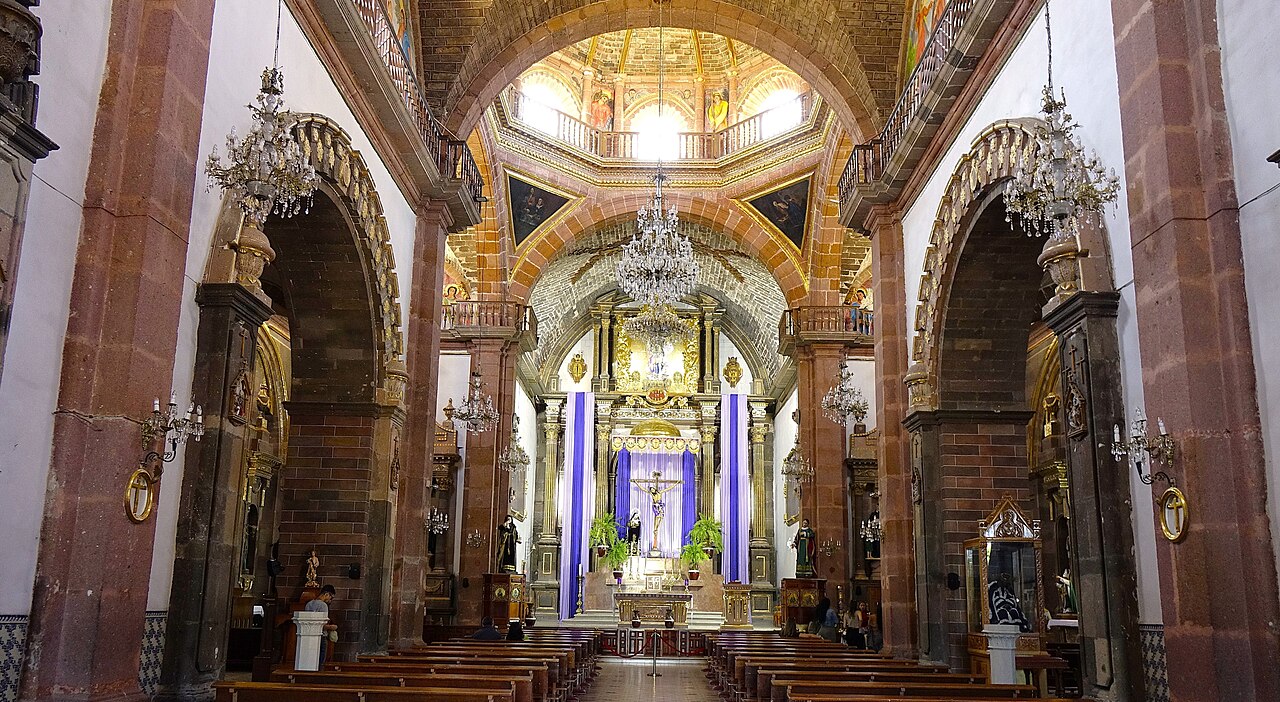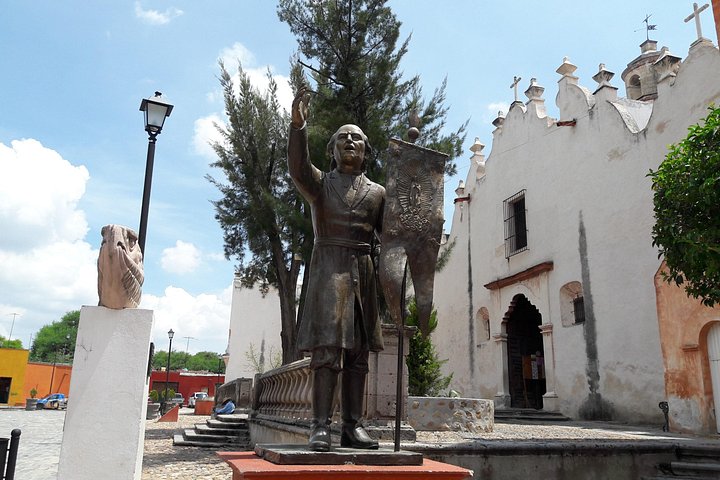
From the outside the Santuario de Jesús Nazareno de Atotonilco looks like a simple, fortress-like church at the edge of a village. Inside, almost every surface is covered in paint. Built in the 1700s as a centre for spiritual retreats, it is known as the Sistine Chapel of Mexico for the richness of its murals, which fill the nave, the side chapels and the vaults with vivid, sometimes startling scenes of devotion, penance and Biblical drama. The sanctuary was founded through the efforts of the priest Luis Felipe Neri de Alfaro, and the painted decoration is attributed largely to the artist Miguel Antonio Martínez de Pocasangre, who worked on it for years. It was inscribed as a UNESCO World Heritage site in 2008, together with the protective town of San Miguel, and it remains a place of pilgrimage, particularly in Lent. It also has a place in history, because in 1810 the independence leader Miguel Hidalgo took a banner of the Virgin of Guadalupe from here as he marched toward revolution.
Why a guide helps
The murals are dense, symbolic and not always easy to read unaided, and the sanctuary is a place of working devotion rather than a polished museum. A short guided visit, such as a 2.5 to 3 hour tour focused on Atotonilco, explains the story behind the imagery, the role of the spiritual exercises, the building's artistic and religious legacy and its link to the independence story. Expect to stand with your head tipped back for much of the visit, so binoculars or a telephoto lens are useful for the ceiling frescoes.
Practical notes
The sanctuary is about 25 minutes from San Miguel de Allende by road, in the small town of Atotonilco, so a guided tour with transport removes the logistics. Bring small change, since admission and donations are usually handled in cash, and dress respectfully, with covered shoulders and no hats inside. It is a living church, so services and pilgrims take priority, and visits during major religious periods can be busy and atmospheric. In the plaza outside, local vendors sell gorditas and snacks, which makes a good informal stop.
Who it suits
Art lovers, history fans and curious travellers who want something beyond the pretty centre. It combines naturally with the nearby hot springs, since the town of Atotonilco is also home to La Gruta, and it fits neatly into a half-day outing. Children who enjoy colourful, dramatic imagery may enjoy it, but the subject matter can be intense, and the spiritual setting calls for quiet behaviour.
What to expect
The experience
A guided half-day visit to the painted sanctuary of Atotonilco, about 25 minutes from San Miguel, covering its murals, history and pilgrimage tradition.
Best time
Morning, when the light is good for the murals and the sanctuary is calm.
How long
Two and a half to three hours including transport from town.
Tips
Bring small change for admission and donations, dress modestly, and take binoculars or a zoom lens for the ceiling frescoes.
Quick picks
- Best for
- Art and history lovers who want the most remarkable single interior near San Miguel.
- Families
- Better for older children, since the setting is devout and the stories can be intense.
- Couples
- A memorable, slightly off-the-beaten-path morning that pairs well with a soak at the nearby hot springs.
- Pair with
- La Gruta hot springs in the same town, and a relaxed lunch back in San Miguel.
- Time needed
- Half a day with transport.
Good questions
Why is Atotonilco called the Sistine Chapel of Mexico?+
Its interior walls and ceilings are covered in extensive painted murals made in the 1700s. The richness and scale of the decoration earned the comparison to the famous chapel in Rome.
Is Atotonilco a UNESCO site?+
Yes, it was designated a UNESCO World Heritage site in 2008, together with the protective town of San Miguel de Allende.
How far is it from San Miguel?+
It is roughly 25 minutes by road. A guided tour with transport is the simplest way to go, though taxis are also possible.
Do I need a guide?+
You can visit independently, but the murals are symbolic and easier to appreciate with explanation. A guided half-day tour covers the history and artistic background.
What should I wear and bring?+
Dress modestly with shoulders covered, bring small change for admission and donations, and consider binoculars or a zoom lens for the high frescoes. Remember it is an active place of worship.