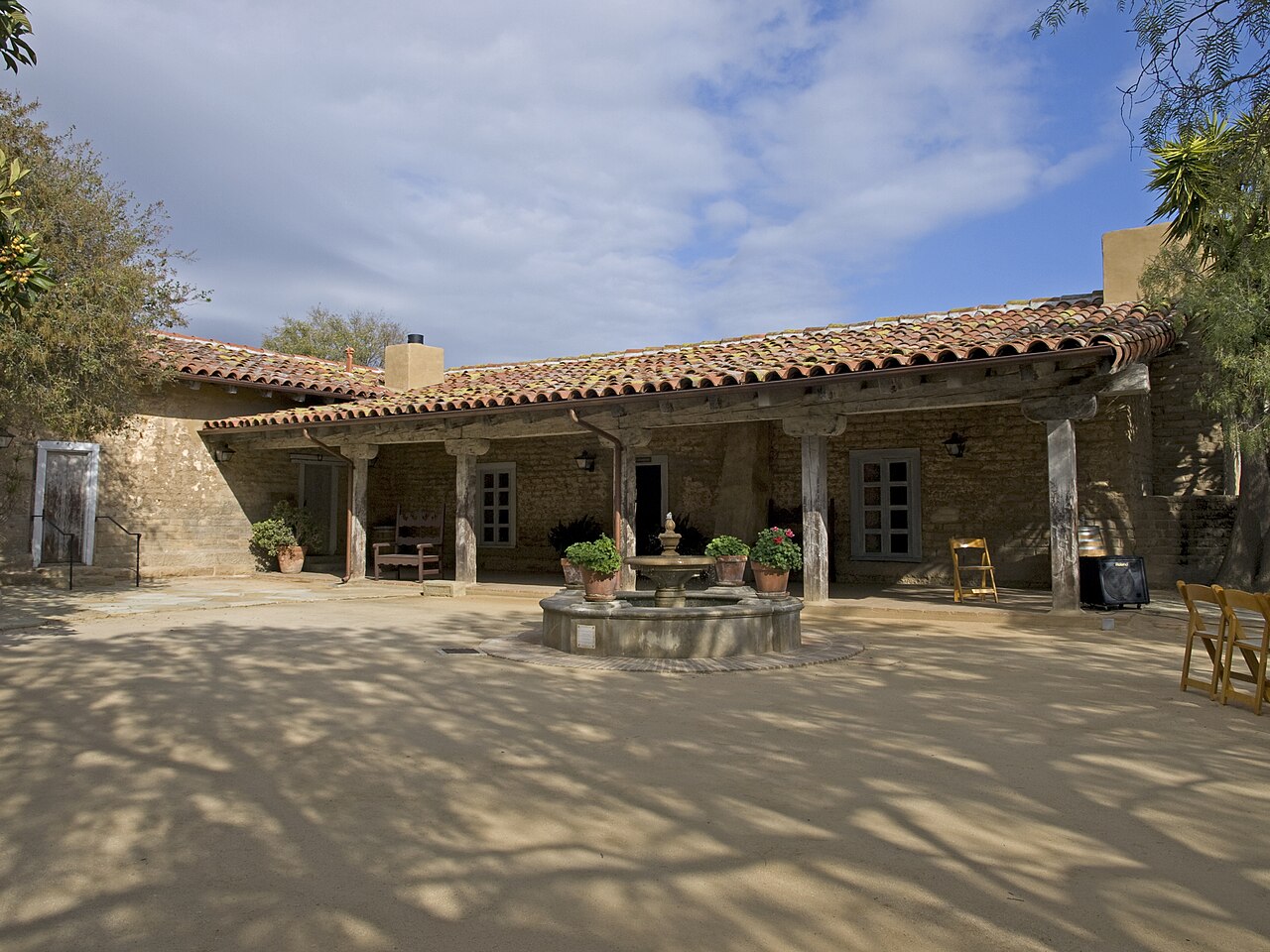
Before there was a mission, a courthouse or a beach town, there was the Presidio. Founded in 1782 as the last of the four Spanish military forts in Alta California, El Presidio de Santa Bárbara was built with the labor of local Chumash people and served as the seat of Spanish authority in the region until 1830. The city grew up around its walls, and the state historic park, operated by the Santa Barbara Trust for Historic Preservation for California State Parks, now spans four downtown blocks a short walk from State Street. Two original structures survive, and the star is El Cuartel, the soldiers' quarters, described as the second-oldest building in California: a low, thick-walled adobe that makes the eighteenth century suddenly tangible. Around it, the Trust has reconstructed the chapel, the Comandancia, the padre's quarters, family living quarters and an observation tower on their original footprints, using traditional adobe methods, and you can see the excavated foundations of the outer defensive wall. The visitor center occupies the Cañedo Adobe, dating to around 1787. The park is open daily from 10:30am to 4:30pm, and admission is about five dollars for adults and four for seniors, free for children 16 and under, members and SNAP, EBT and CalFresh cardholders. The same ticket covers Casa de la Guerra, the restored 1820s adobe home of the Presidio's later commandant, a few blocks away, so plan to see both. Give it an hour; it is the root of everything else you will see.
Why it matters: the Presidio explains Santa Barbara's three founding institutions together. The mission converted, the pueblo settled, and the presidio guarded, and the soldiers who served here and their families became the first generation of Santa Barbarans of Spanish and Mexican descent. The chapel is the emotional center of the reconstruction, its painted interior recreated from historical evidence, and the Trust's ongoing archaeology and rebuilding mean the site keeps growing, with excavated features left visible so you can see how the fort was laid out. The story told here does not skip the Chumash, whose labor built the walls and whose world was transformed by them.
Visiting well: start at the visitor center in the Cañedo Adobe for orientation, then walk the quadrangle clockwise through the chapel, the Comandancia and the reconstructed quarters before ending at El Cuartel across Cañon Perdido Street. Allow about an hour. The site is flat, compact and mostly outdoors, so it suits families with younger children, and seasonal events such as candlelight evenings and living-history days bring it to life; check the Trust's calendar. Keep your ticket for Casa de la Guerra on De la Guerra Street, where the furnished rooms show how the elite of Mexican-era Santa Barbara lived.
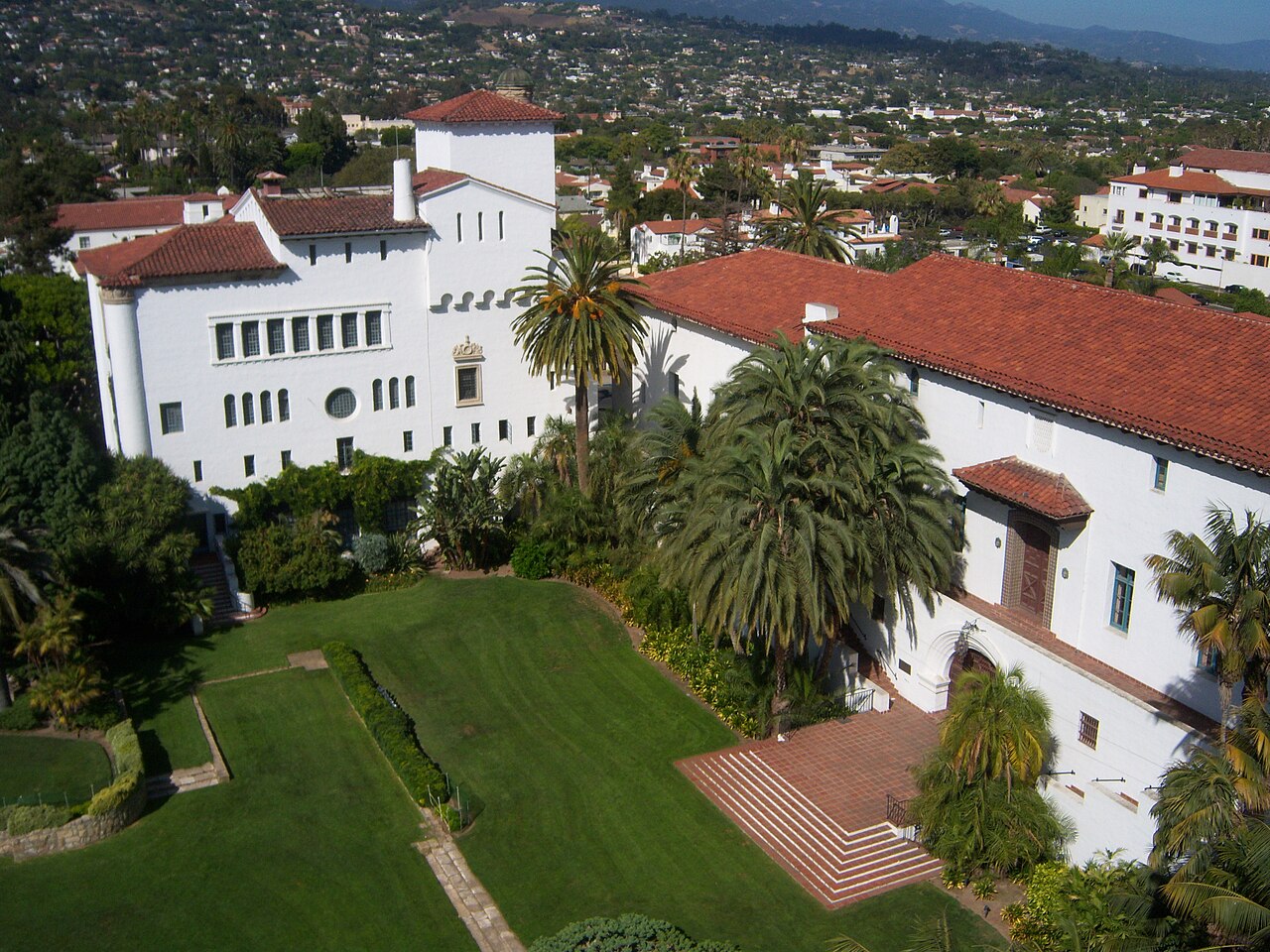
Fitting it into a trip: the Presidio sits on the Red Tile Walking Tour route, and the Santa Barbara Historical Museum and the Lobero Theatre are a block or two away, so it slots neatly into a downtown history morning after the courthouse tower. Lunch in the Presidio neighborhood or at El Paseo, then continue up to the Old Mission in the afternoon to complete the colonial picture.
What to expect
The experience
A four-block state historic park with the original El Cuartel adobe, reconstructed chapel, Comandancia and quarters, an excavated wall line, gardens and a visitor center in the Cañedo Adobe.
Best time
Any day, 10:30am to 4:30pm; mornings before the downtown lunch crowd.
How long
About an hour, plus time for Casa de la Guerra on the same ticket.
Tips
Start at the visitor center. Cross Cañon Perdido Street for El Cuartel. Keep your ticket for Casa de la Guerra. Check the calendar for candlelight and living-history events.
Quick picks
- Best for
- History lovers who want to see where Santa Barbara began.
- Families
- Flat, outdoor and inexpensive, with children 16 and under free.
- Couples
- A quiet adobe hour, then lunch in El Paseo's courtyard nearby.
- Pair with
- The Santa Barbara Historical Museum, Casa de la Guerra and the Red Tile Walking Tour.
- Time needed
- An hour.
Good questions
How old is El Presidio?+
It was founded in 1782 as the last Spanish military fort in Alta California. El Cuartel, the soldiers' quarters, is one of two original buildings still standing.
How much does it cost?+
About five dollars for adults and four for seniors. Children 16 and under, members and SNAP, EBT and CalFresh cardholders get in free, and the ticket includes Casa de la Guerra.
Are the buildings original?+
El Cuartel and part of the Cañedo Adobe are historic. The chapel, Comandancia and quarters are careful reconstructions on the original foundations.
What are the hours?+
Daily from 10:30am to 4:30pm. Check for holiday closures and special evening events.
How does it connect to the Old Mission?+
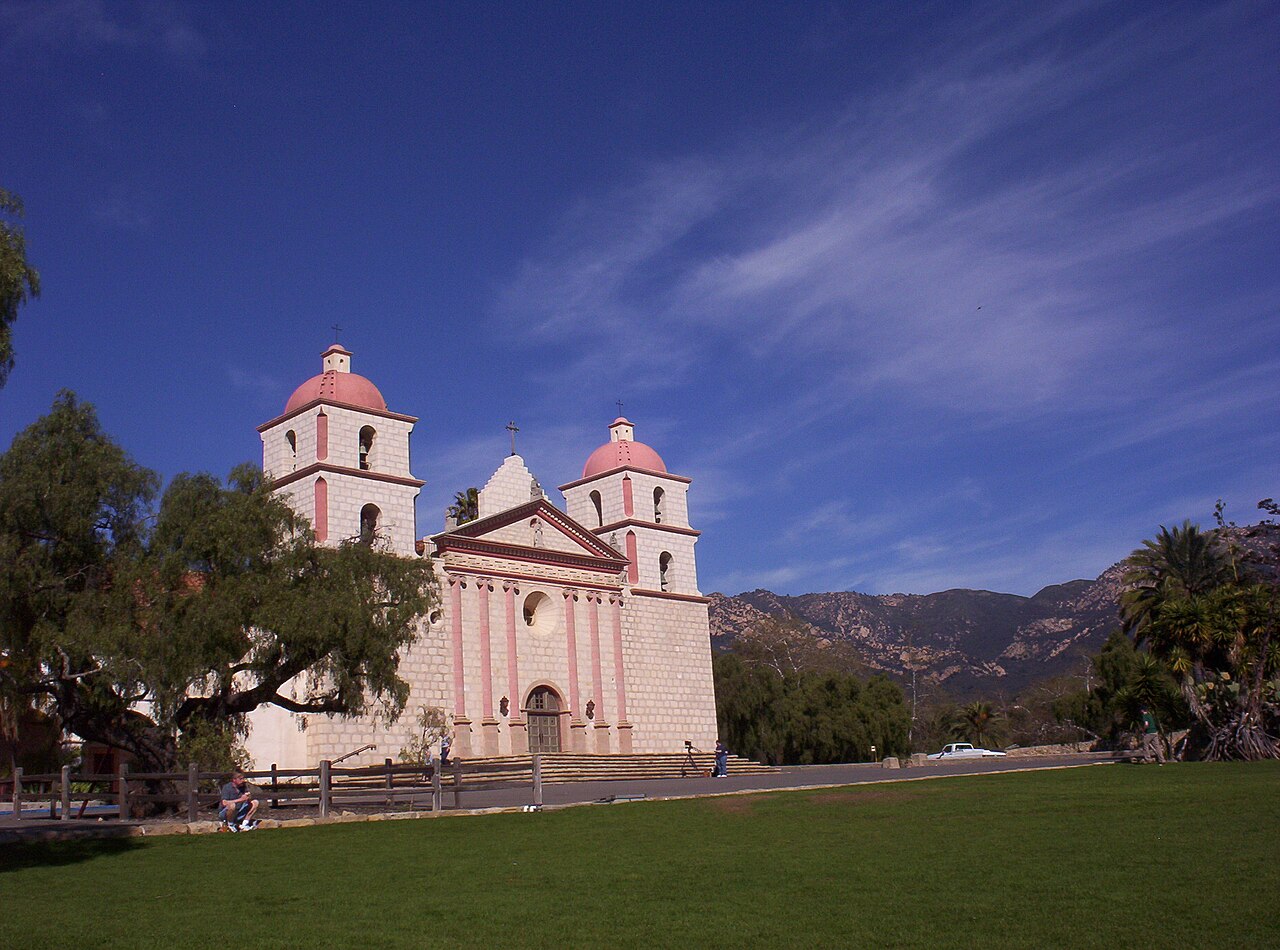
The Presidio guarded the region while the mission, founded four years later in 1786, converted it. Seeing both gives you the full colonial story.