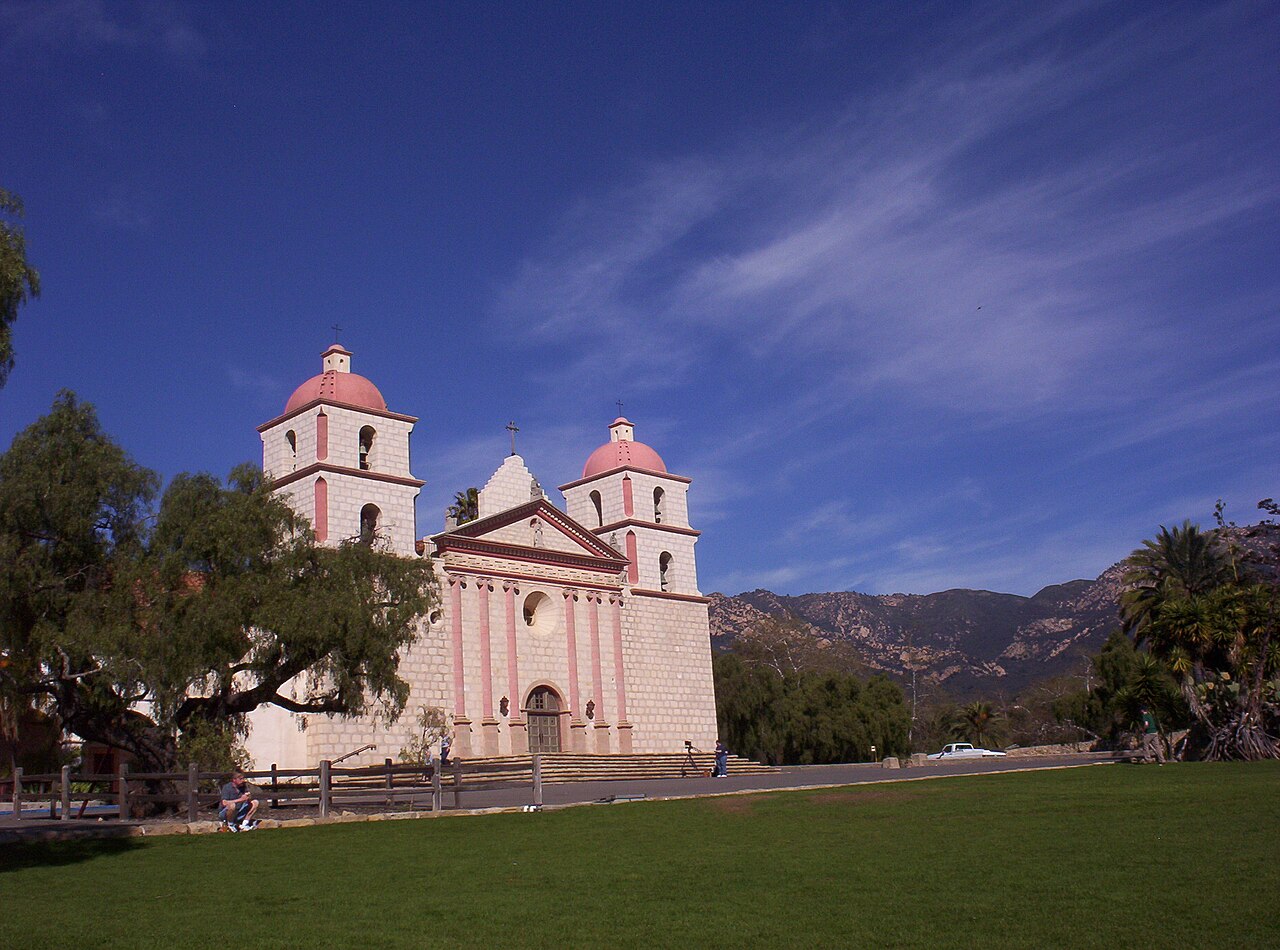
Old Mission Santa Barbara is the building that gave the city its look and its nickname for itself. Founded by Franciscan padres on December 4, 1786 — the feast of Saint Barbara — as the tenth of California's twenty-one missions, it earned the title Queen of the Missions for its setting and its facade: a classical temple front in honey-colored sandstone, flanked by two bell towers, sitting at the top of a long lawn with the mountains behind and the ocean spread below. It is the only one of the California missions to have remained in continuous use by the Franciscans since its founding, and it remains a working Catholic parish, which shapes the visit in good ways (the church is a living sanctuary, not a diorama) and practical ones (Masses, weddings and funerals close the church and cemetery to tour visitors at set times). The self-guided tour runs through the grounds on about fifteen acres: the nine-room museum of historical art and artifacts, the courtyard gardens, the church interior with its painted walls and altar, and the cemetery and mausoleum where thousands of Chumash people are buried alongside early Californios. An audio tour in six languages and QR-coded stops in English and Spanish carry the history, and free parking sits in the front lot off Los Olivos Street. Give it an hour to ninety minutes, take the rose garden across the street on the way out, and you will understand why the whole downtown below was later rebuilt to match it.
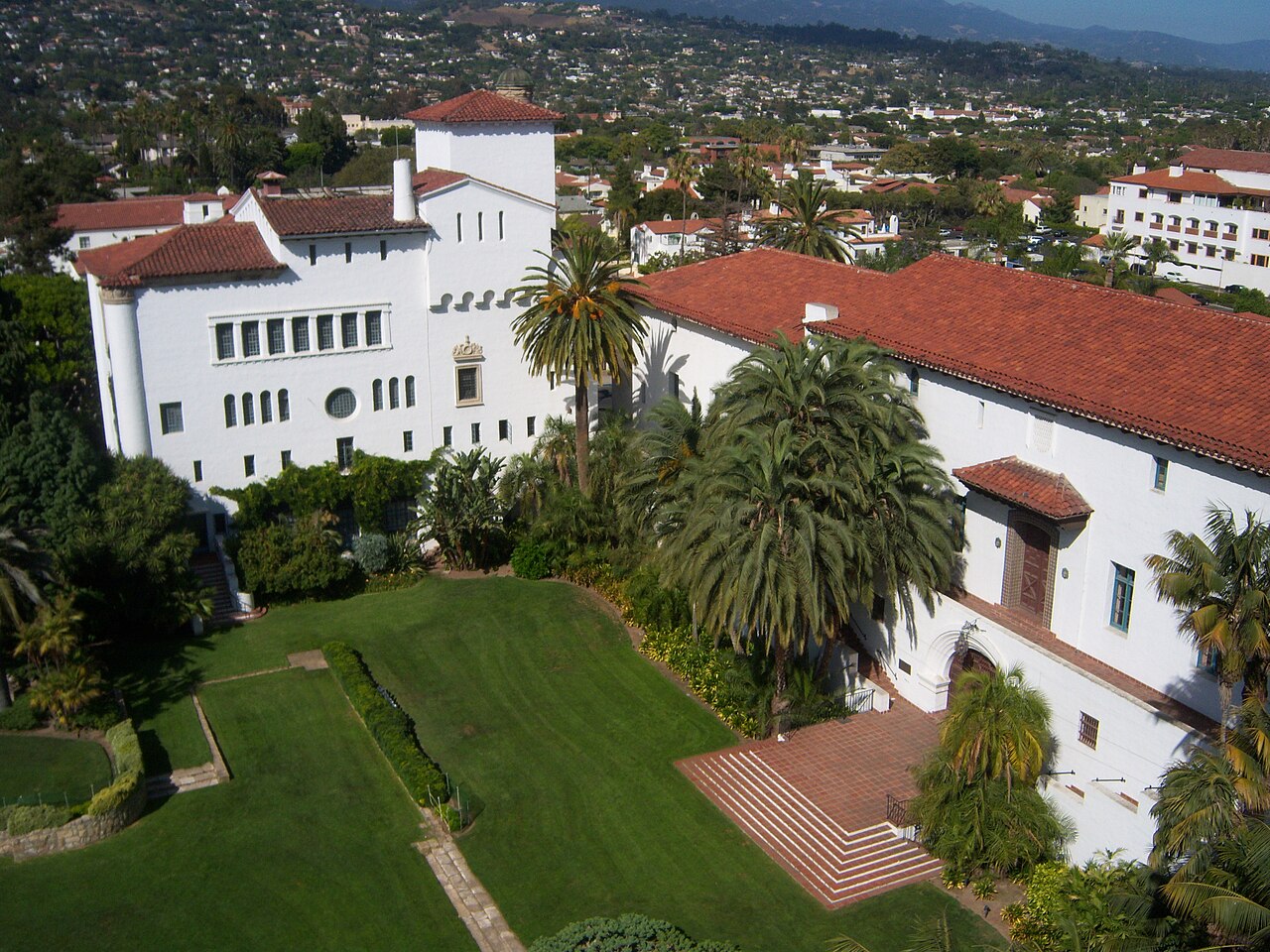
The history has two sides, and the mission now tells both. The Spanish founded it as part of a chain of religious and military outposts reaching up the coast from San Diego, and the labor that raised the adobe buildings, the aqueducts and the dam up Mission Canyon came from the Chumash, whose villages had lined this coast for thousands of years before 1786. The 1812 earthquake brought down the earlier church, and the present one, completed in 1820, was designed with a facade borrowed from an ancient Roman architecture text — hence the temple front unusual among California missions. Earthquakes struck again in 1925, which is when the second tower was rebuilt and when the city below took the mission's Spanish vocabulary as its civic style. Today the museum rooms and interpretive signs give real space to Chumash life, the mission period and its costs, and the cemetery's memorial to the Chumash buried there is the quiet center of the visit.
Touring it well: self-guided tours run Monday to Saturday from mid-morning to late afternoon and on Sunday afternoons, with the last ticket sold an hour before close. Check the weekend pattern before you go — the church and cemetery close to visitors from mid-afternoon on Saturdays for Mass, during Sunday-morning services, and usually for a midday window on wedding Saturdays — and remember that funerals can close them at short notice. The rest of the grounds stay open through all of this, so a closure trims the visit rather than cancelling it. Weekday mornings bring the thinnest crowds and the clearest light on the facade, and the lawn out front is the classic photograph: twin towers, pink-washed stone, mountains behind.
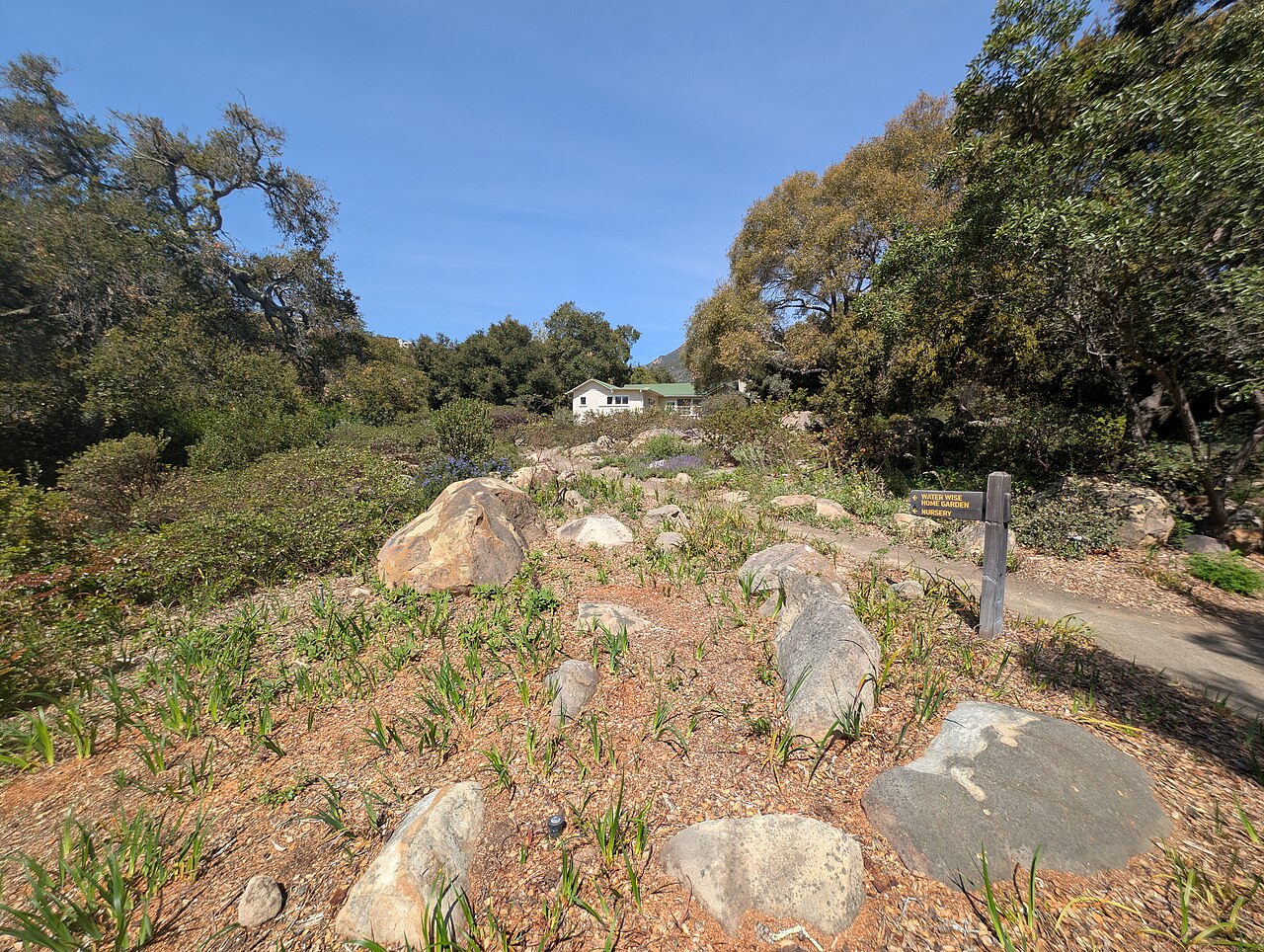
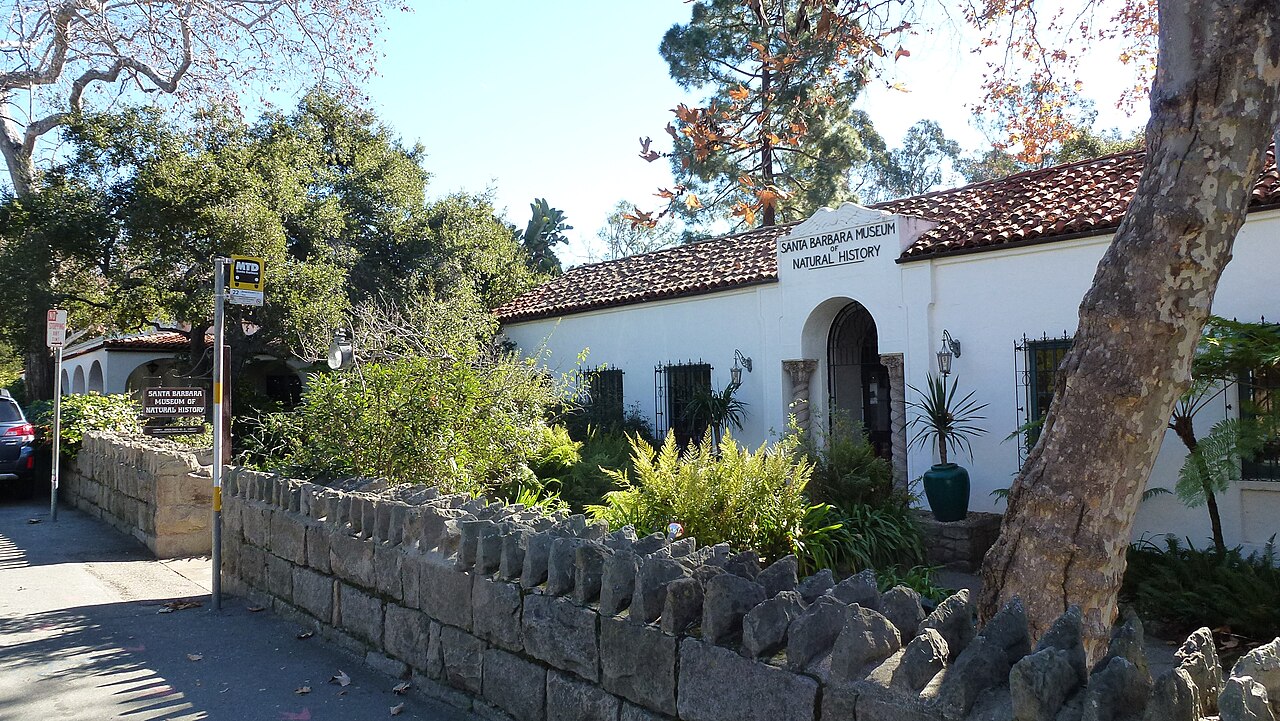
Make it a half-day on the Upper East side. The A.C. Postel Memorial Rose Garden across Los Olivos Street (a city park, free) frames the mission from the best angle; the Santa Barbara Museum of Natural History sits a few minutes' walk up Mission Canyon among oaks; and the Botanic Garden is a short drive farther up the canyon, where the mission-era dam still stands. Families do well here — the grounds are open and the museum rooms are compact — and history buffs should budget the full ninety minutes plus the audio tour. If you only see one historic site in Santa Barbara, this is it: everything else in the city's look is quoting this building.
What to expect
The experience
A self-guided walk through the church, nine-room museum, courtyard gardens, cemetery and mausoleum on about fifteen acres, with an audio tour in six languages and QR-coded stops.
Best time
Weekday mornings for light on the facade and thin crowds; check Saturday-afternoon and Sunday-morning Mass closures for the church and cemetery.
How long
An hour to ninety minutes, longer with the audio tour.
Tips
Park free in the front lot off Los Olivos Street. Walk across to the rose garden for the classic photograph. Pair with the Natural History Museum up the canyon. Dress respectfully; it is an active parish.
Quick picks
- Best for
- First-timers and history lovers — the building that explains the whole city's look.
- Families
- Open grounds, compact museum rooms and a lawn for running off energy afterward.
- Couples
- A golden-hour visit to the facade and the rose garden across the street is the romantic version.
- Pair with
- The Natural History Museum and the Botanic Garden up Mission Canyon.
- Time needed
- Ninety minutes, or a half-day with the canyon neighbors.
Good questions
Is the Old Mission still a working church?+
Yes. It is an active Catholic parish, which is why the church and cemetery close to tour visitors during weekend Masses, weddings and funerals. The museum and gardens usually stay open during those windows.
Why is it called the Queen of the Missions?+
For its setting above the city and its unusual facade — a classical temple front with twin bell towers — which makes it the most admired of California's twenty-one missions.
Do we need to book ahead?+
Not usually for the self-guided tour; tickets are sold on site, with the last one an hour before closing. Groups and school visits book through the mission's tour reservations line.
How does the mission address Chumash history?+
The museum and signage cover Chumash life before and during the mission era, and the cemetery holds the graves of thousands of Chumash people. Give that part of the visit time; it is the heart of the story.
Is there parking?+
Yes — a free front lot off Los Olivos Street, first come, first served during opening hours. Weekend middays fill fastest.