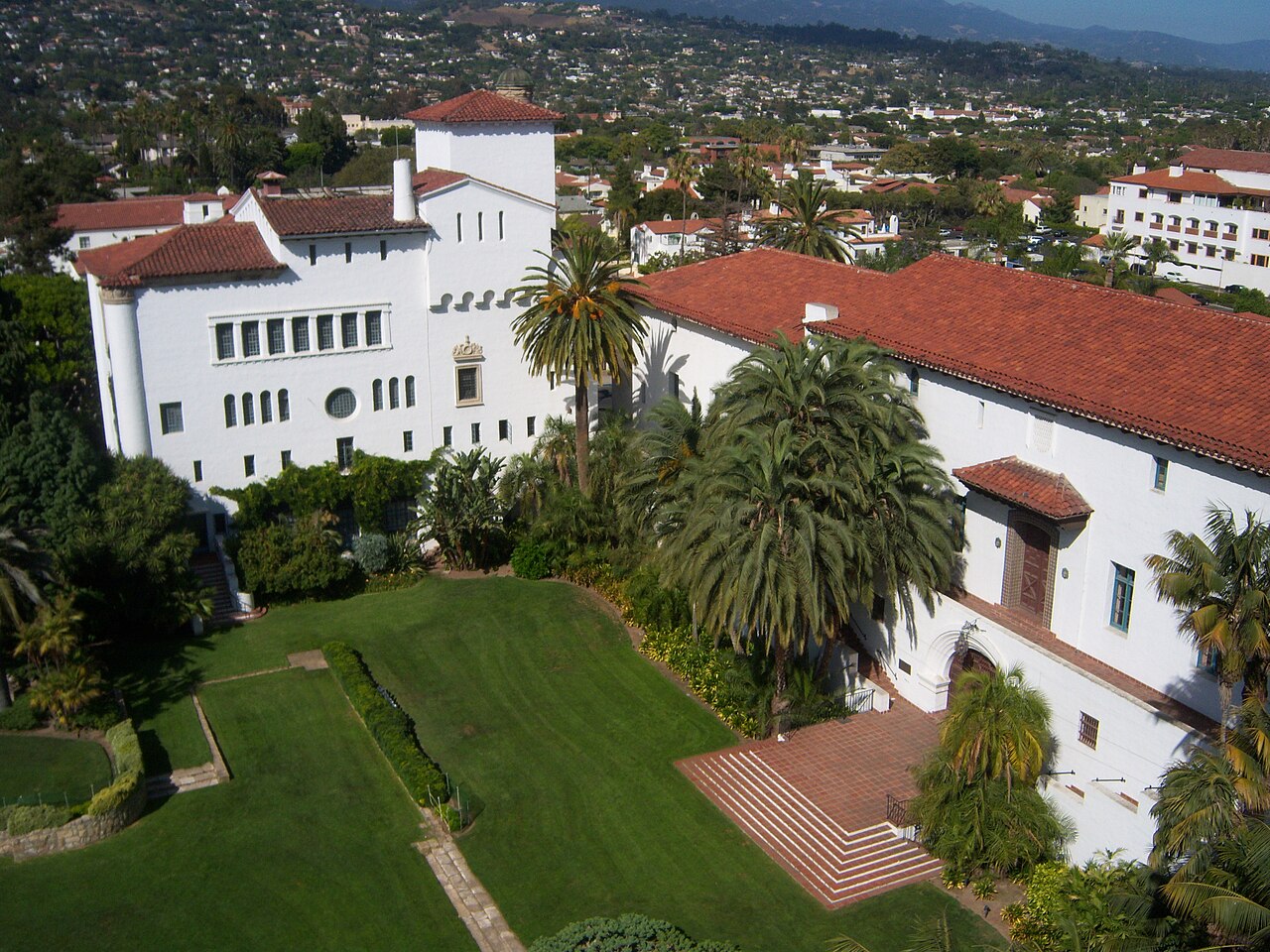
The Santa Barbara County Courthouse is the city's best free attraction and quite possibly the most beautiful public building in America that still hears traffic cases. After the 1925 earthquake flattened much of downtown, the county commissioned architect William Mooser III to build a new courthouse in the Spanish-Moorish style, and the result, completed in 1929, fills an entire city block with arches, wrought iron, carved doors, and tile work in every room it can reach. The interior is the surprise: corridors with stenciled and hand-painted ceilings, staircases lined with patterned tile, and the second-floor Mural Room — the old board of supervisors chamber — wrapped floor to ceiling in murals telling California's history from the Chumash to the Spanish and Mexican eras and statehood. Then there is El Mirador, the 85-foot clock tower: an elevator and a few stairs put you on an open deck with the whole of Santa Barbara laid out — red-tile roofs running down to the harbor, the mission against the mountains, the Channel Islands on the horizon — and it costs nothing. Free docent tours start in the Mural Room on weekday mornings and every afternoon (no reservation needed), the Sunken Gardens on the courthouse lawn host weddings and summer concerts, and the whole thing sits a block off the car-free State Street promenade. Allow an hour; take the tour; go up the tower last.
The building's story is also the city's. Santa Barbara had flirted with Spanish Revival before 1925, but the earthquake gave civic leaders a blank slate and a deliberate idea: rebuild everything in a unified Spanish Colonial Revival style and turn a sleepy Victorian town into a Mediterranean one. The courthouse was the flagship. Mooser's design treats a functioning government building as a small Andalusian city — a great arch framing the mountain view, interior courtyards, a wandering plan that makes each department its own room — and the craftsmen who finished it imported and imitated tile patterns from Spain and North Africa. It remains a working courthouse, so security screening and courtroom etiquette apply, but the public spaces are open to visitors and the county is proud to show them off.
How to visit: enter on Anacapa Street, stop at the information booth near the main archway, and head to the Mural Room on the second floor — free docent tours start there on weekday mornings and daily in the afternoons, except court holidays (confirm the current times before you go). The tour adds the stories you would otherwise walk past: the meaning of the murals, the building's earthquake engineering, the tile and ironwork details. Then ride up El Mirador. The clock tower's deck has a 360-degree view and interpretive panels naming what you see; late afternoon gives the warmest light on the roofs, and on clear days the islands line up across the channel.
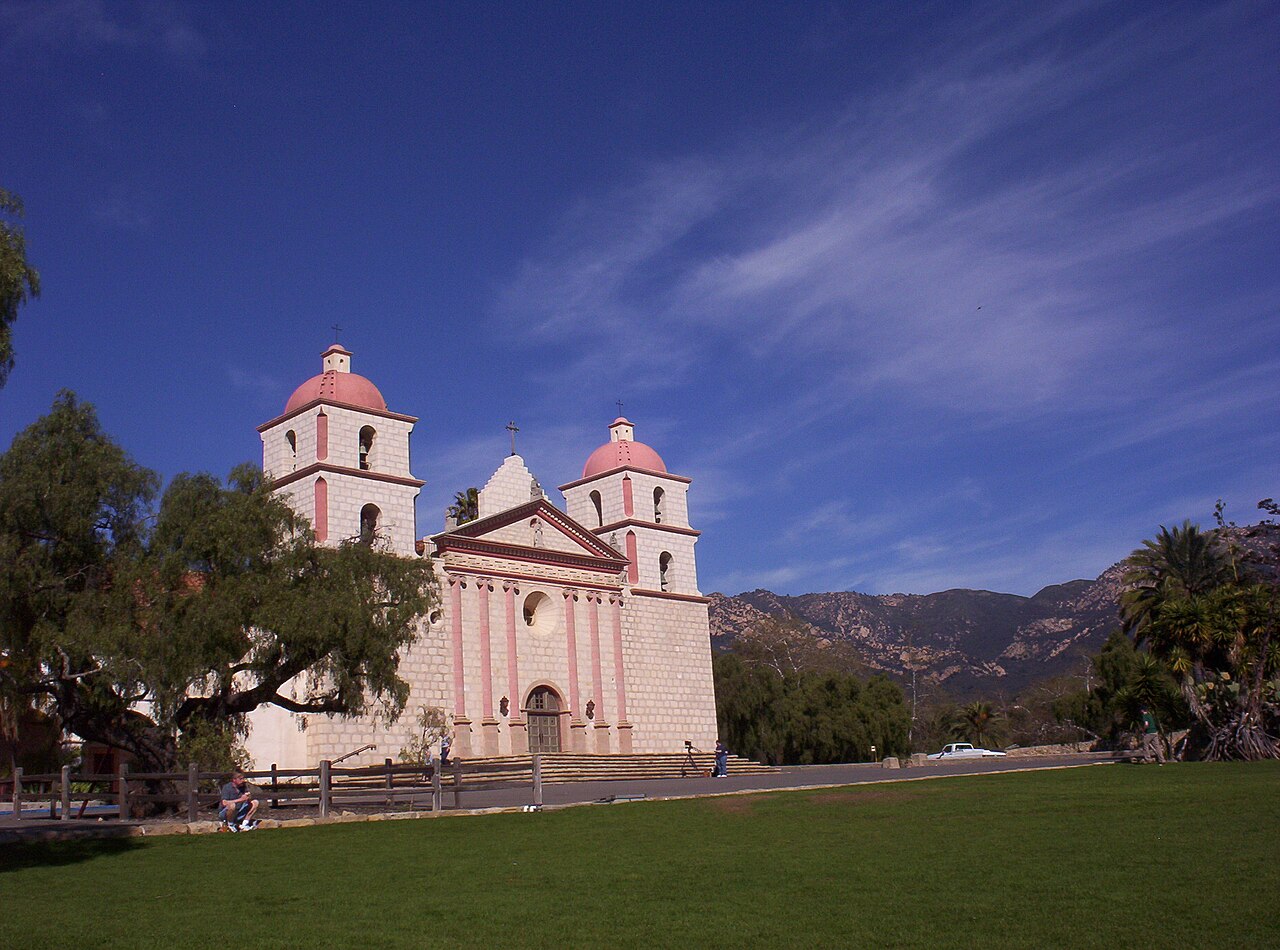
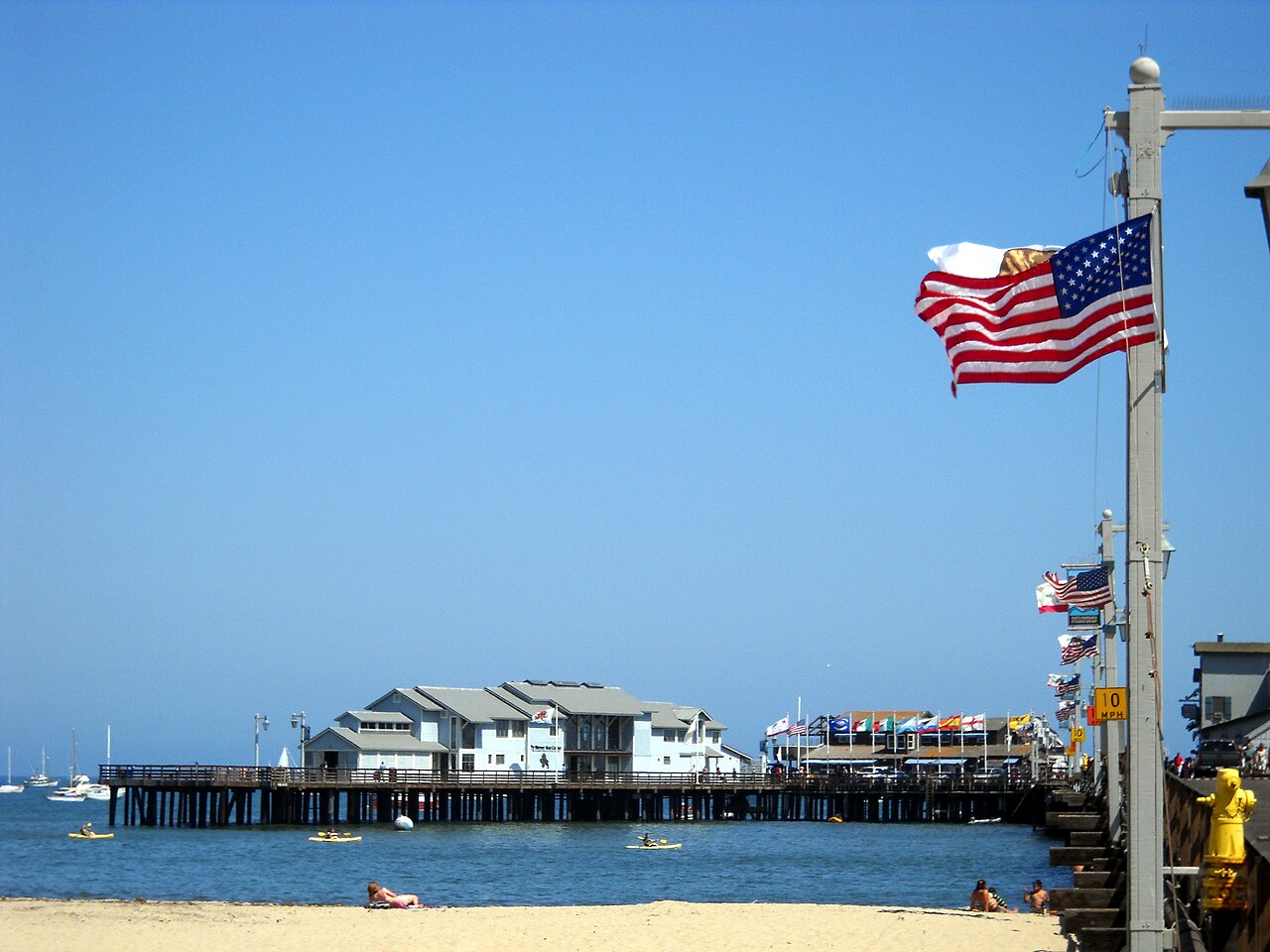
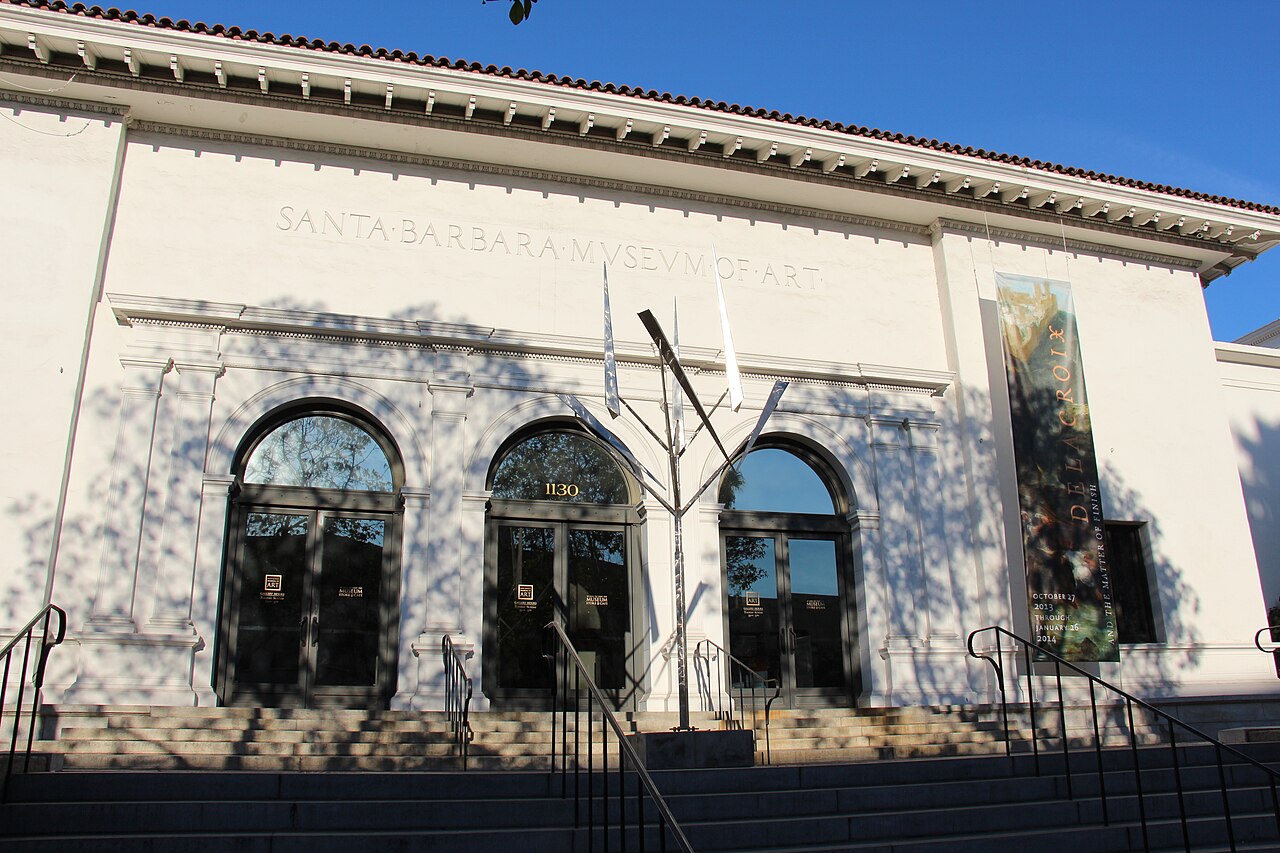
Around it: the Sunken Gardens — the lawn sits on the site of the 1872 courthouse — make the best picnic spot downtown and host weddings most weekends (the county is a popular place to marry, for obvious reasons). The State Street promenade, closed to regular traffic and lined with outdoor dining, is a block west; the Santa Barbara Museum of Art is two blocks along; and El Presidio, the 1782 Spanish fort the city grew from, is a short walk east. Do the courthouse on day one: it orients you better than any map, and it is the reason the rest of downtown looks the way it does.
What to expect
The experience
A working 1929 courthouse with public corridors, the second-floor Mural Room, the Sunken Gardens and El Mirador, an 85-foot clock tower reached by elevator. Free docent tours start in the Mural Room.
Best time
Weekday mornings for the docent tour; late afternoon for warm light from the clock tower.
How long
About an hour including the tower.
Tips
Go to the Mural Room first, the tower last. Expect security screening at the entrance. Picnic on the Sunken Gardens lawn. Confirm docent tour times, which skip court holidays.
Quick picks
- Best for
- Everyone on day one — free, gorgeous, and the best orientation view in the city.
- Families
- The elevator ride and tower deck win over kids; the lawn below is for running.
- Couples
- Tower at golden hour, then dinner on the State Street promenade a block away.
- Pair with
- The Museum of Art, El Presidio, and the State Street promenade, all within a few blocks.
- Time needed
- An hour, comfortably fitted into a downtown morning.
Good questions
Is the courthouse really free?+
Yes — entry, the Mural Room, the clock tower and the docent tours are all free. It is a working courthouse, so expect security screening and quiet near courtrooms.
How do we get up the clock tower?+
An elevator rises to near the top of El Mirador, with a short flight of stairs to the open observation deck. The 85-foot tower has views across the city to the harbor and the Channel Islands.
When are the docent tours?+
Free tours start in the second-floor Mural Room on weekday mornings and in the afternoons, except court holidays. No reservation is needed, but confirm the current times before you go.
What is the Mural Room?+
The former board of supervisors chamber, wrapped in floor-to-ceiling murals of California history from the Chumash era through statehood. It is the building's showpiece interior.
Why does it look Spanish?+
After the 1925 earthquake, Santa Barbara rebuilt in a unified Spanish Colonial Revival style, and the courthouse, completed in 1929 by William Mooser III, was the flagship of that plan.