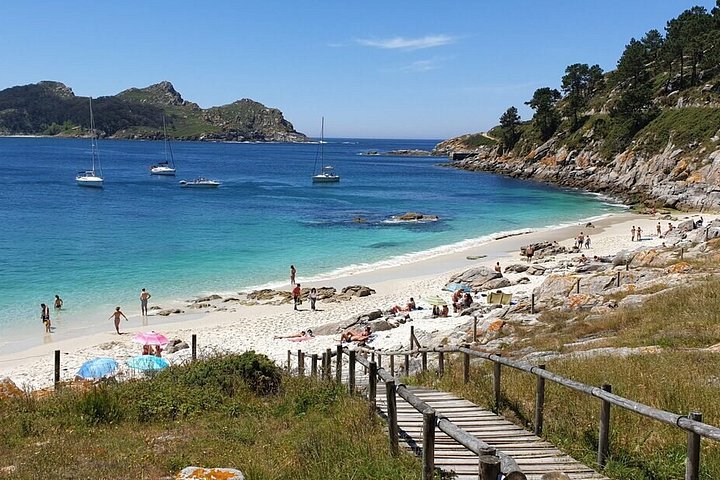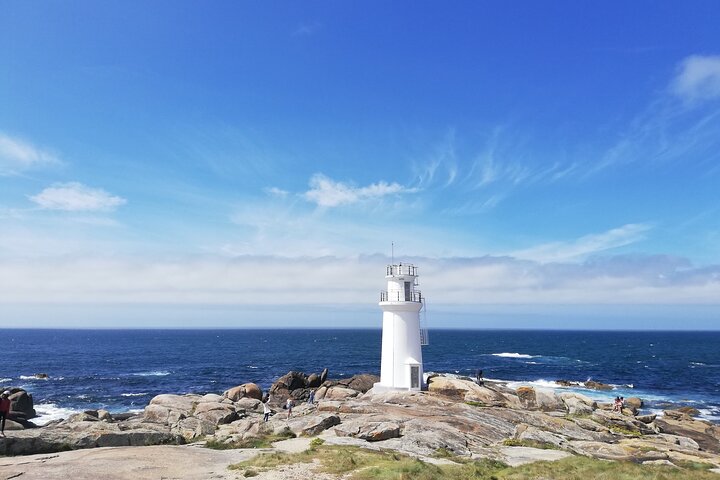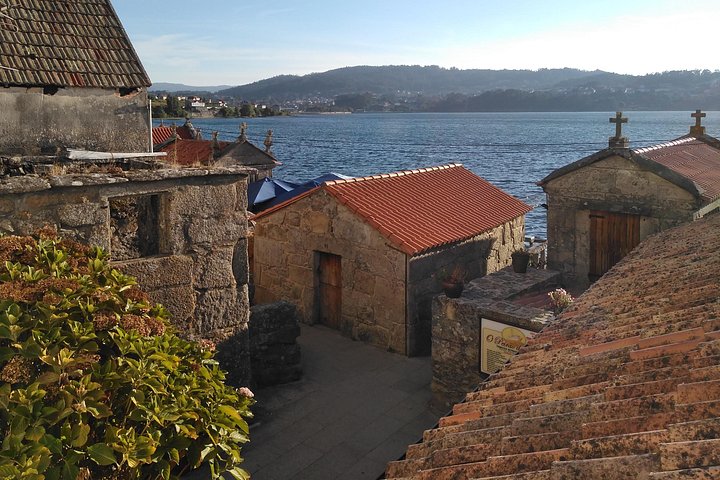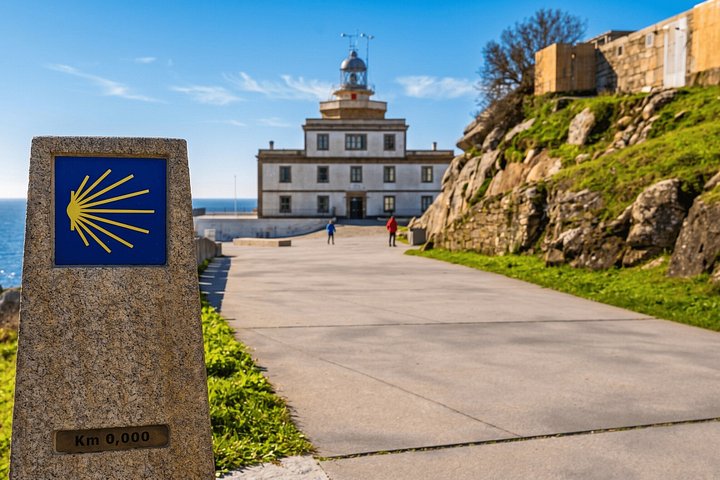
Cape Finisterre, or Fisterra in Galician, is the westernmost point many pilgrims walk to. For centuries it was believed to be the end of the world, the spot where the sun sank into the sea. Many walkers continue from Santiago to the cape over three or four days, but a day tour from Santiago lets you see it by coach with stops at the best viewpoints and villages. The coast here is called the Costa da Morte, the Coast of Death, because of the many shipwrecks on its rocky shores. The tour typically includes the lighthouse at Cape Finisterre, the kilometre zero marker of the Camino, a fishing village or two and a series of scenic stops. The landscape is rugged and beautiful, with granite cliffs, long beaches, standing stones and Atlantic surf.
The drive from Santiago to Fisterra takes around two hours, passing through small towns and green valleys. Stops may include the viewpoint of Ézaro, where a river drops to the sea in a waterfall, the long beach at Carnota with its famously long stone granary, and the fishing village of Muros. At Fisterra, the group usually walks up to the lighthouse for sweeping views and the zero-kilometre stone. It is traditional to watch the sunset here, though day tours often return earlier.
Weather can change quickly on this coast, so bring a windproof jacket and sturdy shoes even in summer. Fog can hide the view, and wind can be fierce on the cape. The lighthouse area has a small shop and cafes, and in the village there are simple seafood restaurants. If you want to try the local seafood, ask the guide for recommendations, and allow time for lunch. Some tours include a boat cruise, which adds a sea perspective on the cliffs.
The Camino connection adds meaning. Pilgrims who walk here traditionally leave something behind, such as a stone carried from home, and the custom of burning boots has been discouraged for environmental reasons. Even if you do not walk, you will sense the end-of-the-road atmosphere. A visit pairs well with a stay of several days in Santiago, because you can see the pilgrim city and then the coast where the road really ends.
Plan the day for comfort. Coach tours can be long, so bring a snack, a bottle of water and a camera. Seats at the front of the bus have the best view, but be ready for winding roads if you are prone to motion sickness. The season matters: summer gives the best chance of clear views, while winter brings dramatic seas but a higher risk of cancellation. Check the terms, and be flexible if the weather is poor.
Food on this coast is excellent, and a stop for lunch is a highlight of many tours. Seafood is central: percebes, octopus, razor clams, grilled fish and the stews of the fishing villages. If you eat shellfish, ask the guide to recommend a restaurant before you reach the cape, because the best tables fill early. Vegetarians can ask for vegetable dishes and tortillas, though choices are limited in small places. Carry a little cash for cafes and small shops, as card machines can be unreliable in remote villages, and bring a refillable water bottle.
What to expect
The experience
A coach tour with stops at coastal viewpoints and the cape lighthouse.
Best time
Summer for clear views, or any season for drama if you dress for wind.
How long
A full day of around ten hours.
Tips
Bring a windproof layer, snacks and a camera, and expect winding roads.
Quick picks
- Best for
- Camino fans, photographers and anyone who likes wild coastlines.
- Families
- Kids who like the sea and open air will enjoy it, though the day is long.
- Couples
- A dramatic sunset-style coastal day.
- Pair with
- Muxía, the Cíes Islands or the Rías Baixas.
- Time needed
- A full day.
Good questions
Why is it called the Coast of Death?+
Because many ships were wrecked on its rocks and reefs over the centuries.
Is Finisterre the westernmost point of Spain?+
No, but it is the most famous western cape on the Camino and was long thought to be the end of the world.
How far is it from Santiago?+
Roughly two hours by road.
Can I see the sunset?+
Only if your tour stays late. Most day tours return earlier.
Is the tour suitable for motion sickness?+
The roads are winding, so bring medication if you are prone to sickness.