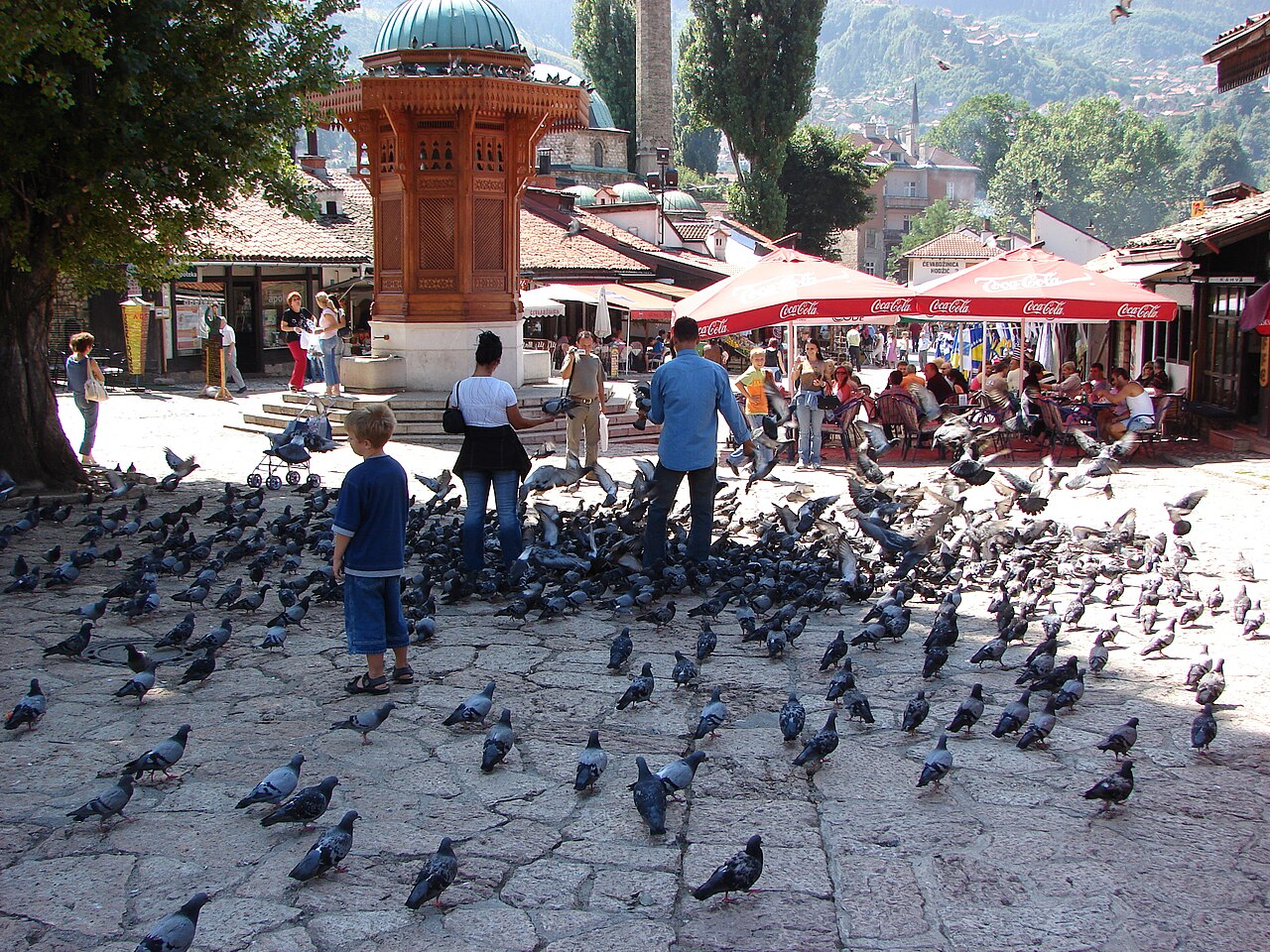
Baščaršija is the old bazaar and historic core of Sarajevo, and it is the first place most visitors walk into and the last they want to leave. Its lanes date back to the Ottoman period, when the city grew around its market, and they are still organised by trade: Kazandžiluk, the coppersmiths' street, rings with the tap of hammers on trays and coffee sets, while neighbouring alleys sell slippers, rugs, jewellery and souvenirs. At the centre is Pigeon Square, where the wooden Sebilj fountain stands under the pigeons and where locals meet. Around it you find the Gazi Husrev-beg Mosque, the Clock Tower, the old caravanserai of Morića Han and dozens of cafes serving Bosnian coffee, the strong, thick brew poured from a copper pot with a sugar cube and a piece of Turkish delight alongside. Cevapi grill houses fill the air with woodsmoke at lunchtime, and a sweet shop on almost every corner sells baklava and tufahija. The streets are pedestrian, compact and easy to cover on foot in a couple of hours, though the real pleasure is to sit, watch the lanes fill and empty, and let the call to prayer drift across the rooftops. Walk a few minutes west and the Ottoman town gives way to Austro-Hungarian boulevards, which is what makes Sarajevo so memorable: two empires in one stroll.
The bazaar's layout tells you how it worked. Each craft had its own street, and the trades were organised in guilds, so the sound and smell changes as you walk: the ring of copper on Kazandžiluk, the leather of the saddlers' lanes, the roasting coffee from the cafes. Some workshops are now mainly for visitors, but many still make what they sell, and watching a coppersmith engrave a tray is worth a few minutes. Sebilj, the ornate wooden fountain on Pigeon Square, is a 20th-century reconstruction of an Ottoman design and is the best meeting point in the city.
Bring an appetite. Cevapi, small grilled minced-meat sausages served in somun flatbread with chopped onion and kajmak, are the signature lunch, and the small grill houses around the bazaar compete fiercely to do them best. For coffee, ask for Bosnian coffee rather than espresso and take your time; it is served to be sipped slowly, never rushed. Bakeries and sweet shops sell burek, a coiled pastry filled with meat, and sirnica and zeljanica, the cheese and spinach versions, which make a good breakfast.
Plan around the light and the crowds. Early morning is quiet and photographs well, midday is busiest when tour groups arrive, and evening brings locals out for a stroll when the lamps come on and the cafes fill. Shops are mostly open daily but keep their own hours, and some close early or shut on Sundays. Dress respectfully if you plan to step into the mosque courtyard, and keep small change for coffee and pastries. Prices at the most obvious souvenir stalls are negotiable, but friendly bargaining rather than hard haggling is the local style.
What to expect
The experience
A self-guided stroll through the pedestrian lanes of the old bazaar, with stops for coffee, cevapi and the main sights around Pigeon Square.
Best time
Early morning for quiet lanes and good light, or early evening when the lamps are lit and locals are out walking.
How long
Two to three hours with coffee and lunch stops; many visitors return several times during a stay.
Tips
Order Bosnian coffee in a copper pot, try cevapi at a grill house, bring small change and wear shoes that cope with polished cobbles.
Quick picks
- Best for
- Every first-timer: the sights, food, craft shops and atmosphere of old Sarajevo in a few compact streets.
- Families
- Car-free and easy to explore, with pigeons to feed on the square, sweets to try and plenty of places to sit.
- Couples
- Coffee in a quiet courtyard, a slow evening stroll when the lamps come on and dinner at a grill house.
- Pair with
- A guided old town walk, the Gazi Husrev-beg Mosque and the Latin Bridge a few minutes away.
- Time needed
- Two to three hours, longer with a leisurely lunch.
Good questions
Is Baščaršija free to visit?+
Yes, the bazaar is an open pedestrian district with no entry fee. You pay only for coffee, food, shopping and any attractions you choose to enter.
What should I eat in Baščaršija?+
Try cevapi in flatbread, burek and the sweet pastries such as baklava and tufahija. Finish with Bosnian coffee served in a copper pot.
Is Baščaršija safe in the evening?+
Yes, it is busy and well lit in the evening and generally relaxed. As anywhere with crowds, keep an eye on your phone and wallet.
Can I pay by card in the bazaar?+
Many cafes and shops accept cards, but small stalls and bakeries often prefer cash. Carry some local currency, the convertible mark, for small purchases.
How long do I need in Baščaršija?+
A couple of hours covers the main lanes and Pigeon Square. Add more time if you want a long lunch or to visit the mosque and museums nearby.