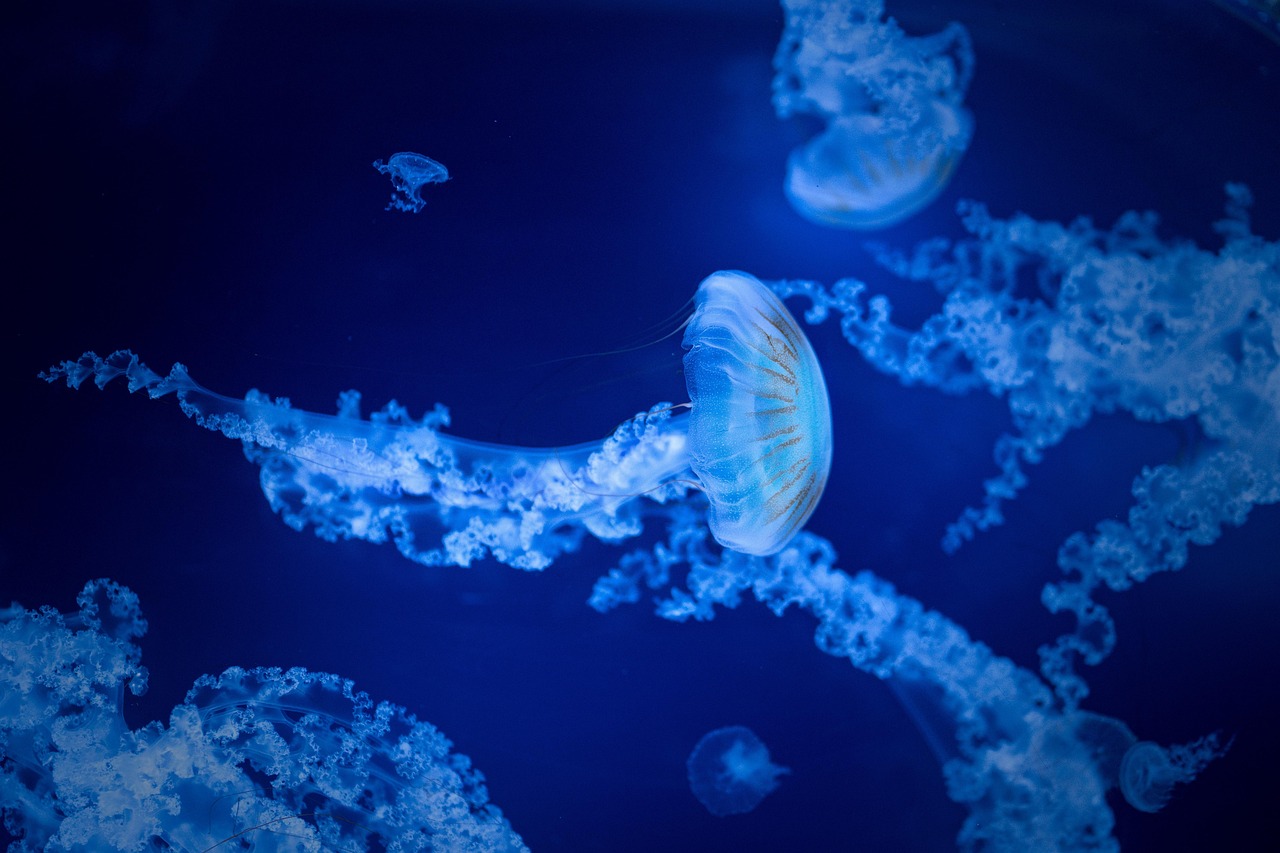
The UGA Marine Education Center and Aquarium is the easy, inexpensive way to meet the Georgia coast up close. Run by the University of Georgia, as part of UGA Marine Extension and Georgia Sea Grant, on Skidaway Island, about half an hour from downtown Savannah, it is a teaching aquarium rather than a tourist attraction, and that is its charm. Sixteen exhibit tanks hold more than 100 animals typical of Georgia's coastal habitats, arranged from offshore live-bottom reefs to the tidal creeks behind the barrier islands: loggerhead sea turtles, stingrays, horseshoe crabs, seahorses, longnose gar, pompano and mullet, plus invasive red lionfish with an explanation of why they matter. A public touch tank lets kids handle whelks and crabs under staff guidance. The outdoor half is just as good: the Jay Wolf Nature Trail runs about a mile and a half through maritime forest and salt marsh, with an accessible boardwalk and an interpretive cabin, and the picnic area sits under live oaks on a bluff above the Skidaway River. Admission is modest, sold on site, and the aquarium is closed Sundays. Honest framing: it is small, and you will see it in an hour; add the trail to make it a half-day. Fit: families, budget travelers, road-trippers on the Georgia coast, and anyone who wants to understand the salt marsh before a Lowcountry boat trip.
What makes this stop worthwhile is local specificity. Instead of a global tour, the tanks show you exactly what lives in the water off Tybee and in the creeks around Savannah, so a later beach walk or kayak trip makes more sense. The loggerheads are the stars, and the staff are university educators who answer questions well. Teaching is the aquarium's core work — school programs and summer marine science camps run here — which is why the tanks are set up as learning stations rather than spectacles.
Do not skip the trail. The boardwalk over the marsh is one of the best short nature walks near Savannah, with fiddler crabs, wading birds and wide views across the spartina. Bring water and bug spray in warm months, and time the walk for a cooler part of the day. The trail's interpretive cabin covers the island's history, the Skidaway Learning Garden at the entrance shows native plants, and the covered picnic pavilion under the live oaks makes the natural lunch stop between tanks and trail.
Practicals
Open weekdays from 9 a.m. to 4 p.m. and Saturdays from 10 a.m. to 5 p.m., closed Sundays; tickets are sold on site, payment is by card or mobile wallet, and season passes suit local families. Allow one hour inside, longer with the trail and a picnic. Pair it with the South Carolina Aquarium in Charleston or the Georgia Aquarium in Atlanta on a Southeast loop.
What to expect
The experience
A small university teaching aquarium with sixteen tanks of Georgia coastal species, a touch tank, and an outdoor nature trail and boardwalk through maritime forest and salt marsh.
Best time
Weekday mornings, when the trail is cooler; it is closed Sundays.
How long
One hour inside, up to two with the trail.
Tips
Bring a card, not cash. Pack bug spray for the marsh boardwalk. Bring a picnic for the live-oak bluff.
Quick picks
- Best for
- A cheap, local, hands-on look at the Georgia coast.
- Families
- Very good — turtles, touch tank and a short nature walk.
- Couples
- Pleasant with the trail and a picnic on the river bluff.
- Pair with
- South Carolina Aquarium in Charleston or Georgia Aquarium in Atlanta.
- Time needed
- One to two hours.
Good questions
How much does it cost?+
Adults pay $8 and children ages 3 to 17 pay $6, with $5 tickets for seniors, military and college students with ID and free entry for ages two and under. Tickets are sold on site.
When is it open?+
Monday through Friday from 9 a.m. to 4 p.m. and Saturday from 10 a.m. to 5 p.m.; it is closed on Sundays.
How far is it from Savannah?+
Less than half an hour, on Skidaway Island southeast of downtown, at 30 Ocean Science Circle on the university marine campus beside the Skidaway River.
What animals will we see?+
Loggerhead sea turtles, stingrays, horseshoe crabs, seahorses, longnose gar, pompano, mullet, invasive red lionfish, and whelks and crabs in a touch tank.
Is there anything to do outside?+
Yes — the Jay Wolf Nature Trail, about a mile and a half through maritime forest and marsh with a boardwalk, plus a riverside picnic area.