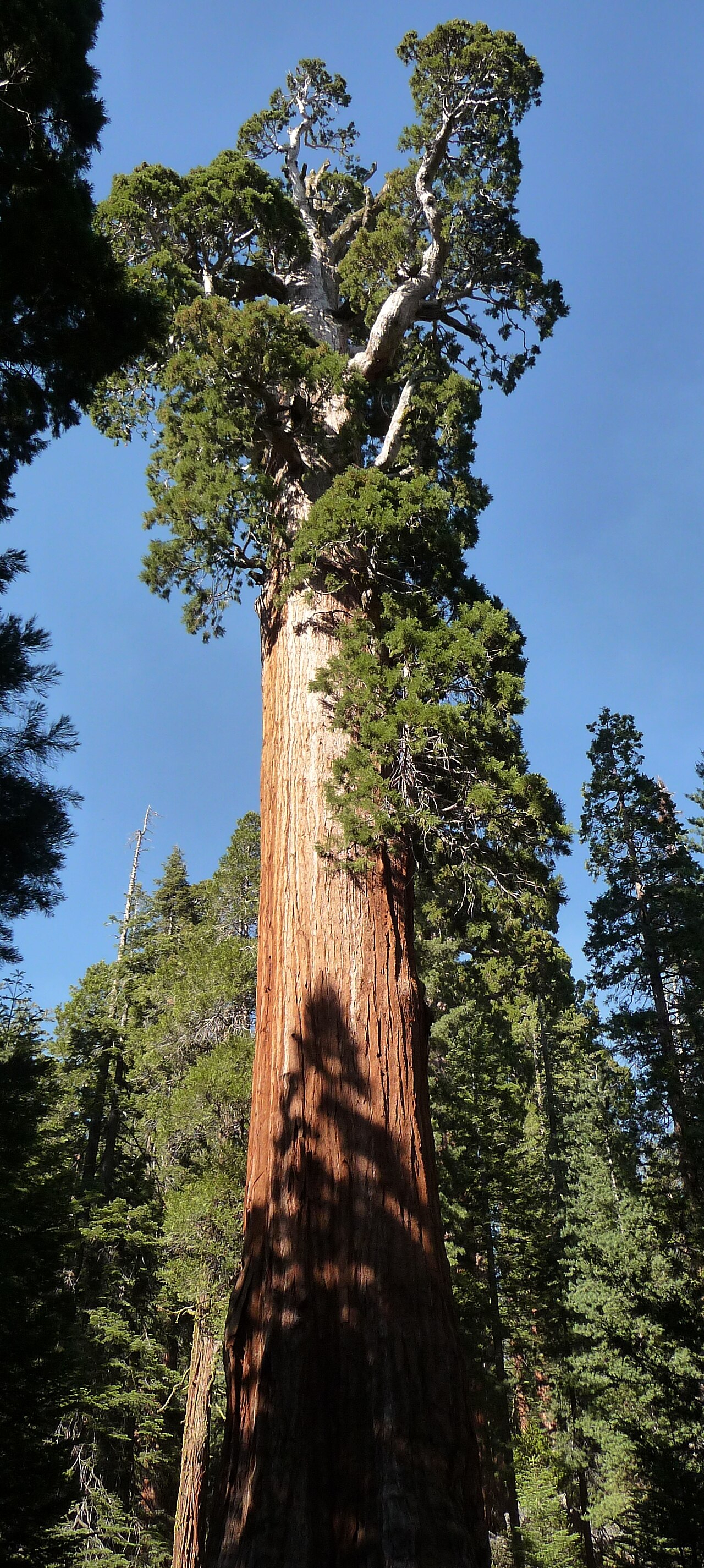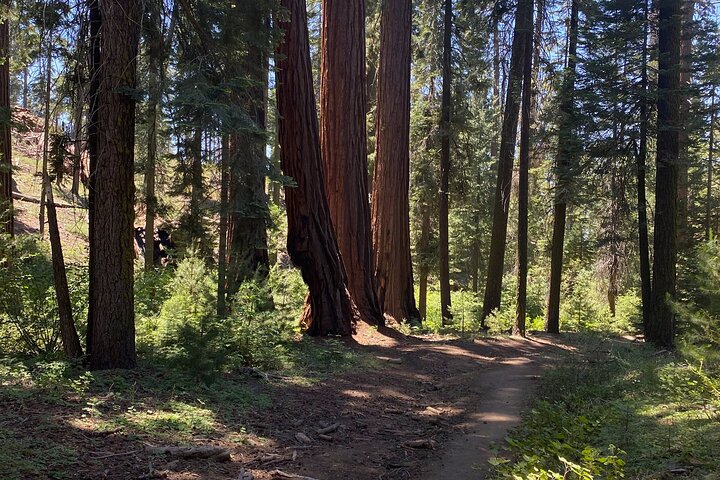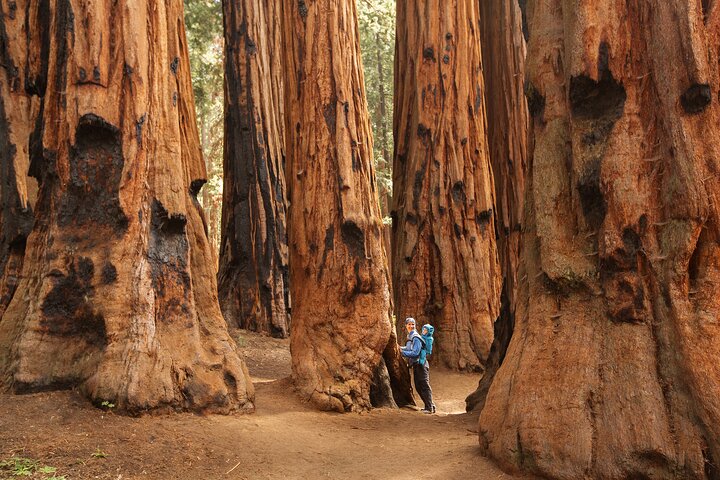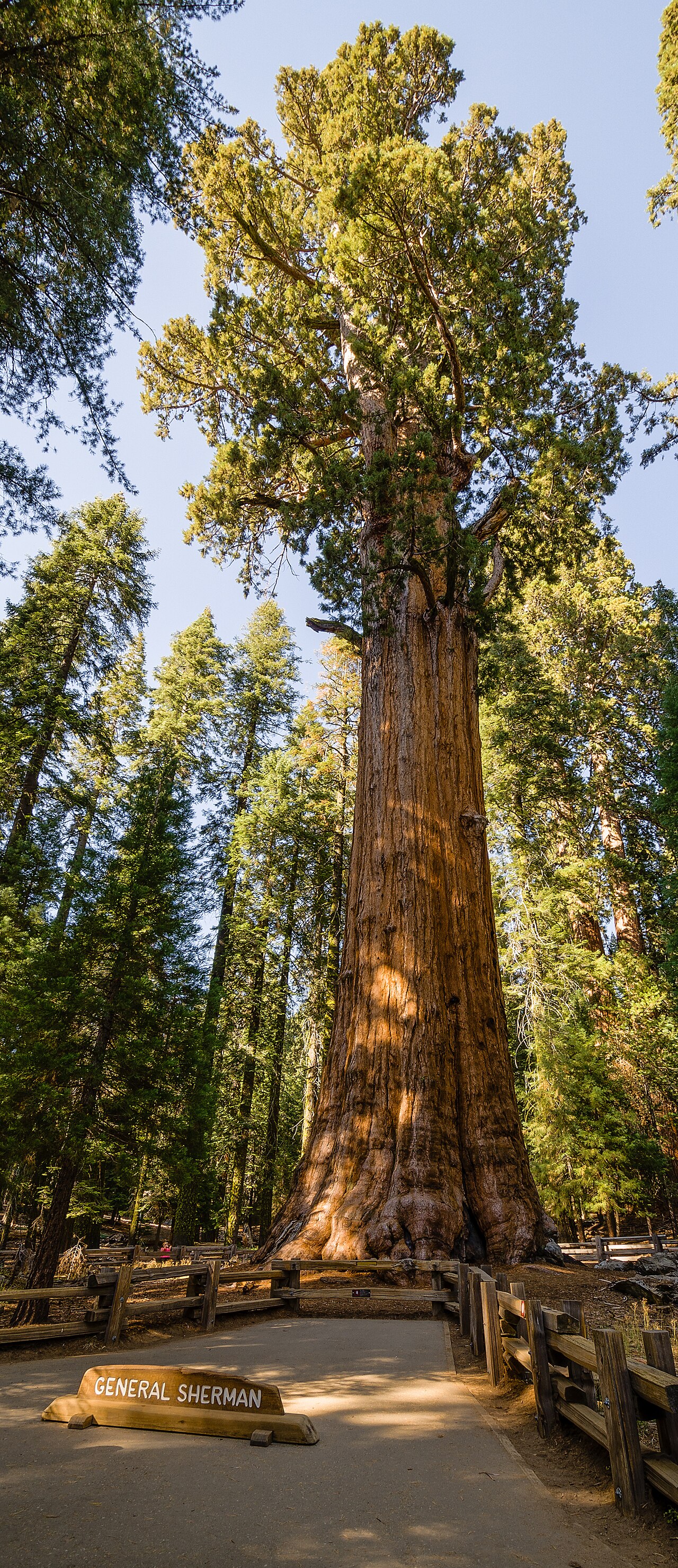
The General Sherman Tree is the headline of any trip to Sequoia National Park, and it earns the billing. It is the largest living single-stem tree on Earth by volume, a giant sequoia roughly 275 feet tall with a trunk more than 36 feet across at the base and an age usually put at 2,200 years. It is not the tallest tree in the world, which belongs to the coast redwoods, and it is not the widest, but nothing else alive carries as much wood. The tree stands in the Giant Forest, a grove of several thousand sequoias on a broad bench of the Sierra Nevada, and it is named for the Civil War general William Tecumseh Sherman. Visitors reach it from one of two parking areas. The main Sherman Tree lot sits off Wolverton Road and connects to a paved trail of roughly half a mile each way that drops through the forest, with a staircase and a steady descent that means the climb back is the harder part. A smaller accessible lot on the Generals Highway offers a shorter, gentler paved route for visitors who use wheelchairs or cannot manage the main trail. Interpretive signs along the way explain the sequoia life cycle and invite you to compare your own height with the surrounding trunks. At the base there is a viewing area and a fenced boundary to protect the roots, because sequoias have shallow root systems that spread widely and are easily damaged by trampling. Expect crowds at midday in summer. Early morning light through the red bark is the best time for photographs, and the Sherman Tree is also an easy place to meet the idea of scale: stand at the rail and let your eye run up the trunk to the first branch, which is itself larger than most trees.
Understanding what you are looking at. Giant sequoias grow naturally only on the western slope of the Sierra Nevada, in a few dozen groves between about 4,500 and 7,500 feet. Their thick, fibrous bark can be two feet deep and protects them from fire, and their cones open in the heat of flames, so periodic low-intensity fire actually helps seedlings take root.
Many of the great sequoias in the Giant Forest carry fire scars that they have simply grown around. Severe wildfires in recent years have tested even these giants, and the Sherman Tree has been protected during fire seasons with measures such as raking and wrapping at its base. That history is part of the story you will read along the trail.
How to do it well. Aim for early morning or late afternoon, when the car park is calmer and the light is warmer. Wear shoes with grip, carry water, and remember that you are above 6,000 feet, so the walk back up can leave first-timers breathless. If you visit in the busy season, take the free park shuttle where it operates instead of circling for a space.
The Sherman Tree is also the start of the Congress Trail, a paved loop of about two miles that passes the President Tree and the grouped trunks called the House and Senate, so many visitors combine the two in a single outing of two hours or so.
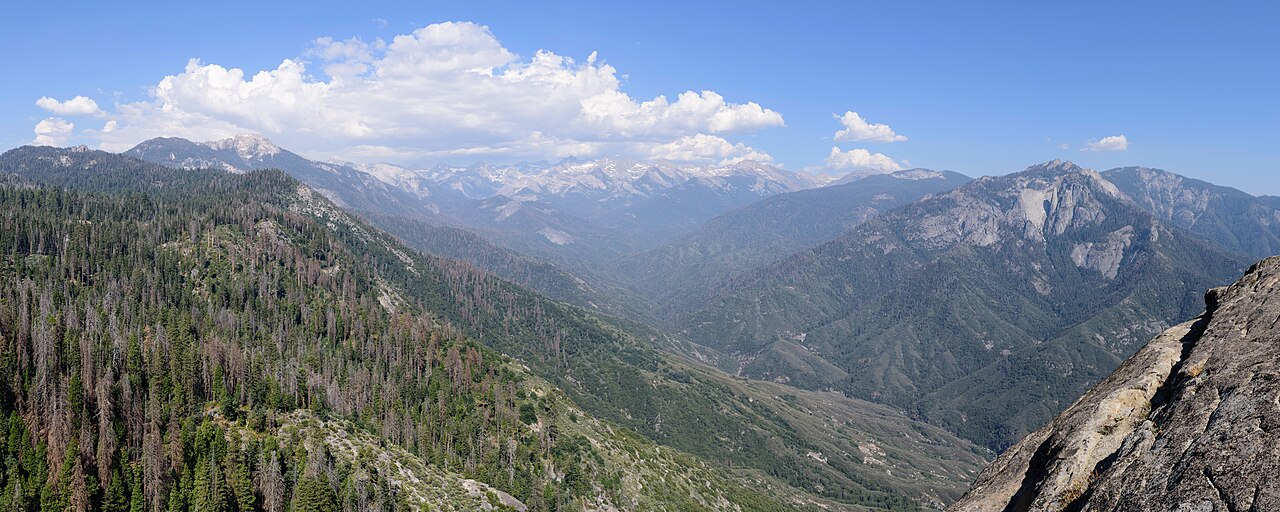
What to pair it with. The Giant Forest Museum, Moro Rock and Crescent Meadow are all within a short drive on the Generals Highway, which makes the Sherman Tree the natural opening stop of a Giant Forest day. In winter the area is often snowy and chains may be required on the highway, but the trail is usually walkable with traction and the snow-laden forest is unforgettable.
What to expect
The experience
A paved trail of about half a mile each way from the main Sherman Tree parking area, or a shorter accessible route from the Generals Highway lot, ending at a viewing area beneath the tree.
Best time
Early morning or late afternoon for softer light and smaller crowds; winter for a snowy forest.
How long
About an hour for the tree alone, two hours with the Congress Trail.
Tips
The climb back up is the hard part at this altitude. Use the free shuttle in season when parking fills, and stay on the trail to protect the roots.
Quick picks
- Best for
- Anyone who wants to stand beside the largest living tree on Earth.
- Families
- The paved trail is manageable for most children, and the scale of the trunk impresses every age.
- Couples
- Come early and walk the quiet Congress Trail loop afterward.
- Pair with
- The Giant Forest Museum and Moro Rock.
- Time needed
- One to two hours.
Good questions
How big is the General Sherman Tree?+
It is roughly 275 feet tall with a base more than 36 feet across and is the largest living single-stem tree on Earth by volume. The age is commonly estimated at about 2,200 years.
Is the walk to the Sherman Tree hard?+
The main trail is paved and about half a mile each way, but it descends to the tree so the return is uphill at altitude. An accessible lot on the Generals Highway offers a shorter route.
Is it the tallest tree in the world?+
No. Coast redwoods are taller. The Sherman Tree is the largest by volume of wood.
Can I touch the tree or walk up to it?+
There is a viewing area and a boundary at the base to protect the shallow roots, so you look from a short distance rather than touching the trunk.
What else is nearby?+
The Congress Trail starts here, and the Giant Forest Museum, Moro Rock and Crescent Meadow are a short drive along the Generals Highway.