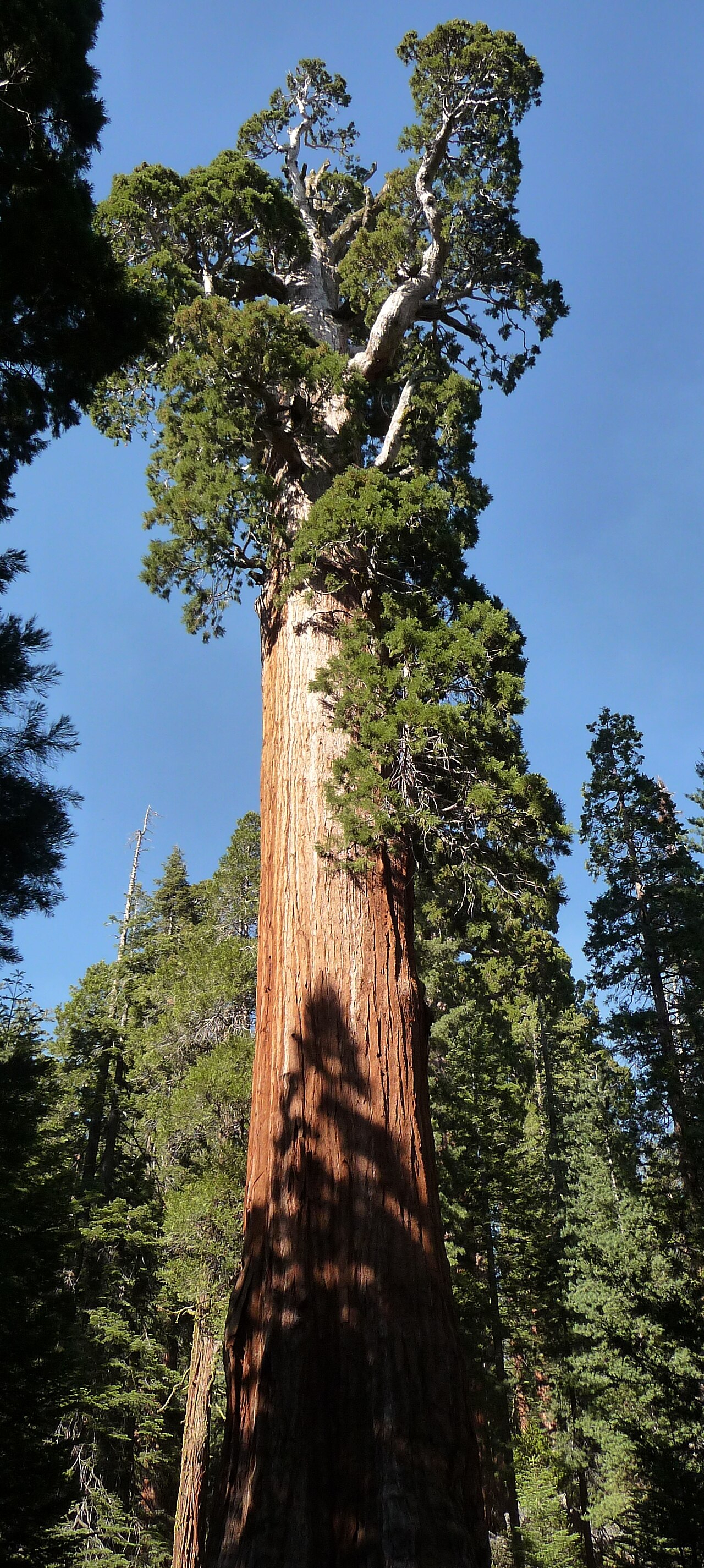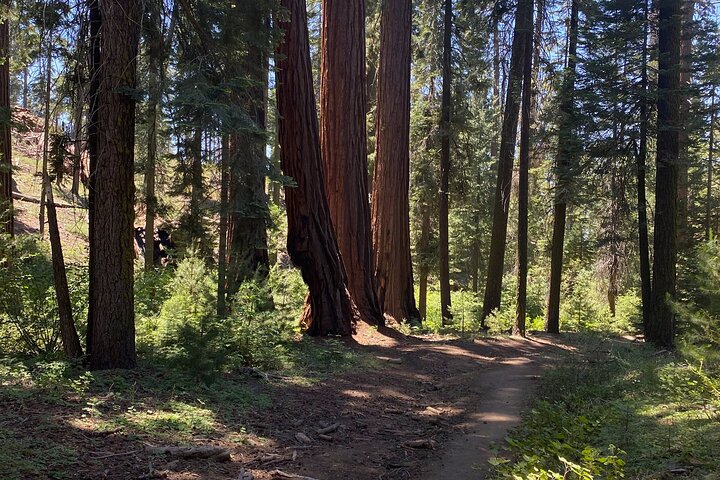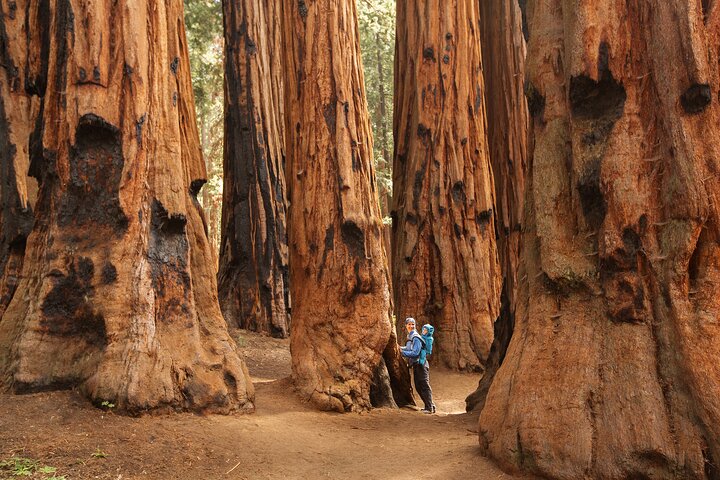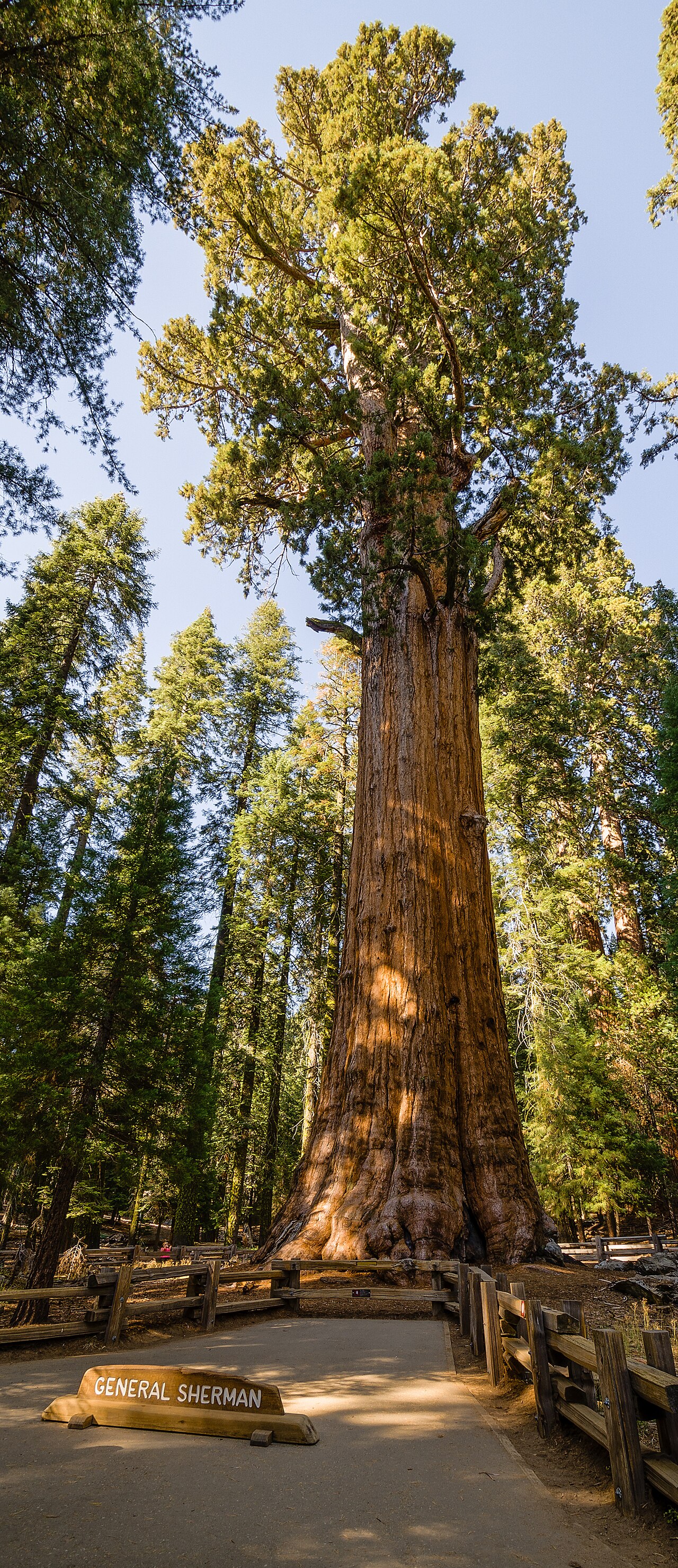
The Giant Forest Museum is the best place to begin any visit to the sequoias. It occupies a stone-and-timber building from 1928 that once held a market and lodging services for the forest, which was crowded with cabins and parking before the park removed most development to protect the roots of the trees. Today the building is a visitor center with exhibits on how sequoias live, why fire matters to them and how the park has changed the way people use the forest. It also holds a park store and self-issue wilderness permits, and rangers can give current road and trail conditions. Outside, the Sentinel Tree stands at the museum door and the paved Big Trees Trail starts nearby. That loop is about 1.2 miles around Round Meadow, with interpretive signs and boardwalk sections, and is mostly level and accessible, making it the easiest long walk among giants in the park. The Congress Trail begins at the General Sherman Tree and runs roughly two miles on pavement past the President Tree, named for a president of the United States, and the groups of trunks known as the House and the Senate. A longer network of trails branches off for hikers who want more solitude. In summer a free shuttle links the museum, the Sherman Tree and other stops in the area, which helps when parking is tight. Hours vary by season and the visitor center is typically closed on a few winter days, so check the park website for current opening times.
Why it matters. In the early twentieth century the Giant Forest was a village, with cabins, stores and roads around the base of the great trees. Over time scientists saw that compaction and construction were stressing the trees' shallow roots. The park moved the accommodation and services out to nearby areas, restored meadows and replaced parking with trails, a transition that is now a model for managing visitors in sensitive places. The museum explains this story and then sends you out to see the results.
Best ways to use it. Stop here first to check conditions and pick up a map, then walk the Big Trees Trail for an easy introduction. If you want to link several sights on foot, park at the Sherman Tree and do the Congress Trail, which links up with side trails to the museum and Crescent Meadow if you are feeling ambitious. The museum bookstore is a good place to buy trail guides and children's nature books. Rangers sometimes lead programs on sequoia ecology, so ask about current offerings.
Planning notes. The museum sits about sixteen miles from the Foothills entrance by a winding mountain road, so allow around an hour for the drive. The Generals Highway can close temporarily in storms between Giant Forest and Grant Grove, and winter driving may require chains.
Facilities near the museum are limited, so bring water and snacks, and use the restrooms before heading out. The loop trails are easy, but at altitude the walk can feel longer than expected, and a short rest on a bench with a view of the meadow is part of the experience.
Extra details worth knowing. The Sentinel Tree outside the museum is a convenient first sequoia for visitors who cannot walk far, because it stands right beside the parking area. Rangers and volunteers often staff the information desk and can advise on which trails are clear of snow, which roads are open and how crowded the Sherman Tree area is. Families should ask about the junior ranger program, which gives children a booklet of activities and a badge, and turns the loop trails into a small treasure hunt.
What to expect
The experience
A visitor center in a restored 1928 building with exhibits and a store, plus paved loops through the groves, including the 1.2-mile Big Trees Trail and the roughly two-mile Congress Trail.
Best time
Morning for parking and light; winter for snowy trails if the road is open.
How long
An hour for the museum and the Big Trees Trail, longer with the Congress Trail.
Tips
Ask rangers about road conditions, and carry water. Hours change by season.
Quick picks
- Best for
- First-time visitors who want context and easy walks among the trees.
- Families
- The Big Trees Trail is flat and paved with signs that engage children.
- Couples
- The Congress Trail early in the day, before the crowds arrive.
- Pair with
- The General Sherman Tree and Moro Rock.
- Time needed
- Half a morning.
Good questions
What is in the Giant Forest Museum?+
Exhibits on sequoia ecology and the history of the forest, a park store, and self-issue wilderness permits. Rangers can also give trail and road updates.
How long is the Big Trees Trail?+
About 1.2 miles in a loop around Round Meadow, mostly level and accessible, with interpretive signs.
Where does the Congress Trail start?+
At the General Sherman Tree, running roughly two miles on pavement past the President Tree and the House and Senate groups.
Is there a shuttle?+
In summer a free shuttle links the museum, the Sherman Tree and other Giant Forest stops. Check the park website for the current schedule.
How far is it from the park entrance?+
About sixteen miles from the Foothills entrance, roughly an hour on a winding road.