Transylvania is one of the few places in Europe where whole villages built their churches as fortresses, and Sibiu is the best base for seeing them. The Saxon settlers who came here in the Middle Ages lived on a frontier, so they surrounded their churches with thick walls, towers and storerooms, creating refuges where a community could shelter for weeks. Dozens of these fortified churches still stand within a day's reach of the city, and choosing among them is the main planning question.
Why they exist
In the late medieval period the region faced raids and sieges, and a village could not rely on distant castles for protection. The answer was to fortify the one solid building every community already had. Walls were raised around the church, towers were added for defence and for storing food, and rooms were built into the ramparts so each family had a place for its bacon, grain and valuables. Some churches have several rings of walls, gate towers and covered walkways. Knowing this story turns a visit from a pretty photograph into a lesson in how people lived.
Biertan: the grand one
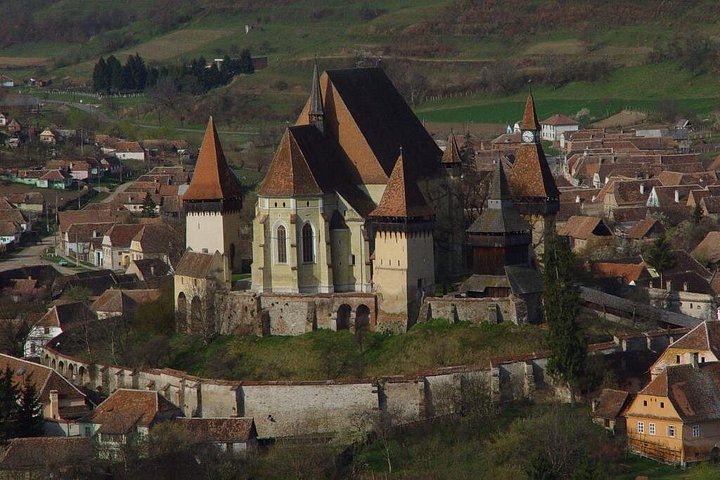
Biertan is the best known and the most impressive, with three rings of walls, a hilltop setting and a large hall church in the middle. It sits on the UNESCO World Heritage list as part of the Transylvanian villages with fortified churches, and it works well as a single stop or as part of a day that also includes Sighisoara. Expect to climb steps and walk through several gateways, so wear shoes with grip. Allow an hour or more.
Viscri: the quiet village
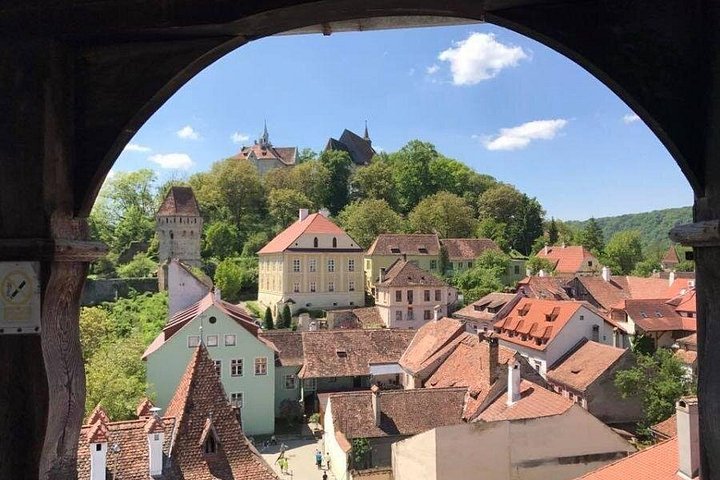
Viscri is smaller and more rural, and it is valued as much for the village as for the church. Wide streets of colourful gabled houses, geese and carts and a slow pace give a sense of how a Saxon village feels. A visit suits travellers who want atmosphere rather than monumental architecture, and it combines well with Biertan and Sighisoara on a long day.
Closer to Sibiu
You do not need a full day to see fortified churches. Churches in the villages of the Marginimea Sibiului and in the countryside just outside the city give a taste in a few hours, and Cisnadioara, with its hilltop Romanesque church and fortress ruins, is a good half-day option. If you are short of time, a half-day outing is a sensible compromise.
Choosing a route
A typical day with a driver or guide links two or three of the major sites, with Biertan, Sighisoara and Viscri the popular combinations. A slower option adds a farm visit and a carriage ride, which gives context on village life. Public transport to the villages is limited, so a guided tour or a driver is the easiest way. A rental car gives freedom, but roads in the villages can be narrow and signs sparse.
Opening hours and access
Some churches are staffed by local caretakers, and opening hours can be shorter in the cooler months, closed on certain days or dependent on a key holder. Check ahead with your tour operator or the tourism office, and do not assume every church is open at every hour. Entry is usually inexpensive, and a small donation is appreciated at smaller sites.
What to bring
Modest clothing for church interiors, comfortable shoes for steps and cobbles, a light jacket because interiors stay cool, a little cash for tickets and village shops and water for the road. Photography is usually allowed outside, and rules inside vary, so ask before you shoot.
When to go
Late spring to early autumn gives the best light, open churches and green hills. Winter has its own charm, with frost on the walls, but daylight is short and some sites run reduced hours. Weekdays are quieter than weekends, and early morning is best for photographs at hilltop sites.
Combining with the rest of your stay
Fortified churches work well after a few days in the city, when you have seen the squares and the museums. Plan one longer day for the big names and one shorter outing if you want more, and balance them with a rest day. A comfortable hotel with a spa or free parking is welcome after a long day on the road. With a little planning, the churches become the most distinctive part of a Sibiu trip.