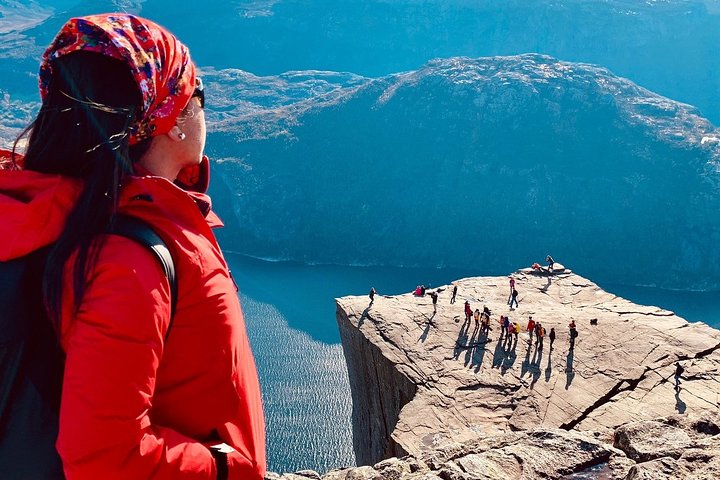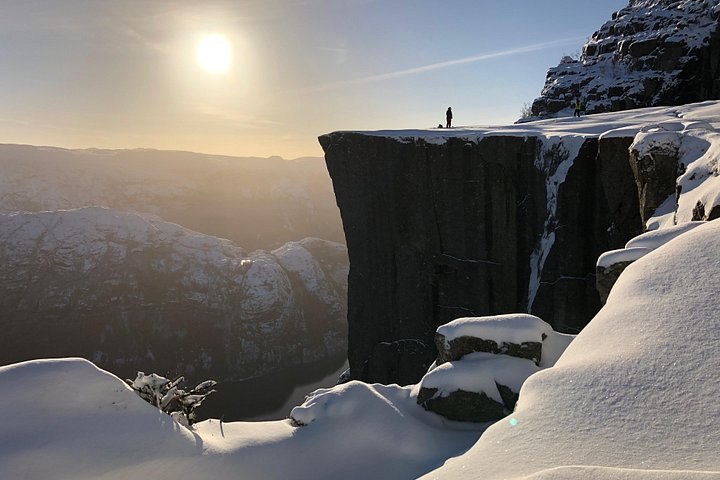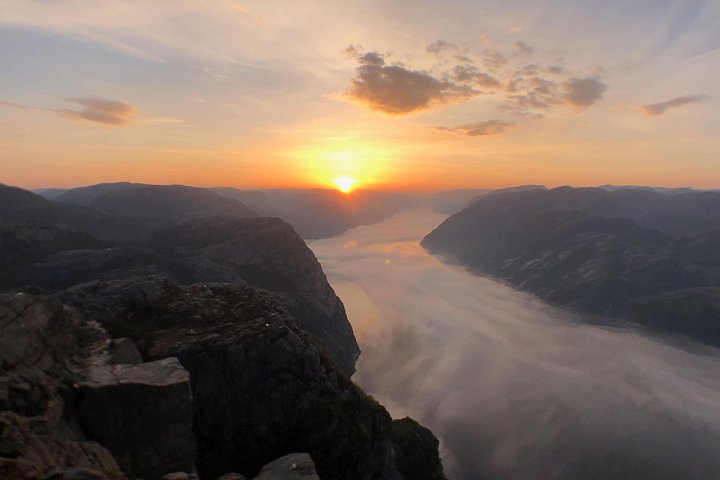
Anyone who has seen photographs of Preikestolen with a queue of people waiting to stand at the edge will understand the appeal of a sunrise departure. The plateau itself is the same, a flat granite slab above Lysefjord with a drop of roughly 600 metres, but the experience at dawn is very different. In the long summer light the sun rises early, the trail is almost empty, the air is cool and the fjord below is often wrapped in a low layer of mist. Instead of sharing the summit with hundreds of people, you may share it with a handful, and you can sit, eat a snack and take your time. A guide handles the early transfer from Stavanger, the logistics at the trailhead and the pacing on the way up.
Because the walk itself is the same eight kilometres return as any other Preikestolen hike, the physical demands are identical: a steep first half with stone steps, then a more open plateau, and around four to five hours of walking in total. What changes is the start time. Departures leave Stavanger in the very small hours in midsummer and somewhat later at other times of year, so you will lose some sleep and should plan a quiet afternoon afterwards.
Bring a headtorch or phone light for the first stretch if your guide advises it in spring or autumn, when the sun rises later, and dress in layers because it is noticeably colder at dawn, especially on the exposed summit.
Light is the big reward. Low sun rakes along the fjord walls and gives depth that the flat midday light never does, and early morning is also when the air is usually calmest. That makes the edge feel less intimidating, although the same safety rule applies: there is no fence, so keep a sensible distance and never step backwards while taking a photograph. Wind can arrive without warning, and wet stone can be slippery. Your guide will manage the group and tell you where to stand.
This format suits keen photographers, couples and early risers who dislike crowds, and it is a good way to use a single day in the region, because you are back in Stavanger by late morning with the rest of the day free for the old town or the museums. It is less ideal for anyone who finds early alarms miserable or for families with younger children. In winter and deep shoulder season, sunrise hikes may not run or may be replaced by different timings, so confirm the departure details and the minimum numbers when you book.
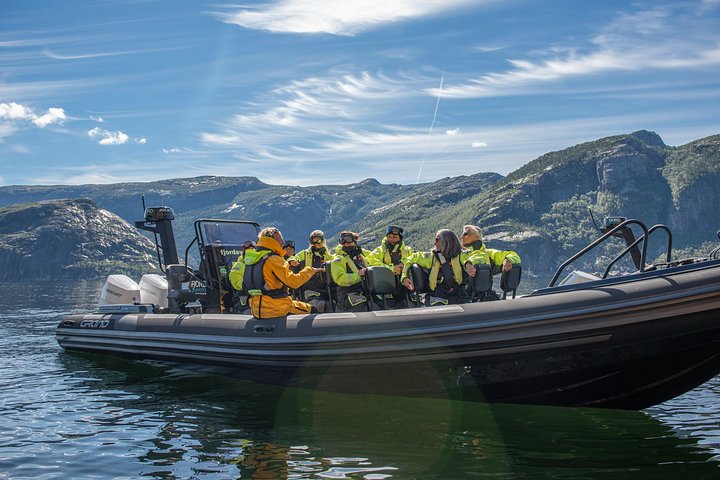
Bring water, a flask of something hot, a proper breakfast or snack, gloves and a hat even in summer, and good hiking shoes. Phone coverage is limited on the plateau, so agree on a meeting point with your group in advance. Combine this with a fjord cruise on another day to see the same cliff from below, and you will have experienced Preikestolen in two entirely different ways.
What to expect
The experience
A guided early-morning hike to Preikestolen with a transfer from Stavanger, timed so that you reach the plateau around sunrise.
Best time
Clear mornings from late spring to early autumn, when the sun rises early enough to be practical.
How long
About 4 to 5 hours of walking, finishing by late morning.
Tips
Dress in layers, bring a warm drink and a headtorch if advised, and keep well back from the unfenced edge.
Quick picks
- Best for
- Photographers and early risers who want Pulpit Rock with far fewer people.
- Families
- Better for older children and teenagers because of the early start.
- Couples
- A quiet, memorable way to start a day together; mist over the fjord is common.
- Pair with
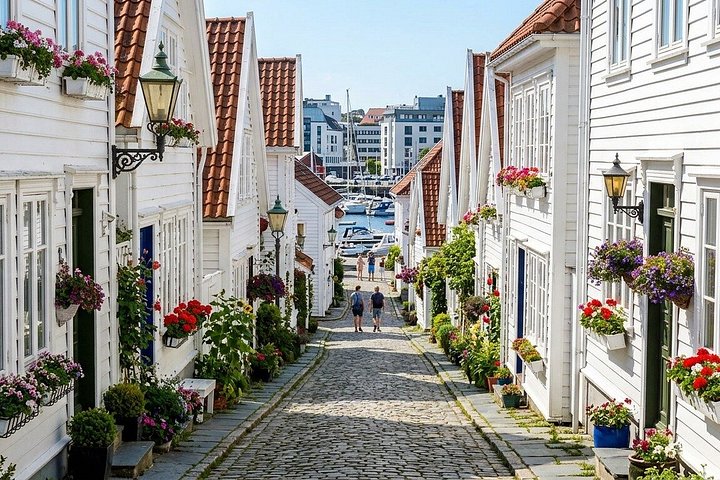
- A slow lunch back in Stavanger, then an afternoon in Gamle Stavanger.
- Time needed
- Most of the morning, about 7 to 8 hours including transfers.
Good questions
How early does the sunrise hike leave?+
In midsummer the transfer leaves in the very small hours, and later in spring and autumn. Check the exact departure time for your date when you book.
Is the trail different at sunrise?+
No, it is the same route as the daytime hike. The difference is the quiet, the cooler air and the low light.
Do I need a headtorch?+
It depends on the season. In midsummer it is light almost all night, while in spring and autumn a light can help on the first stretch. Your operator will advise.
Is it much colder at dawn?+
Yes, especially on the exposed plateau. Wear warm layers, a hat and gloves, and bring a hot drink.
Is the sunrise hike safe?+
It is as safe as the daytime hike if you follow your guide and stay away from the edge. Wet stone and wind are the main hazards.