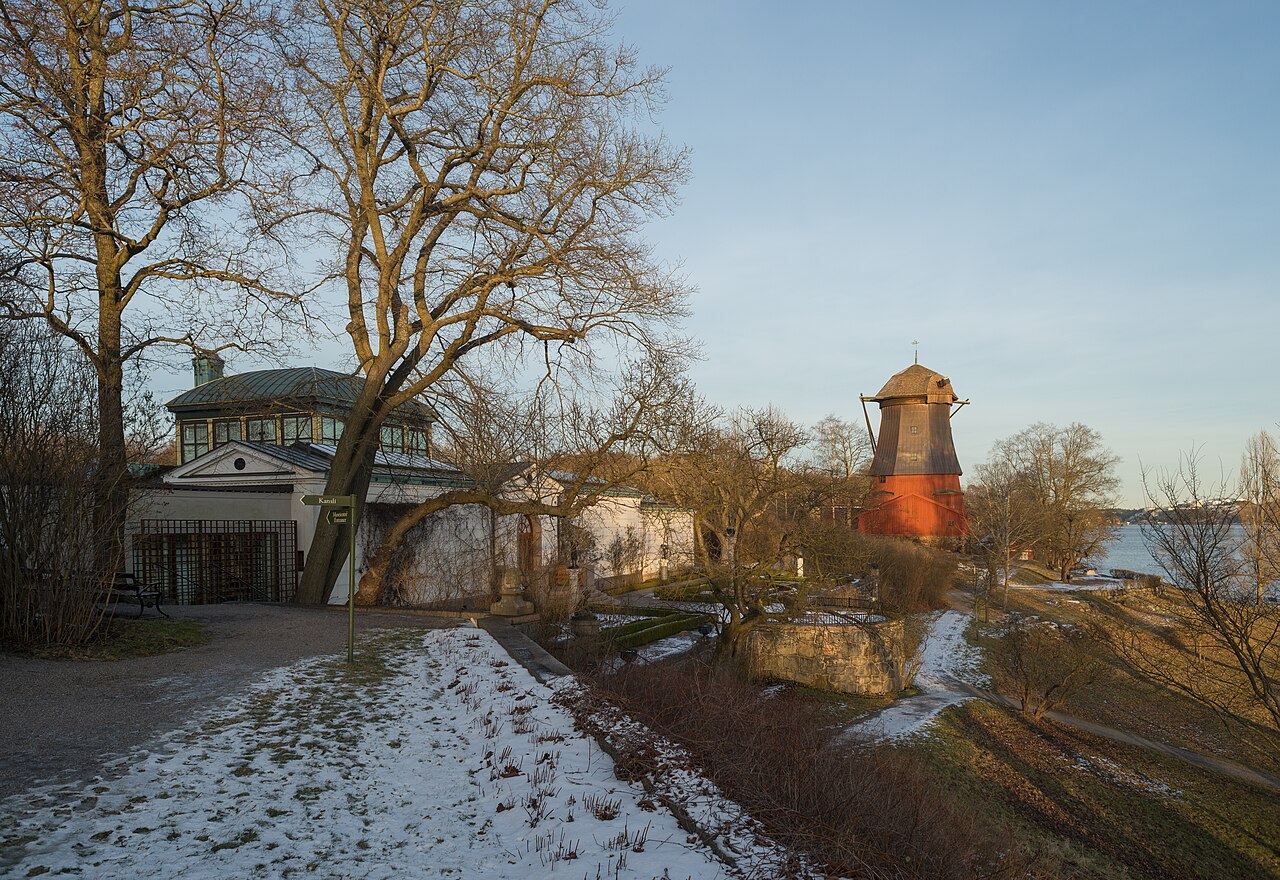
Waldemarsudde is the former home of Prince Eugen, the youngest son of King Oscar II, who lived from 1865 to 1947 and was one of the best-known landscape painters in Sweden as well as a patron and collector of Nordic art. He built his villa on a headland on the southern shore of Djurgården in the early years of the twentieth century, with the main house designed by the architect Ferdinand Boberg, and filled it with paintings, sculpture and furniture. On his death he left it to the Swedish state, and it has been open to the public since 1948. The villa is still arranged much as he lived in it, with his own landscapes hanging among works by the Nordic artists of his time, and a purpose-built gallery added in the early 1910s displays more of the collection and hosts changing exhibitions. Outside, the grounds are a large part of the pleasure: lawns and flowerbeds slope down towards the water, old oaks give shade, and an eighteenth-century linseed oil mill still stands in the park. The tour of the house and gallery gives you a more personal picture of Swedish art around 1900 than a big national museum can, and the setting, on the water with the city across the bay, is hard to beat.
How to see it
Start with the villa, where the rooms give a sense of the prince's daily life and his taste, then walk through the gallery and finish in the garden. If the weather is good, the grounds are the place to linger, with benches facing the water and views of the passing boats. There is a cafe on site, which makes a good stop between the house and the park.
What to look for
The prince's own paintings, which are quiet, atmospheric landscapes in a late-Romantic style, and the way his home blends art, garden and architecture. The collection includes works by leading Nordic painters and sculptors of his generation, and the exhibitions in the gallery change through the year, so each visit can be different.
Getting there
Waldemarsudde lies on the quieter southern edge of Djurgården. You can ride a bus along the island from the city, take the ferry or tram to the main museum area and walk along the shore, or cycle on a fine day. Allow a little more time than you might expect for the journey, and plan around the opening days, which follow a weekly pattern with one closing day. A visit pairs well with a morning at the Vasa Museum or Junibacken, followed by a picnic in the grounds.
Why it is a favourite
Many visitors to Djurgården head straight for the big museums, and Waldemarsudde offers a gentler counterpoint, a place where art and nature are shown at human scale. The prince was a keen gardener as well as a painter, and the planting in the park, with its flowering borders and old trees, reflects his taste. In the gallery you can see how Nordic painters of his time responded to light, water and forest, which makes a useful background to the landscapes you will see as you travel around Sweden.
A walk back along the shore to the city in the evening, with the water on one side and the trees on the other, is a lovely way to end the day.
What to expect
The experience
A villa museum, gallery and garden in one: Prince Eugen's home, his collection of Nordic art, a historic mill and grounds sloping to the water.
Best time
A fine spring or summer day for the garden; any season for the villa and gallery.
How long
About two hours with the garden and a cafe stop.
Tips
Allow time for the grounds, check the weekly closing day and combine it with a walk along the Djurgården shore.
Quick picks
- Best for
- Art lovers and anyone who wants a quiet, beautiful corner of Djurgården away from the crowds.
- Families
- Space to roam in the garden, though the art itself suits older children best.
- Couples
- A slow afternoon of art and garden by the water.
- Pair with
- The Vasa Museum or Junibacken on the same island.
- Time needed
- Two hours.
Good questions
Who was Prince Eugen?+
The youngest son of King Oscar II, a well-known Swedish landscape painter and a patron and collector of Nordic art.
Where is Waldemarsudde?+
On the southern shore of Djurgården, a bus ride or a scenic walk from the main museum area.
What is there to see?+
The prince's villa and his art collection, a gallery with changing exhibitions, a historic linseed oil mill and a large garden by the water.
Is the garden worth visiting?+
Yes, the grounds slope to the water and are one of the most attractive parts of the visit, especially in spring and summer.
How long do I need?+
About two hours, a little more if you want to linger in the garden or cafe.