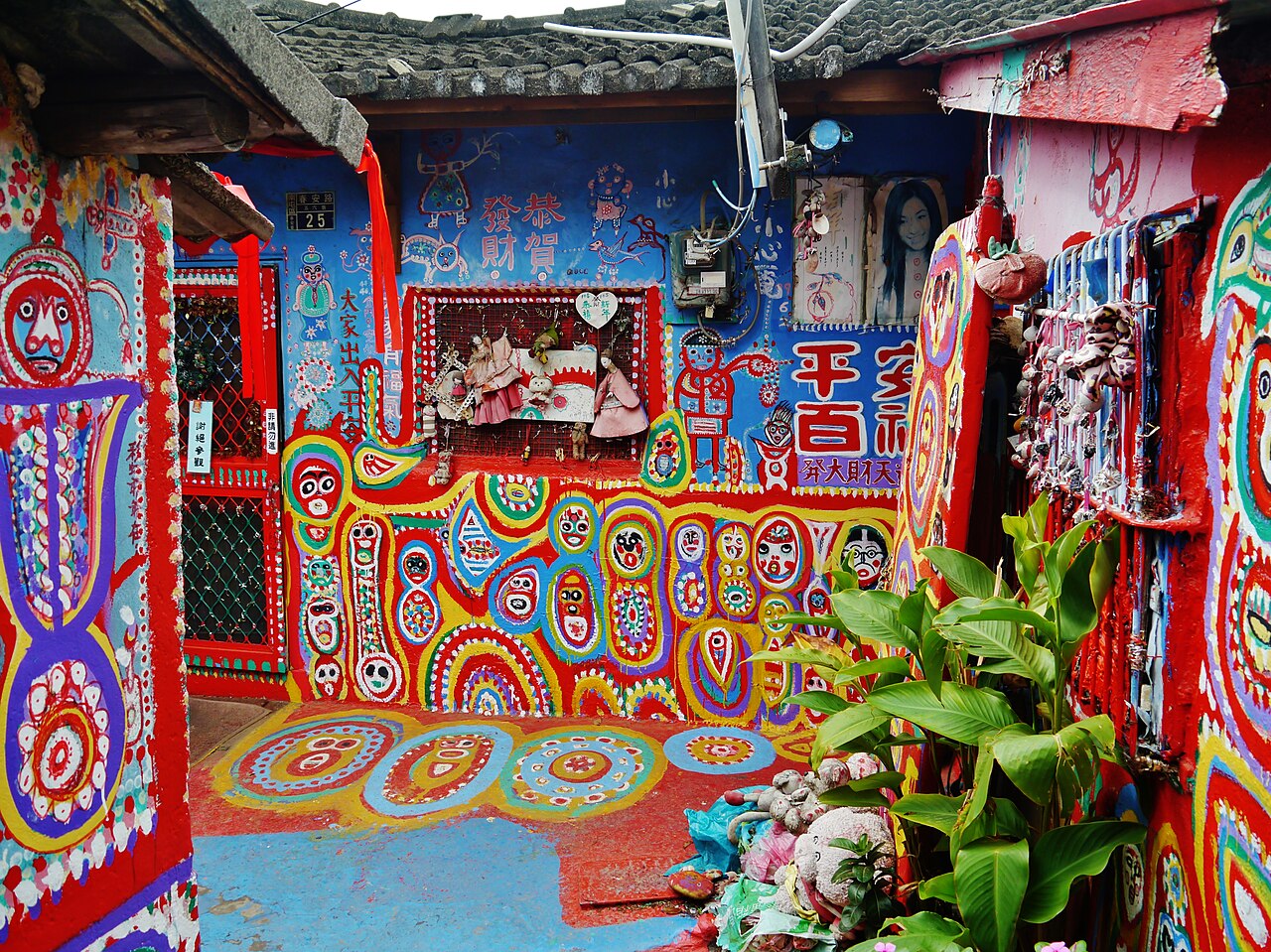
Rainbow Village is a small lane of former military housing in Nantun District that became famous for its hand-painted walls. The Taichung tourism board notes that a retired soldier known as Grandpa Rainbow began painting the buildings in September 2008, and the project grew from a private act of decoration into a city landmark when residents and supporters campaigned to save the houses from demolition. Birds, faces, animals and swirling patterns cover walls, doors and the ground, in a style that is naive, joyful and unmistakably personal. Entry is free, the lane is open to walk through, and a visit is short, so it works well as a first stop of the day rather than an all-day destination. The village has changed in recent years, with some murals repainted and newer apartment blocks rising close by, so go for the colour and the story rather than expecting a large, polished theme park.
What to see
Walk the narrow lane slowly and look at the detail, because the charm is in the small things, such as hand-painted figures beside doorways, patterned steps and the repeated motifs of birds and smiling faces. The painter, Huang Yung-fu, died in January 2024 at the age of 101, and reports since then describe the site as quieter, with some of the artwork refreshed by local artists and students after earlier damage. That makes it a place to appreciate as a piece of Taichung's recent history: a veteran's way of saving his home that turned into public art.
Planning the visit
The village is outdoors and there is no ticket office, so there are no fixed hours to worry about, but go in daylight when the colours are at their best and any nearby residents are not disturbed. Weekends are busier with photographers and school groups, and weekday mornings are calmer. Wear comfortable shoes, bring water in summer and keep your voice down because people live here. Most visitors need only 20 to 40 minutes. Some corners are narrow, so take care with strollers and wheelchairs.
Getting there and combining it
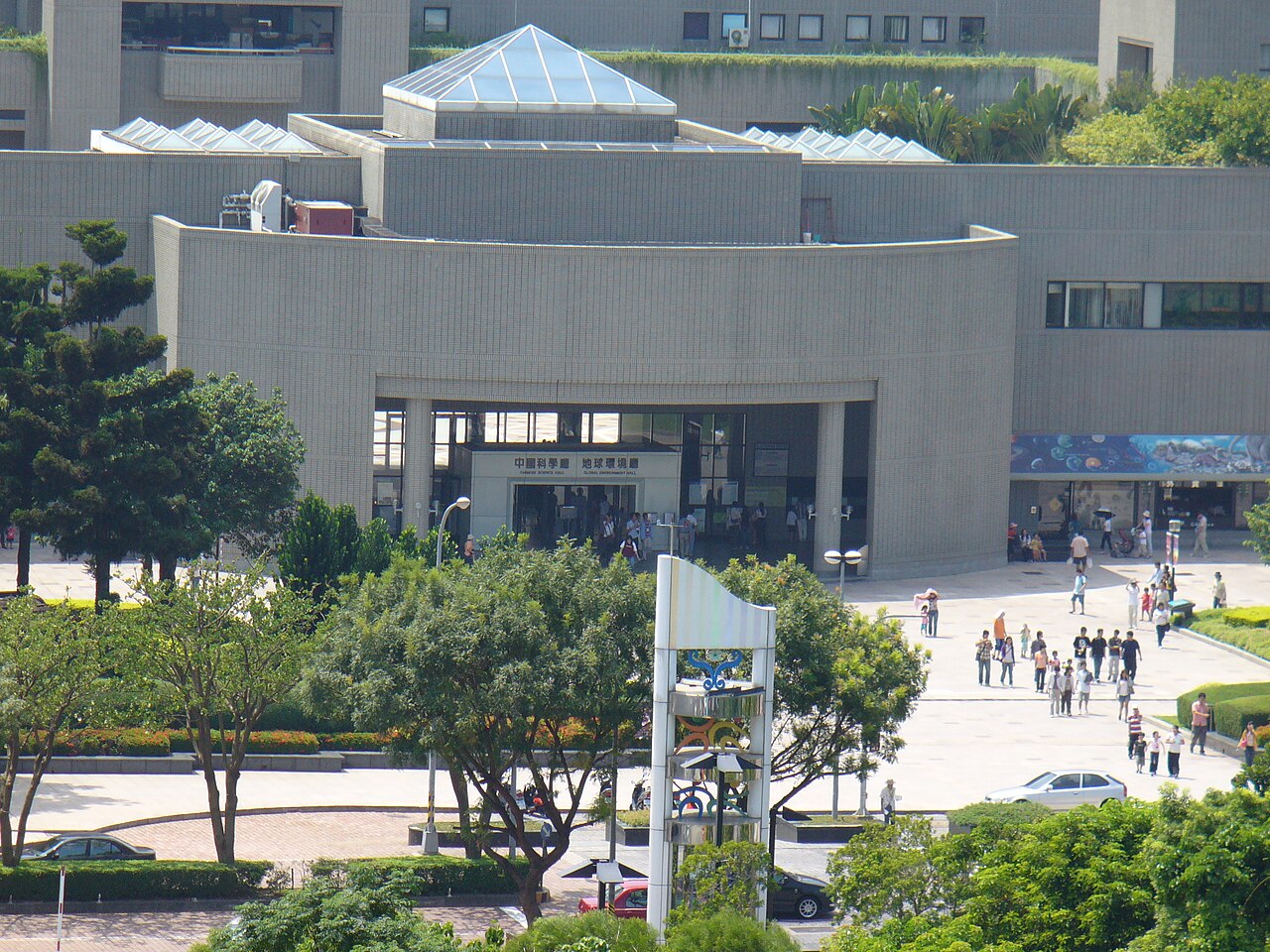
Nantun is in the western part of the city, a short taxi ride from the high-speed rail station, and city buses also run to the area, so check a current route planner for the right number. Because the visit is brief, many travellers pair it with the Gaomei Wetlands for sunset or with the National Museum of Natural Science and the Calligraphy Greenway in the same day. Families will enjoy the bright murals, couples will find easy photographs, and anyone who likes street art will appreciate the story behind it.
What to expect
The experience
A free, self-guided walk through a short lane of painted houses, courtyards and doorways, with no tickets or guided tours needed.
Best time
Go on a weekday morning in good light, before the weekend photographers and school groups arrive.
How long
Allow 30 to 45 minutes, including time for photographs and a look at the surrounding lanes.
Tips
Respect the residents who live here, bring water in warm months, and treat it as a short stop to combine with a nearby sight.
Quick picks
- Best for
- First-timers and photographers who want a quick, colourful and free stop.
- Families
- Easy and short, with bright murals that children enjoy; watch them in the narrow lanes.
- Couples
- A playful photo stop that fits neatly before or after a coffee or a sunset trip.
- Pair with
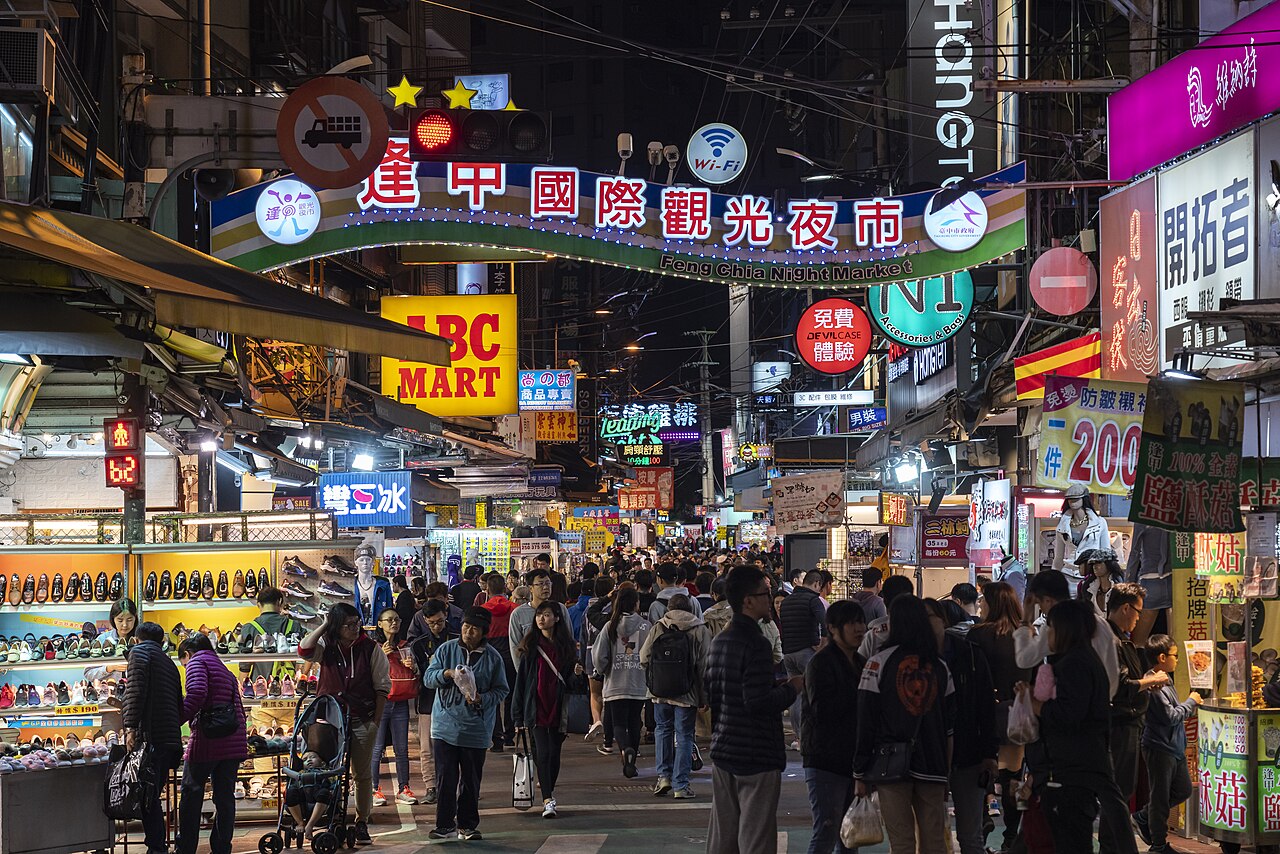
- Gaomei Wetlands, the National Museum of Natural Science or Fengjia Night Market.
- Time needed
- Half an hour is enough, plus travel time from the city centre.
Good questions
Is Rainbow Village free to visit?+
Yes, there is no entry fee and no ticket office. It is an open outdoor lane, so just walk in during the day.
Who painted Rainbow Village?+
A retired soldier, Huang Yung-fu, known as Grandpa Rainbow, began painting the houses in 2008. He died in January 2024, and the village has since been looked after and partly repainted by others.
How long do I need?+
Most visitors spend 20 to 40 minutes. It is a small site, so plan it alongside other stops.
Is it still worth visiting after the changes?+
Yes, if you go for the colour and the story and keep expectations modest. It is small and newer buildings stand close by, but it remains a cheerful, free stop.
How do I get there from central Taichung?+
A taxi from the city centre or the high-speed rail station is the simplest option, and city buses also serve Nantun. Check a current route planner for the right bus number.