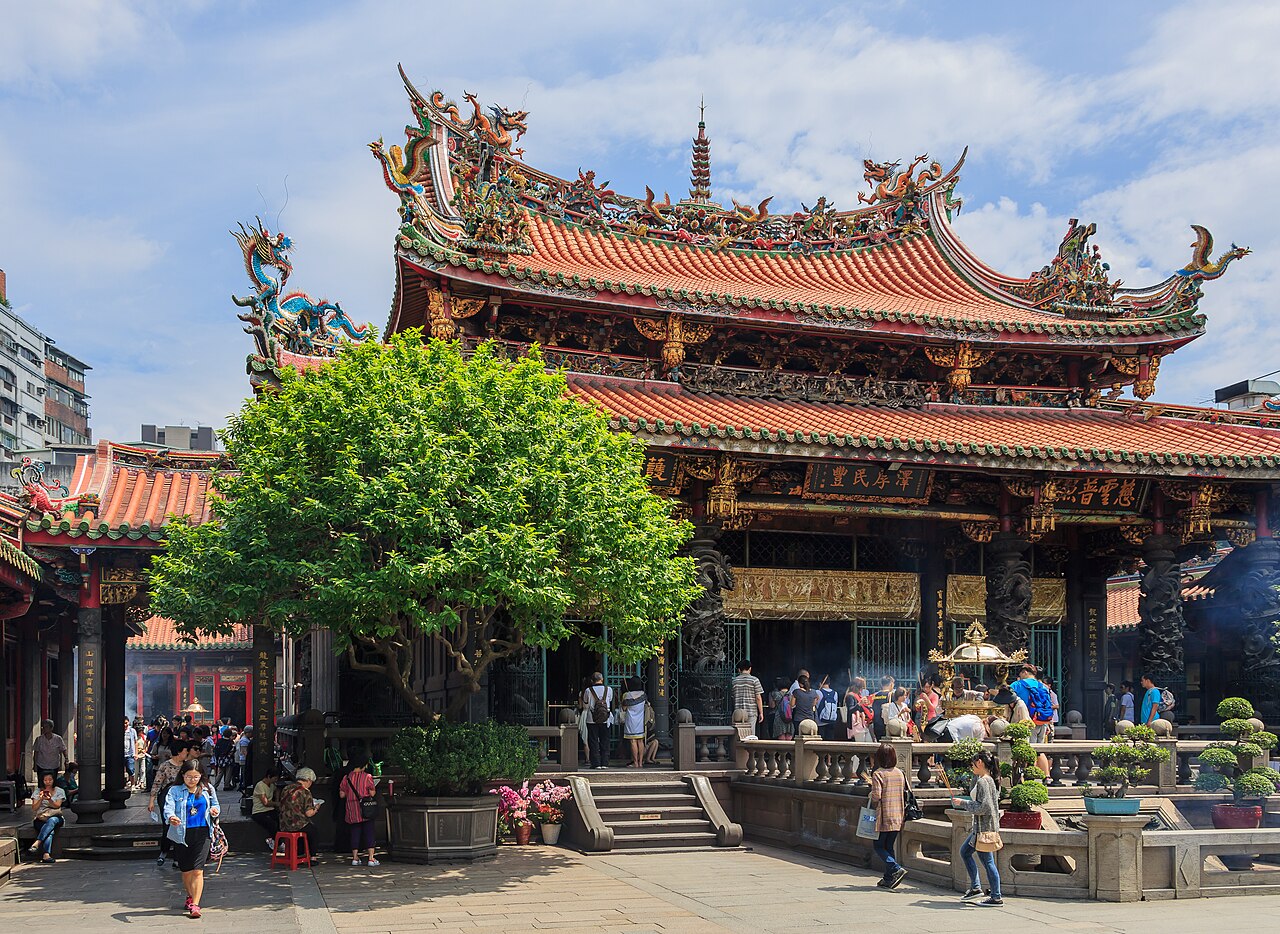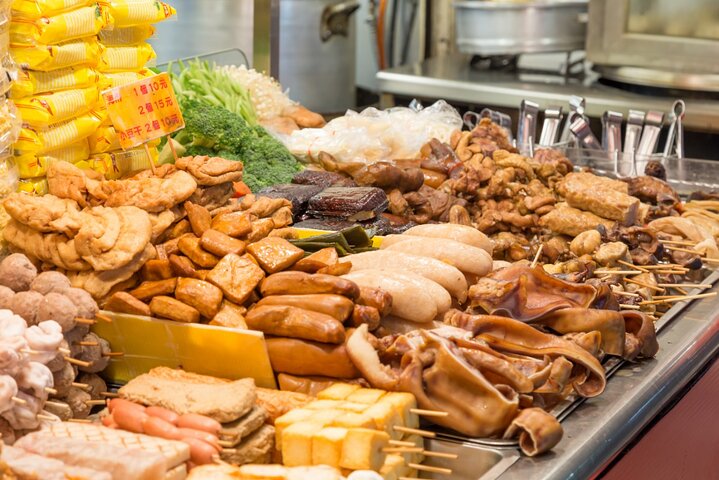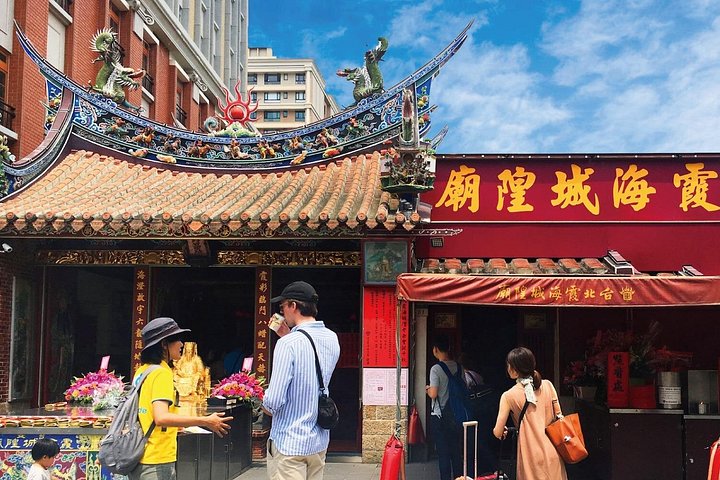
Dadaocheng is where Taipei began to trade with the world. In the 19th century, merchants shipped tea, camphor and rice from the Tamsui River wharf, and Dihua Street became the city’s main commercial artery, lined with narrow brick shophouses whose carved and baroque-style facades still stand. Today it is the most atmospheric walking district in the capital, and the one place where the old city feels intact. Shops sell dried mushrooms, squid, betel nut, herbal medicine, incense, bolts of cloth and every grade of Taiwanese oolong, while newer cafés, tea rooms and design studios occupy restored shophouses beside them. At the centre of it all is the Xiahai City God Temple, a small, crowded and deeply loved shrine known for matchmaking, where visitors tie red threads and ask the Old Man Under the Moon for a good partner. A few steps away, Yongle Market has fabric stalls on its upper floors and a food hall of local snacks. Dadaocheng is also the best place in the city to buy tea to take home, and to learn how to taste it properly before you do.
How it works
There is no entry fee, since this is a living neighbourhood rather than an attraction, and a guided walk is optional. Most visitors arrive by MRT and walk, with Beimen and Daqiaotou stations on the edge of the district and the riverside wharf reached on foot or by a short ride on a different line.
Shops generally open from mid-morning and close in the early evening, and a few smaller ones keep irregular hours, so the best time for browsing is between late morning and late afternoon. A short guided walking tour is a good way to learn who built what and to be taken inside buildings you would walk past alone.
What to expect
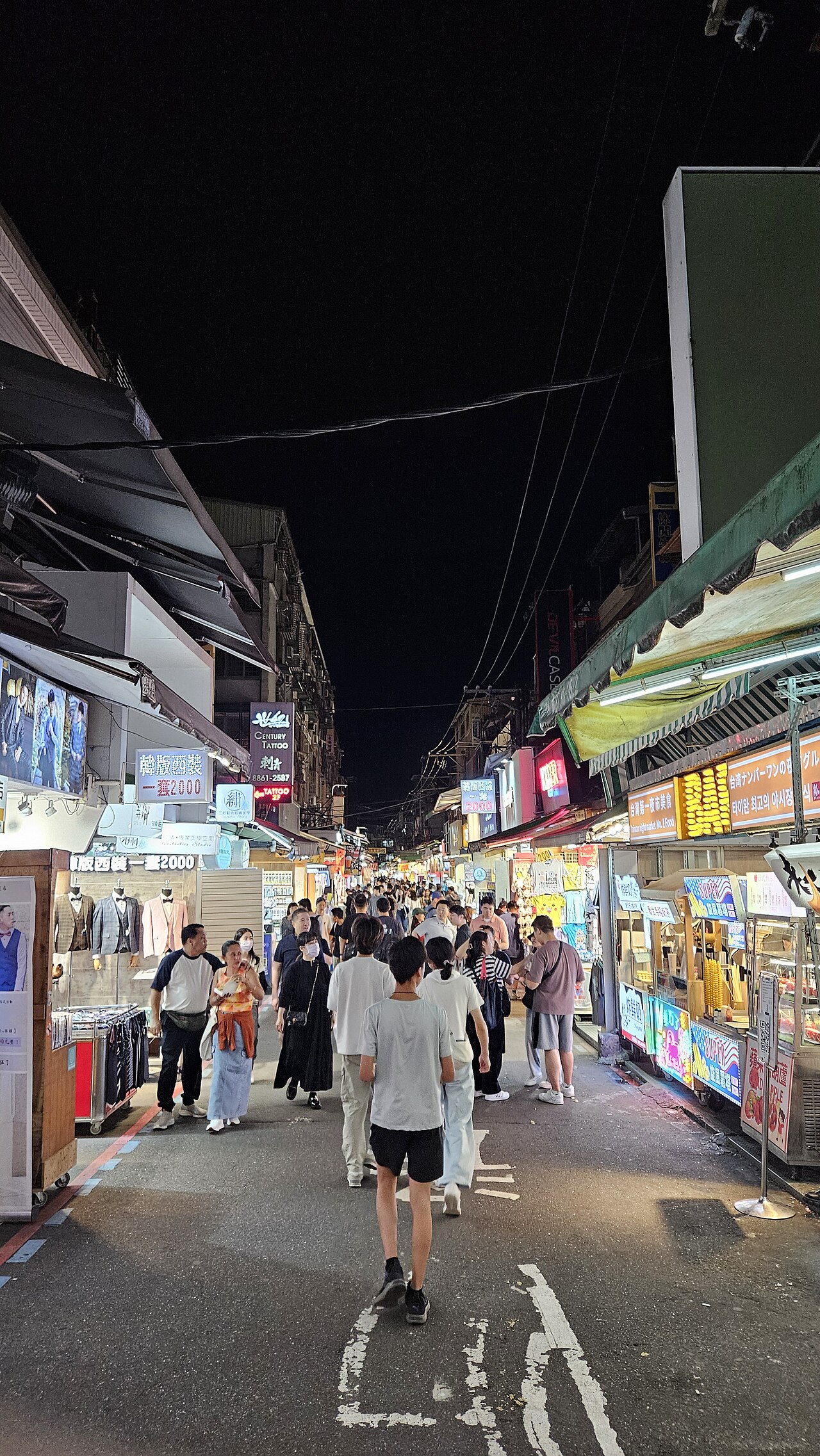
Dihua Street is about a kilometre of low buildings with deep, narrow plots, where goods spill onto the pavement. You will smell dried fish, camphor and tea before you see them. Look up for the date plaques and decorative parapets, and look into the long, dark shop interiors, many of which run back through courtyards.
Tea merchants will usually let you taste before you buy, and a small pot of oolong makes a pleasant excuse to sit down. Around the Lunar New Year the street turns into one of the busiest festive markets in Asia, packed with snacks, nuts and decorations, which is exciting but very crowded.
Making the most of it
Pair Dadaocheng with Longshan Temple and the old Wanhua district for a full day of old Taipei, or come at the end of the afternoon and walk down to the Dadaocheng Wharf, where the riverside park looks west across the water to the Guanyin mountain. The sunset here is one of the best-loved in the city, and food stalls and bars set up near the wharf in the evening.
Comfortable shoes are essential, as pavements are uneven and sometimes blocked by stock. Bring a tote bag for tea and snacks. If you enjoy the area, return one evening for a drink in one of the converted shophouses, since several bars and small restaurants stay open late and give the old street a second life after the shops close.
What to expect
The experience
A free neighbourhood walk through historic shophouses, with an optional guided tour.
Best time
Late morning to late afternoon, finishing at the wharf for sunset.
How long
Two to three hours, longer if you stop for tea.
Tips
Taste before you buy tea, carry a little cash and wear comfortable shoes.
Quick picks
- Best for
- Travellers who want to see old Taipei and buy good tea.
- Families
- Plenty of snacks and colourful shops, but pavements can be crowded.
- Couples
- Tea tasting, then sunset on the wharf.
- Pair with
- Longshan Temple and the Wanhua district.
- Time needed
- Two to three hours.
Good questions
Where is Dadaocheng?+
On the west side of central Taipei beside the Tamsui River, a short MRT ride or taxi from Taipei Main Station.
What is Dihua Street known for?+
Dried goods, herbal medicine, tea and cloth, sold from restored 19th-century shophouses.
Is Dadaocheng good for buying tea?+
Yes, it has some of the city’s best-known tea merchants, and many let you taste before you buy.
When is the best time to visit?+
Late morning to late afternoon for the shops, with sunset at the wharf as a finale.
Is it very crowded?+
Weekends are busy, and the weeks before Lunar New Year are extremely crowded, so visit on a weekday if you can.