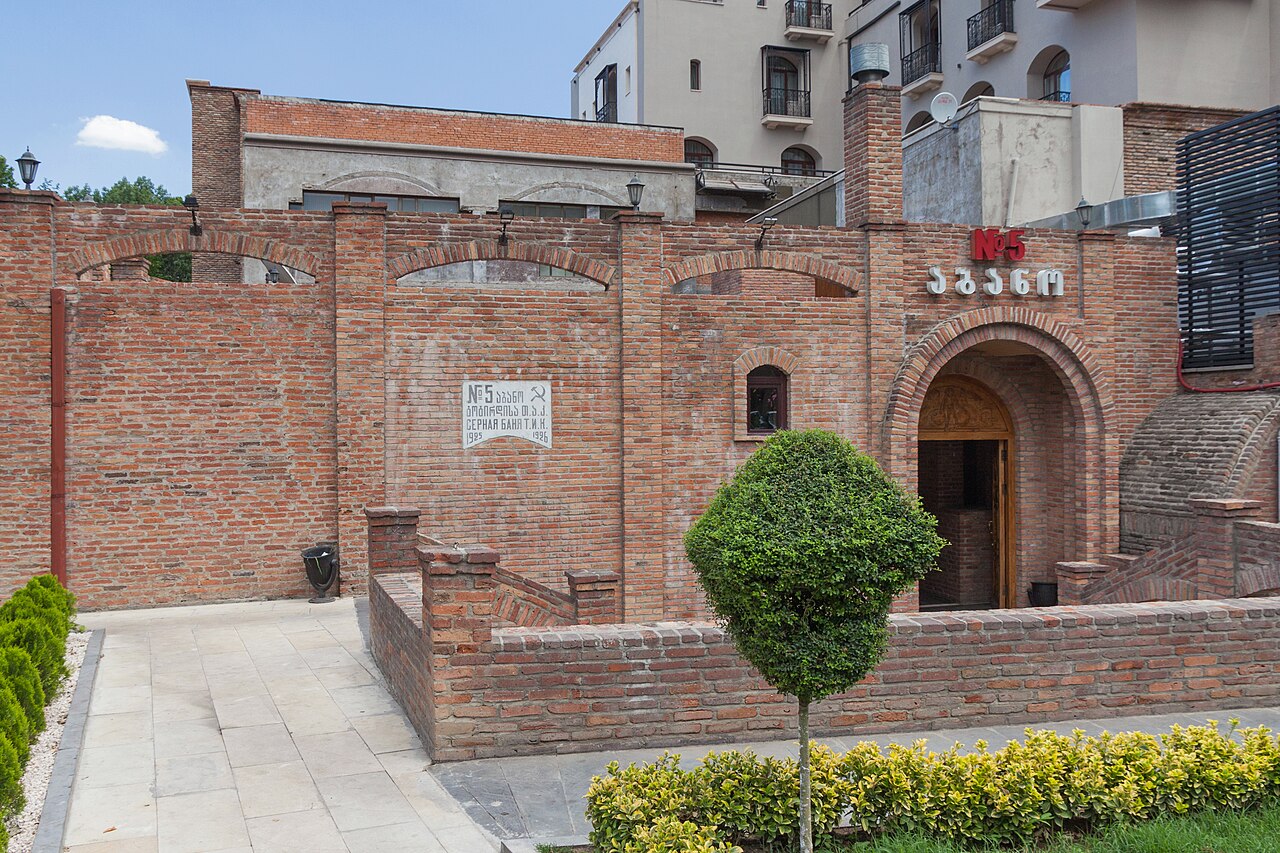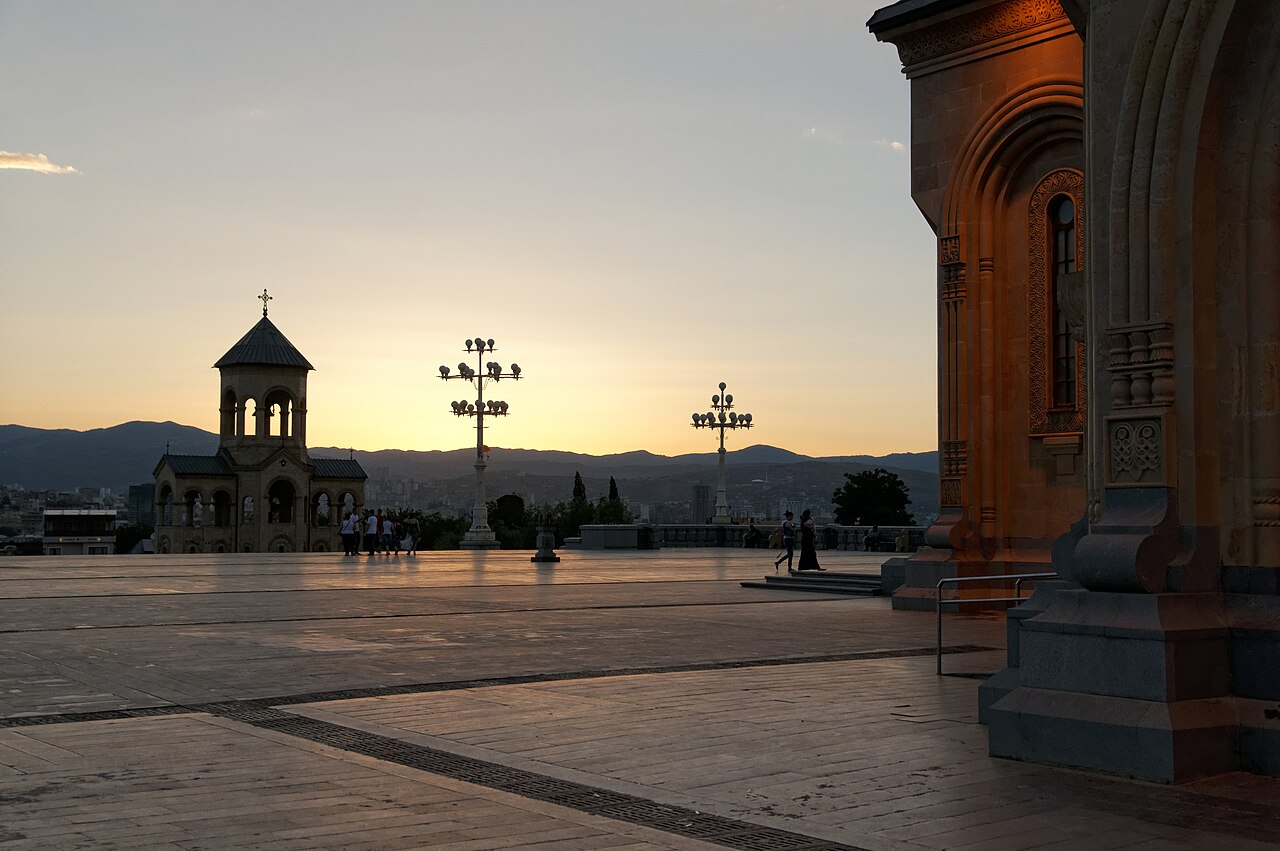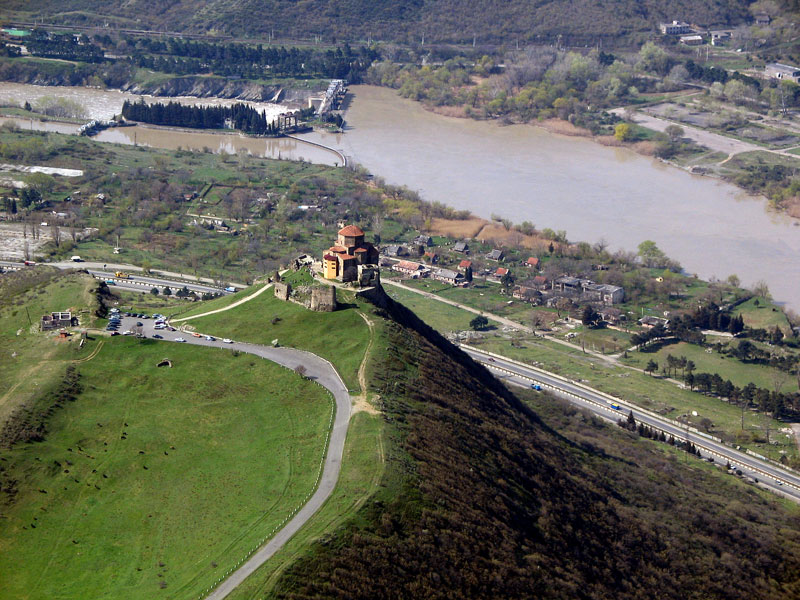
Narikala Fortress has watched over Tbilisi for some sixteen centuries. Its crumbling walls and towers run along the steep ridge between the old town and the botanical garden, and the views from the ramparts take in almost the whole city: the balconies and church domes of the old town, the brick cupolas of the sulfur baths, the river, the glass Bridge of Peace and, across the water, the golden cross of Holy Trinity Cathedral. The fortress was built and rebuilt by Persians, Arabs and Georgian kings, and much of what you see dates from later centuries, with the small, restored Church of Saint Nicholas inside the walls. The easiest way up is the Rike cable car, a 500-metre gondola ride from Rike Park on the left bank that floats over the river and the rooftops in a couple of minutes. From the top station, a path leads along the ridge to Kartlis Deda, the Mother of Georgia, holding a sword for enemies and a bowl of wine for friends.
How to visit: the fortress is open-air and free to explore. The cable car runs from Rike Park, near the Bridge of Peace, to the top of the ridge by the fortress; you pay with a Metromoney transport card or a contactless bank card at the gate, as on the metro. From 1 November the cable car switches to its winter timetable, opening at 10:00 and closing at 22:00 rather than midnight, so check the times if you plan an evening ride. You can also walk up from the old town in about fifteen to twenty minutes on steep lanes and steps.
What to expect: the paths around the walls are uneven, rocky and unfenced in places, so wear proper shoes and keep a hand on children. Inside the walls, Saint Nicholas Church is small and usually open; cover shoulders and knees to go in. From the ridge you can continue on foot to the Mother of Georgia statue, or drop down the other side into the National Botanical Garden, a green gorge with a waterfall, which charges a small entrance fee.
Making the most of it: come up an hour before sunset, watch the city lights come on, then walk down through the old town to Abanotubani for a sulfur bath or dinner.
What to expect
The experience
A short cable car ride, then a self-guided walk along the fortress walls and the ridge to the Mother of Georgia statue.
Best time
The hour before sunset for golden light and city lights; mornings are quietest.
How long
One to two hours, longer if you continue into the Botanical Garden.
Tips
Wear shoes with grip for the rocky paths, and check the cable car’s winter closing time before an evening visit.
Quick picks
- Best for
- Everyone; it is the essential Tbilisi view.
- Families
- Children love the cable car, but hold hands on the unfenced walls.
- Couples
- Sunset on the ramparts, then a walk down to dinner in the old town, is the classic Tbilisi evening.
- Pair with
- The Abanotubani sulfur baths at the foot of the hill.
- Time needed
- One to two hours.
Good questions
Is Narikala Fortress free?+
Yes, the fortress is open-air and free to explore. The cable car up from Rike Park costs a small fare.
What are the Tbilisi cable car hours in winter?+
From 1 November the Rike-Narikala cable car runs on its winter timetable, from 10:00 to 22:00 rather than midnight. Check locally, as times can change.
How do you pay for the Narikala cable car?+
You pay at the gate with a Metromoney transport card or a contactless bank card, the same way as on the metro. Cash is not the usual way to pay.
Can you walk up to Narikala?+
Yes, steep lanes and steps lead up from the old town in about fifteen to twenty minutes. Many people ride up and walk down.
Is the Mother of Georgia statue near Narikala?+
Yes, Kartlis Deda stands on the same ridge, a short walk from the cable car top station. She holds a sword for enemies and a bowl of wine for friends.