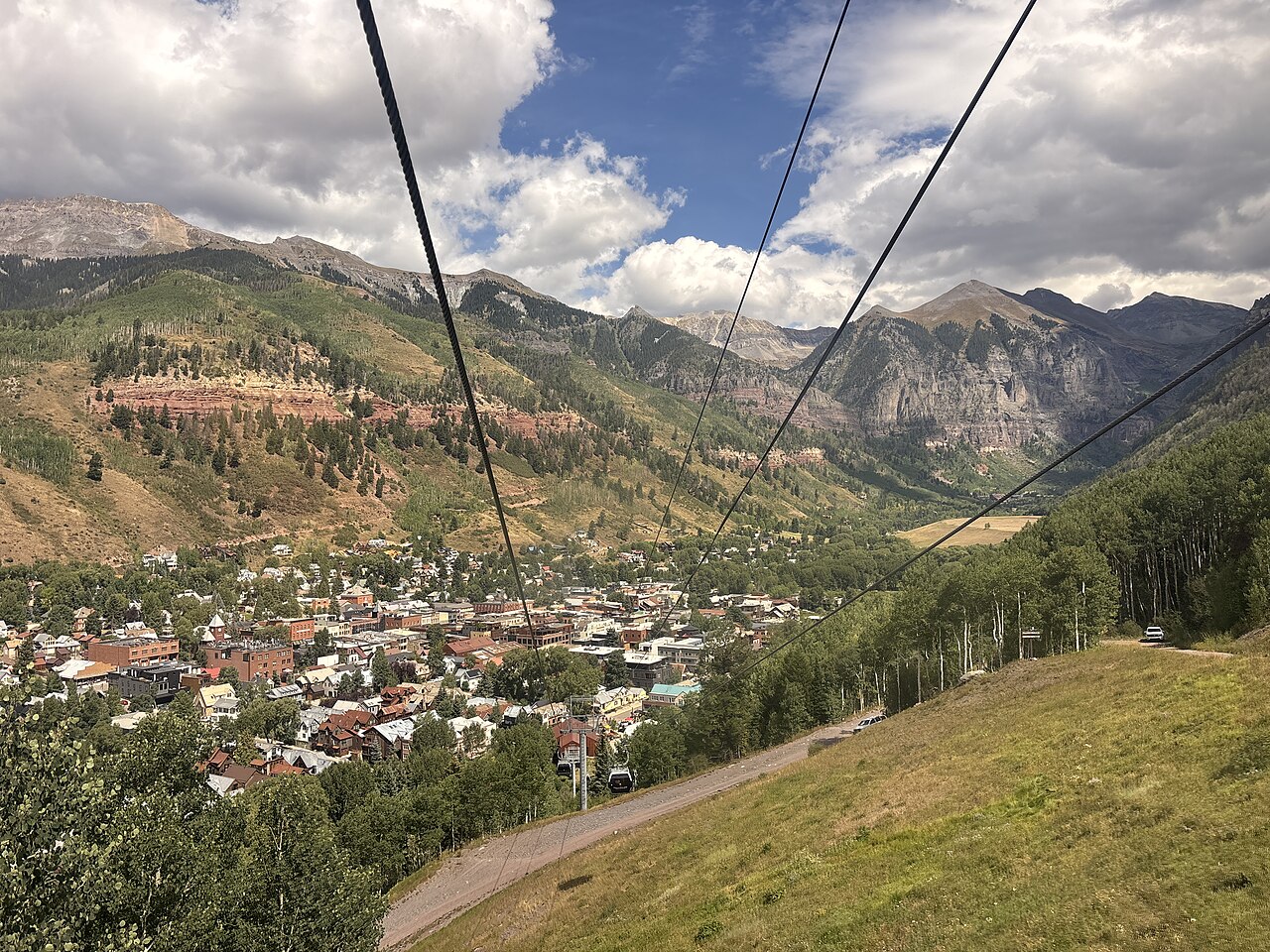
Telluride's town center is a National Historic Landmark District, and unlike many preserved mining towns it is still a living main street rather than a museum. Colorado Avenue runs east to west with its 1890s brick and false-front buildings intact, now housing bookstores, galleries, restaurants, outfitters and a handful of historic hotels. At either end the street simply stops, hemmed in by the walls of the box canyon, and the effect of Victorian architecture set against thirteen-thousand-foot peaks is what makes the place instantly recognizable. The town grew up in the 1870s and 1880s around gold and silver strikes in the surrounding mountains. By the 1890s it had saloons, a red-light district, opera performances and a railroad, and it was also the site of one of the best-known early bank robberies in the American West, when Butch Cassidy and his companions took the San Miguel Valley Bank in 1889. The building on Colorado Avenue is still a landmark and is a quick, free stop on any walking tour.
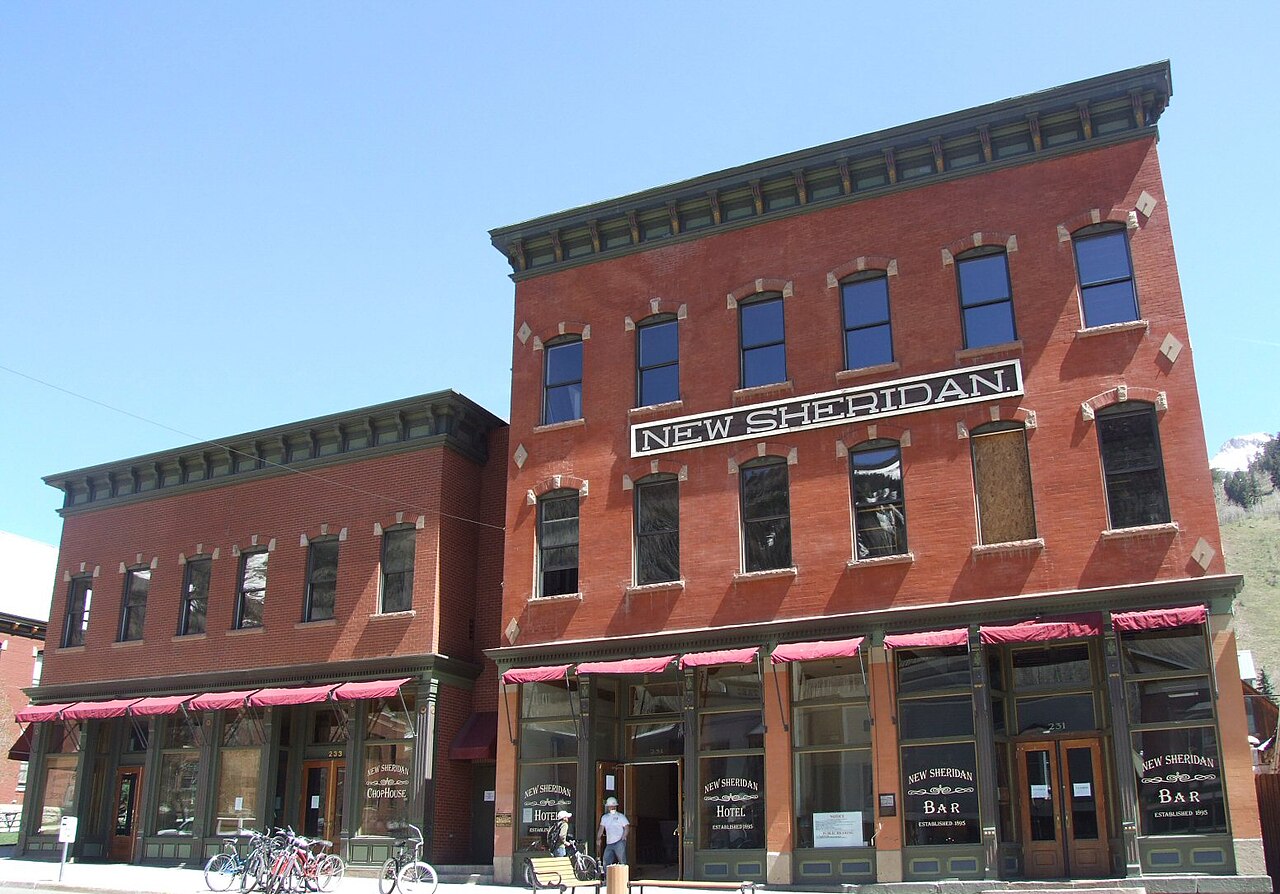
A self-guided walk takes about an hour or two if you stop to browse. Start at the east end near the old courthouse and work west, reading the plaques on the buildings. The Sheridan Opera House and the New Sheridan Hotel, both dating from the 1890s, anchor the central block; the hotel's bar is one of the best places in town for an evening drink among period fixtures.
Side streets of restored miners' cottages, painted in bright Victorian colors, reward a detour, and the stretch along the San Miguel River on the south edge of town makes a pleasant loop on a warm afternoon.
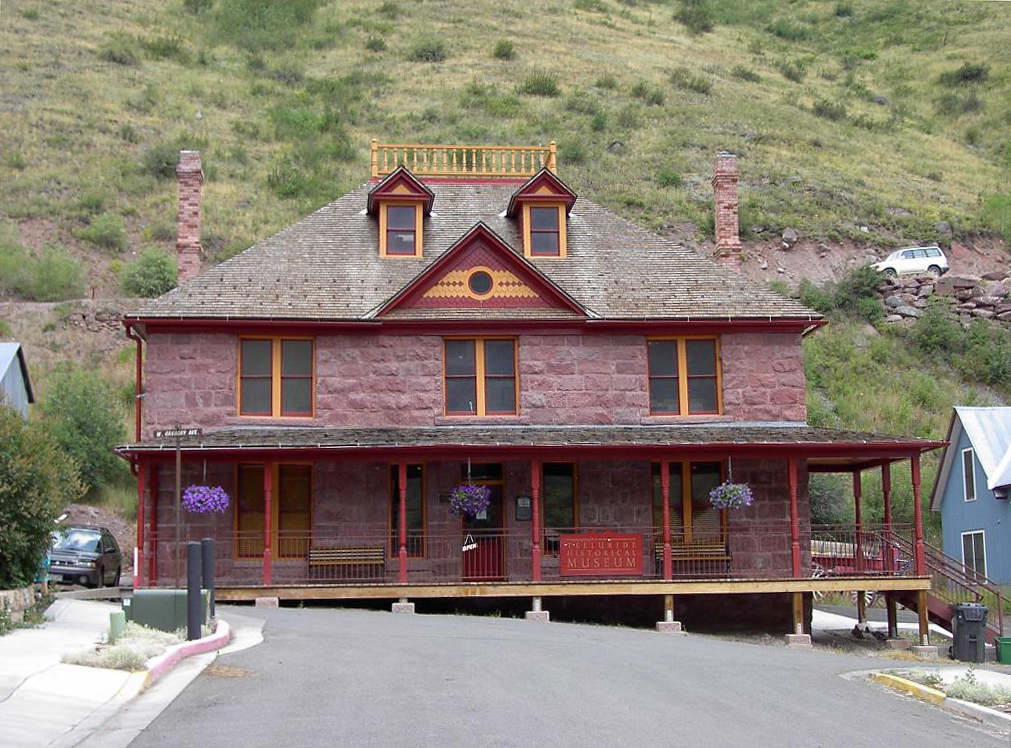
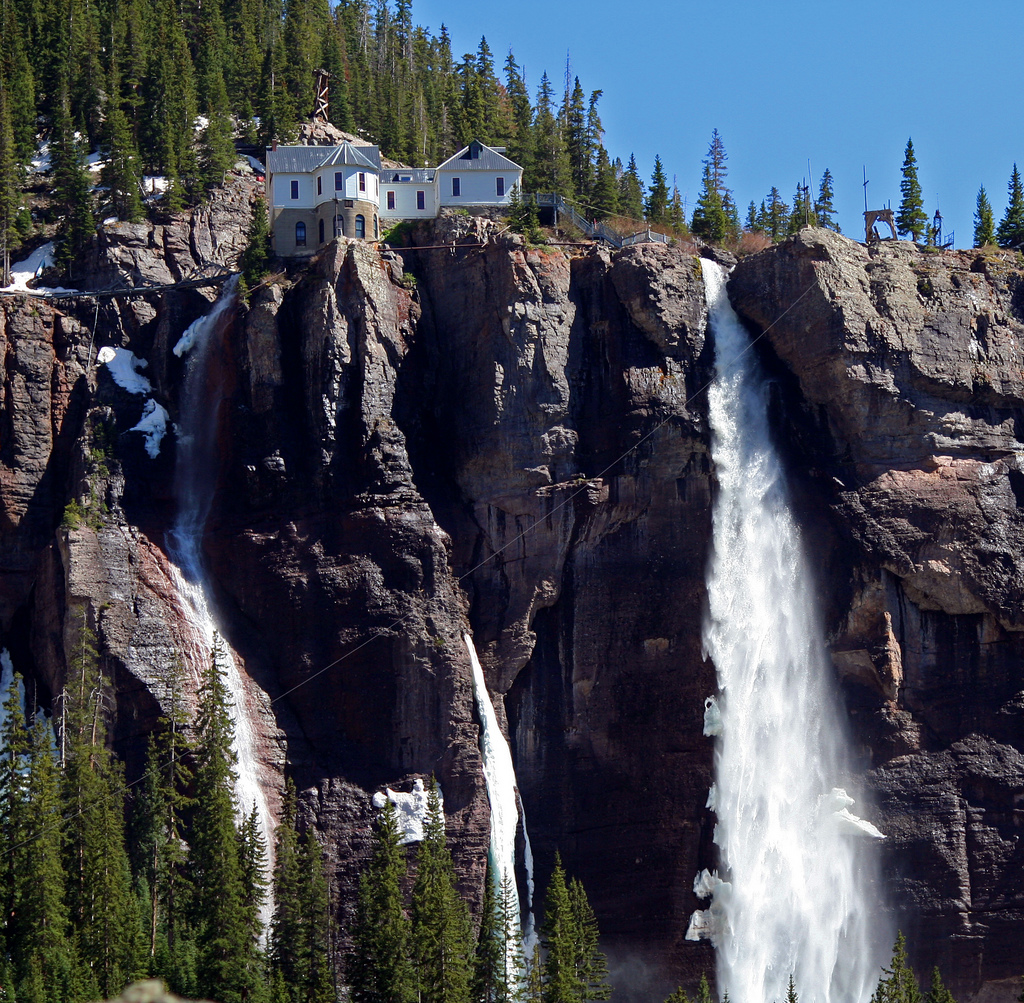
The district is also a good lesson in how a mining town evolved. When the mines wound down in the twentieth century, Telluride shrank and nearly emptied, and it was the arrival of the film festival in the 1970s and the ski area soon after that gave it a second life. The old mining structures still visible on the hillsides, including the headframes and the hydroelectric works around Bridal Veil Falls, link the street-level history with the mountains above. A visit to the local historical museum in the former hospital fills in the human stories.
Allow time for the practical pleasures as well. The main street is flat and walkable at an altitude of roughly 8,750 feet, so take it easy on the first day, drink plenty of water and plan on slower walking than at sea level. Summer evenings bring outdoor tables and live music, winter brings snow-lined sidewalks and lights, and the free gondola station sits at the foot of Oak Street at the heart of it all. For a first-time visitor, an unhurried loop of the historic district is the best way to get oriented.
Shopping here is a pleasure rather than a chore, because the shops are mostly independent: outdoor outfitters, galleries showing regional artists, bookstores and gift shops selling local goods. Restaurants range from casual burger counters to thoughtful dinner rooms, and several serve breakfast that suits a morning before a hike. If you arrive during a festival weekend the whole avenue changes character, with crowds, music and pop-up stages, so decide whether you want that energy or prefer to visit in a quieter week.
Either way, the best view of the district is the one you take on foot, slowly, with your head tilted back at the cornices.
What to expect
The experience
A self-guided walk along Colorado Avenue and neighboring streets through preserved 1890s brick and false-front buildings.
Best time
Morning for quiet streets and good light; early evening in summer for outdoor dining and music.
How long
One to two hours for a loop, longer with museum and shopping stops.
Tips
You are at about 8,750 feet: go slowly, hydrate and carry layers. Read the building plaques and look for the old bank on Colorado Avenue.
Quick picks
- Best for
- Anyone arriving for the first time: free, flat and the best orientation to the town.
- Families
- Flat, car-free and easy with strollers; kids enjoy the creek path and ice cream stops.
- Couples
- An evening walk, a drink in a historic bar and dinner on the avenue.
- Pair with
- The Telluride Gondola, the historical museum and the film festival venues.
- Time needed
- Allow one to two hours.
Good questions
Is Telluride really a National Historic Landmark District?+
Yes. The town center was designated a National Historic Landmark District in the 1960s for its well-preserved mining-era architecture.
What is the famous bank robbery?+
In 1889 Butch Cassidy and companions robbed the San Miguel Valley Bank on Colorado Avenue, one of the first bank robberies tied to the outlaw. The building is a walking-tour stop.
How long does a walking tour take?+
A casual loop of Colorado Avenue and the side streets takes an hour or two, depending on how often you stop to shop or eat.
Is the main street walkable in winter?+
Yes, the town is compact and flat, but sidewalks can be icy. Wear boots with good traction and expect snow banks.
Do I need a car in town?+
No. Most visitors park once or arrive by shuttle and walk everywhere; the free gondola connects to Mountain Village.