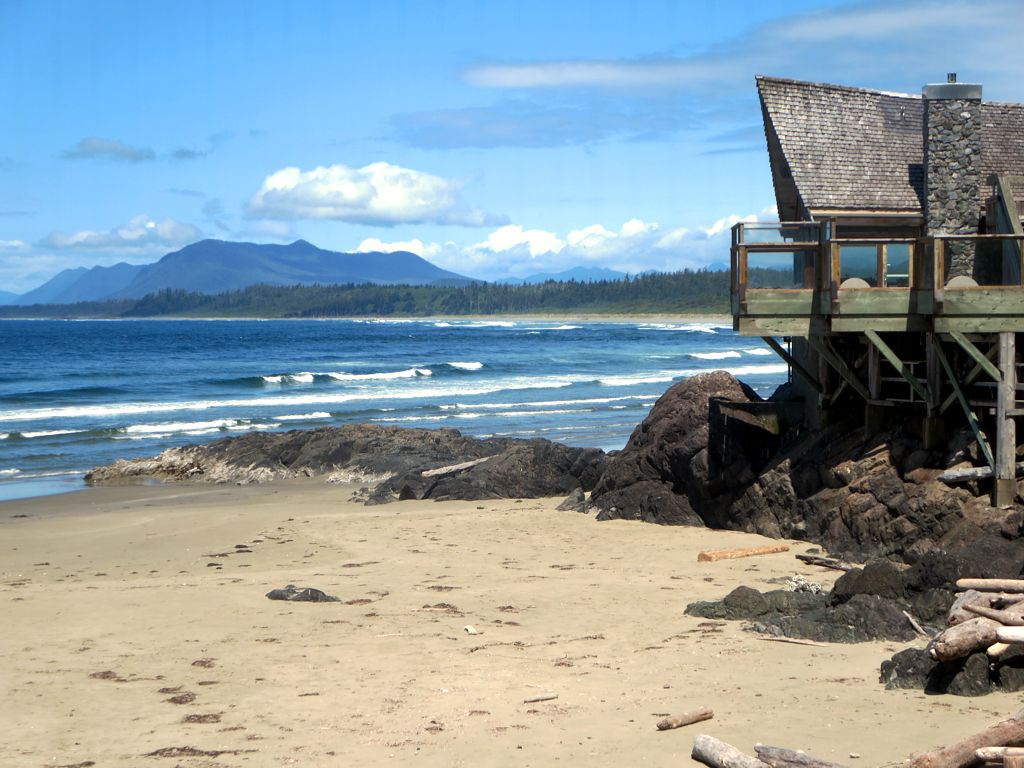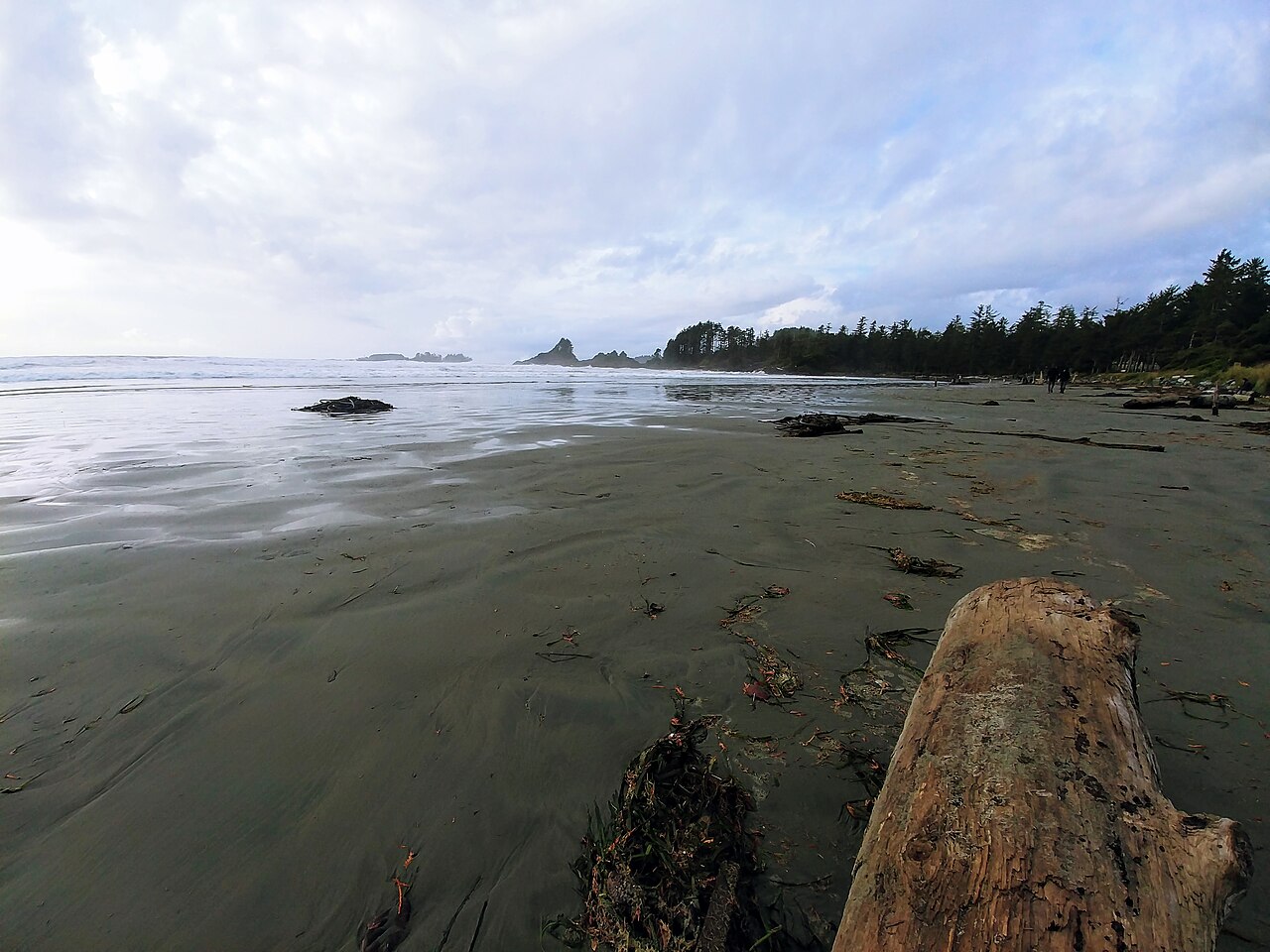
Long Beach is the heart of the Long Beach Unit of Pacific Rim National Park Reserve and the longest beach on Vancouver Island's west coast. The sand runs for about 16 kilometres along the open Pacific, backed by dark forest, with driftwood stacked above the tide line and surf rolling in from a long way out. Several access points along the Pacific Rim Highway lead to different stretches, from Combers Beach near the Rainforest Trail to Wickaninnish Beach at the southern end, so you can walk for hours without repeating yourself. Two big volcanic rocks, Incinerator Rock and Lovekin Rock, make natural landmarks, and a bench on Incinerator Rock gives a fine view at low tide. Surfers share the water with seabirds, and in autumn and winter the same beach turns into the coast's best front-row seat for big waves.
What to do
Walk, beachcomb and watch. The firm sand near the waterline is easy going at low tide, and the multi-use pathway beside the highway lets walkers and cyclists link several beaches. Surfing is the headline activity, but the water is cold and unpredictable, so Parks Canada advises a wetsuit and a lesson rather than learning alone. There are no lifeguards on these beaches, and rip currents are a real hazard, so read the conditions before you step onto the shoreline and never turn your back on the surf.
Dogs must be leashed and are not allowed on Combers Beach from 1 April to 1 October. Trail and parking-lot closures change from time to time, so check Parks Canada's trail conditions page and use another access point if one is shut. Lots fill in peak summer, but in November the beach is quiet and the light is dramatic, with cloud, spray and low sun. Time your walk around the tide, and stay off wet rocks and well above the high-tide line, because rogue waves are the biggest danger on this coast.
Fitting it in
Long Beach sits between the two towns, about a ten-minute drive from the centre of Tofino and a little further from Ucluelet, so it works from either base. Pair it with the Kwisitis Visitor Centre at its southern end, a short rainforest walk, and a warm-up afterwards in a cafe or lodge. Wear waterproof layers and shoes you do not mind getting wet.
What to expect
The experience
A self-guided visit to a wide, open beach in a national park, with several access points, a multi-use pathway and plenty of room to walk.
Best time
Low tide for the longest walks and the easiest going; on a stormy day, a rising tide for the biggest waves, viewed from a safe distance.
How long
Allow two hours for a beach walk and photos, or a half day if you want to combine several access points and the visitor centre.
Tips
Buy your park pass before parking, wear waterproof layers, keep dogs on a leash, stay off wet rocks and never turn your back on the surf.
Quick picks
- Best for
- First-time visitors who want the signature west coast beach in one stop.
- Families
- Children love the space and the driftwood, but keep them well back from the waterline because the surf and rip currents are strong.
- Couples
- Walk a quiet stretch near sunset, then warm up with dinner back in town.
- Pair with
- The Kwisitis Visitor Centre, the Wild Pacific Trail and a storm-watching afternoon fit naturally around it.
- Time needed
- Two to four hours, depending on the tide and the weather.
Good questions
How long is Long Beach?+
The beach is about 16 kilometres of continuous sand, the longest on the west coast of Vancouver Island. Several access points along the highway let you walk different sections.
Do I need a pass to visit?+
Buy your pass before you park, and check the park's site for the current options.
Is it safe to swim or surf?+
There are no lifeguards, the water is cold and rip currents are common, so most visitors wade rather than swim. If you want to surf, take a lesson with a local school and wear a wetsuit.
Can I bring my dog?+
Dogs are allowed on the beaches but must be leashed. They are not permitted on Combers Beach between 1 April and 1 October.
Is it worth visiting in winter?+
Yes, autumn and winter bring big surf and dramatic skies, and the beach is far quieter. Dress for wind and rain, check the tide, and watch the waves from well above the high-tide line.