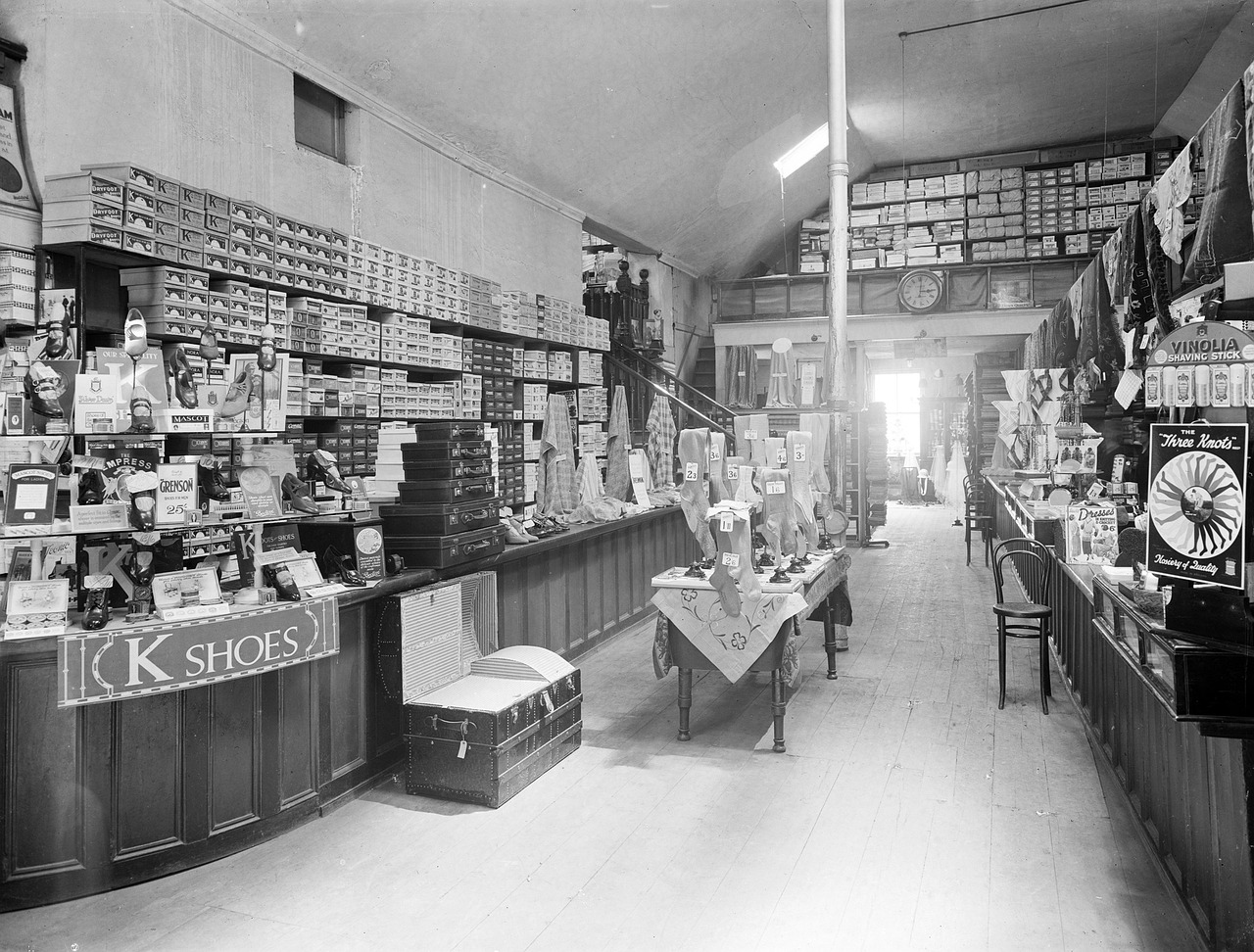
The Bata Shoe Museum is Toronto's great conversion experience: the museum visitors enter as a lark and leave evangelizing — the world's most comprehensive footwear collection (15,000-ish artifacts spanning 4,500 years) housed in its own architectural joke done elegantly (Raymond Moriyama's 1995 building is a stylized shoebox with its lid askew — the copper-edged roofline lifting at Bloor and St. George), telling what is genuinely one of the best material-history stories in any museum anywhere: All About Shoes, the permanent chronology, runs humanity through its feet — ancient Egyptian gilded sandals (the oldest pieces reach toward 4,500 years), medieval poulaines' absurd points (and the sumptuary laws that regulated toe length by rank — the labels' social history is the museum's secret weapon), chestnut-crushing clogs and chopines a foot tall (the Venetian platform era's servant-assisted walking), Chinese lotus shoes presented with the binding history's full weight (the museum handles the hard material honestly), samurai bear-fur boots, Inuit and circumpolar boots at reference depth (founder Sonja Bata's collecting expeditions made the Arctic holdings the world's best — the research program continues), French Revolution-era heels (Marie Antoinette-adjacent pieces among them) and Napoleon's black silk socks, through the celebrity case's rotating relics (Elton John's platforms, Elvis's blue patents, Terry Fox's running shoe — the Canadian pilgrimage object — and the sneaker-culture era's grails). The rotating exhibitions take the premise seriously (recent eras ran Indigenous footwear artistry, sneaker history, the 1990s — the museum's curatorial ambition outruns its square footage), the scale is the mercy (90 minutes covers it rich — the museum slots perfectly between the ROM and a Bloor-Yorkville afternoon), and the family math works (kids run the chronology as a weirdness hunt; the museum leans into it with trails and the try-on corner). Fit: the museums chip's charm entry, families (the under-twelve conversion rate is total), couples on the Bloor culture crawl (ROM-Gardiner-Bata within three blocks), and every skeptic — the museum's entire reputation is built on them.
The founder's story is the collection's
Sonja Bata — architect by training, married into the Bata shoe empire (the Czech-Canadian company's global factories gave her the world) — began collecting on business trips in the 1940s and never stopped: the ethnographic depth (the circumpolar expeditions she funded, the vanishing-craft documentation) made the collection scholarly while the celebrity-and-curiosity tier kept it human, and her foundation built the museum to hold it (she chaired it into her 90s; the museum remains the family foundation's project — the independence explains the curatorial personality). The collection's research spine: the circumpolar program (the Arctic footwear holdings and the conservation lab's sealskin-and-sinew expertise are world-reference), the Chinese collection's binding-era scholarship, and the conservation-visible displays that let the museum punch at research weight.
The visit craft
The permanent chronology descends floor by floor (start at the top and fall through time), the label-reading pays unusually (the social-history writing — who could wear what, and what it cost to walk — is the museum's voice), the celebrity case's rotation means the famous pairs vary (Terry Fox's shoe, when displayed, is the Canadian moment), and the exhibitions floor decides repeat visits. The Bloor pairing is built in: the ROM's crystal two blocks east, the Gardiner's ceramics across from it, Philosopher's Walk's ravine-path between, and Yorkville's café tier north — the museum anchors the city's most walkable culture crawl. The practical notes: 90 minutes honest, the admission runs modest with free-evening traditions worth checking, and the gift shop's sock-and-lace wit earns the browse.
Practicals and fit
327 Bloor Street West at St. George (the subway station is literally adjacent), 90 minutes, modest admission, exhibitions rotating. Fit: families (total conversion), the museums chip's charm slot, couples on the Bloor crawl — and the skeptics the museum was effectively built to delight.
What to expect
The experience
The world's great footwear collection in Moriyama's shoebox building — gilded Egyptian sandals to samurai boots to the celebrity case — humanity's material history told through feet in 90 charming minutes.
Best time
It slots between the ROM and a Yorkville afternoon on the Bloor crawl; check the free-evening traditions; exhibitions rotate the repeat value.
How long
Ninety minutes, richly.
Tips
Start at the top floor and fall through time. Read the labels — the who-could-wear-what social history is the museum's secret weapon. The subway station is literally adjacent for the rainy-day arrival.
Quick picks
- Best for
- The skeptic's conversion — enter as a lark, leave evangelizing; the museum's reputation is built on it.
- Families
- A weirdness hunt through 4,500 years — foot-tall platforms, bear-fur boots and the try-on corner.
- Couples
- The charm slot on the ROM-Gardiner-Bata crawl, Yorkville's cafés after.
- Pair with
- The ROM two blocks east, the Gardiner across from it, Philosopher's Walk between.
- Time needed
- One delighted ninety minutes.
Good questions
Is a shoe museum actually good?+
The city's great conversion experience — 15,000 artifacts telling 4,500 years of social history (who could wear what, and what walking cost), with scholarship underneath the charm; the skeptics are the target audience.
What are the famous pieces?+
Egyptian gilded sandals, foot-tall Venetian chopines, samurai bear-fur boots, Napoleon's silk socks, and the celebrity case's rotation — Elton's platforms, Elvis's patents and Terry Fox's running shoe, the Canadian pilgrimage object.
Where does the collection come from?+
Founder Sonja Bata's seven-decade obsession — the shoe-empire travels plus funded Arctic expeditions that made the circumpolar holdings world-reference — her foundation's museum since 1995.
How long does it take?+
Ninety honest minutes top floor to bottom — the mercy of its scale — slotting perfectly into the Bloor Street culture crawl with the ROM and Gardiner.
Why is the building shaped like that?+
Moriyama designed a stylized shoebox with its lid askew — the copper-edged roofline lifting at the corner is the architectural joke, done elegantly.