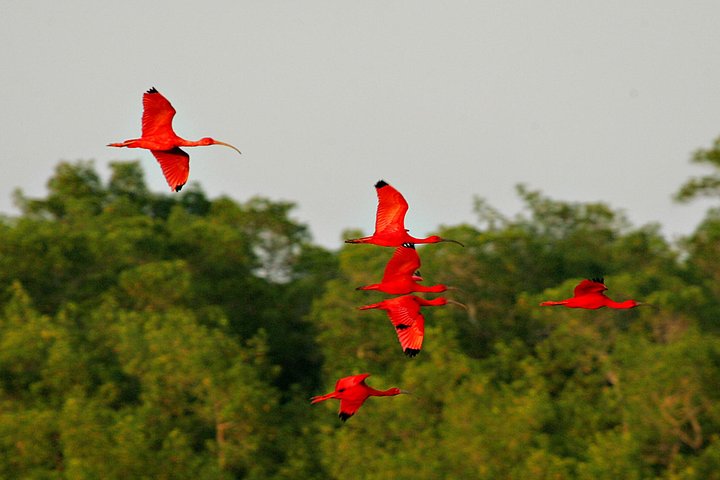
The Caroni Swamp is a vast tidal wetland of mangrove forest and winding channels on Trinidad's west coast, and its bird sanctuary is the best-known wildlife outing on the island. The headline act is the scarlet ibis, the national bird, which spends the day feeding along the coast and flies back in the late afternoon to roost in the mangrove islands. The standard trip is a small motorised boat that leaves in the afternoon, threads through narrow channels past mangrove roots, then idles in a quiet lagoon as the light fades and the birds arrive in flocks, so that whole trees turn scarlet. Along the way a guide points out herons, egrets, kingfishers and, with luck, a caiman or a tree boa resting in the branches. Our pick is the sunset boat tour into the Caroni wetlands, which has the deepest review base of the swamp trips and collects guests from Port of Spain. It is a gentle, unhurried outing that suits almost every age, and it pairs naturally with a late dinner back in the city.
Timing is everything here. The birds do not come at a set minute, so the boat usually positions itself in the roosting lagoon well before the light goes and waits. The first ibis often arrive in twos and threes, then in lines, and the peak can be over in less than half an hour, so keep your camera ready and your voice down.
Most trips return to the jetty in the dark, which is part of the atmosphere, but it also means insect repellent is not optional: mosquitoes and sandflies are active at dusk, so bring a strong repellent and wear long, light-coloured clothing.
Because the ibis feed along the coast during the day and return to roost at the end of it, the experience does not depend on the weather in the same way a beach day does, though heavy rain can make the evening grey and may cause a tour to be adjusted. The dry season, roughly January to May, tends to be the most comfortable for sitting on the water, but the roost can be seen in other months too. Ask your operator how many boats go into the lagoon at once, and choose a small group if you want quiet; some trips also add kayaking or a longer guided paddle for people who want to move under their own power.
Getting there is straightforward
The swamp is a short drive from Port of Spain, and the tour we recommend includes transport from the capital, which removes the stress of finding the jetty after dark. It combines well with the Asa Wright Nature Centre on a different day for a full tour of Trinidad's birdlife, and with a street food evening afterwards. For a visitor with only one nature outing in Trinidad, this is the one that delivers a genuine spectacle with almost no effort.
What to expect
The experience
A guided boat trip through mangrove channels into a roosting lagoon, with a guide who identifies the birds and a pause to watch the scarlet ibis arrive at dusk.
Best time
The late afternoon into dusk, when the ibis return to roost; the dry season from about January to May is the most comfortable.
How long
Roughly three to four hours including the drive from Port of Spain and the return after dark.
Tips
Bring strong insect repellent, wear long light-coloured clothing, keep your voice low in the lagoon and have your camera ready before the first birds arrive.
Quick picks
- Best for
- Anyone who wants a real wildlife spectacle without a hike, especially birdwatchers and photographers.
- Families
- Yes for children who can sit still on a boat; the evening finish is the main thing to plan around.
- Couples
- Gliding through the mangroves as the sky and the ibis turn red is one of the most romantic outings on the island.
- Pair with
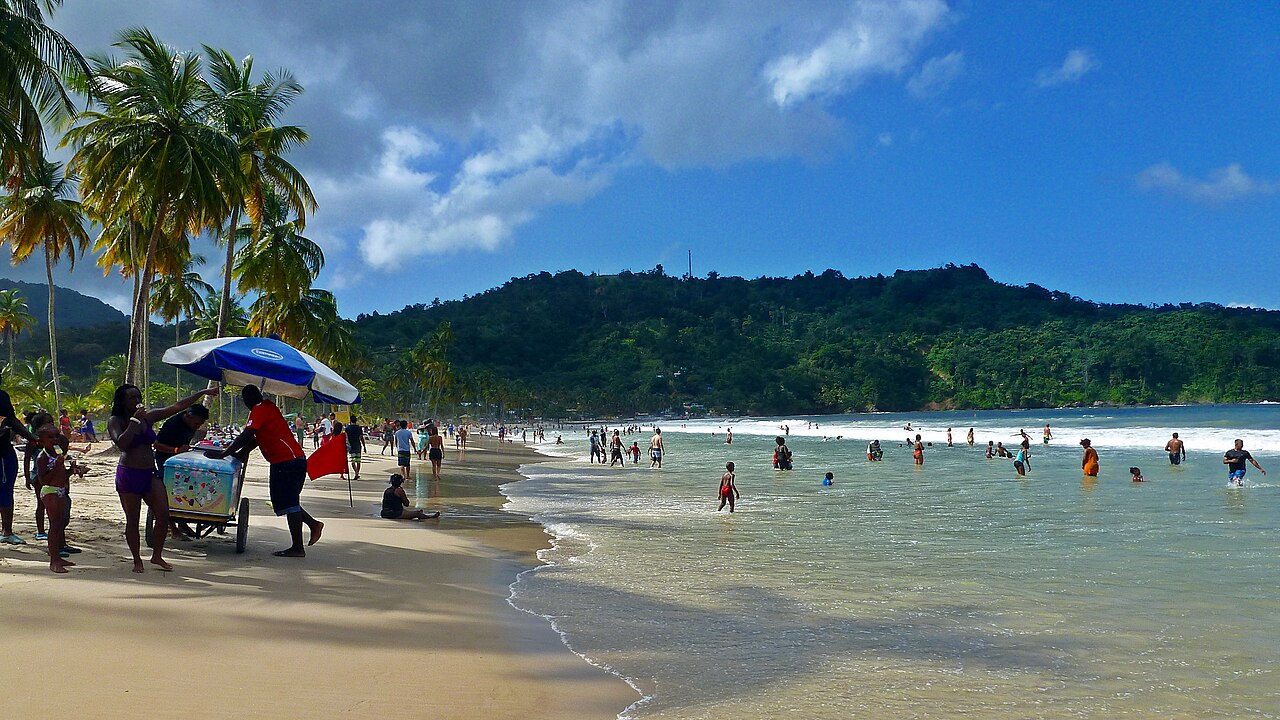
- A day at Maracas Bay or the Asa Wright Nature Centre, and a Port of Spain dinner afterwards.
- Time needed
- A late afternoon and evening, about three to four hours.
Good questions
When do the scarlet ibis come to roost?+
The ibis feed along the coast during the day and fly into the mangrove islands in the late afternoon, so tours are timed to reach the roosting lagoon before dusk. The peak usually lasts a short while, so arrive on time.
Is a sighting guaranteed?+
It is a reliable trip but wildlife is never guaranteed, and numbers vary through the year and with the weather. Guides know where the birds roost and position the boat accordingly.
What should I wear and bring?+
Long, light clothing, a strong insect repellent and a hat, plus a camera with a zoom lens if you have one. Mosquitoes and sandflies are most active at dusk.
Is it suitable for children?+
Generally yes, since the boats are slow and the trip is gentle. Check the operator's age and life-jacket policies when you book.
How far is the swamp from Port of Spain?+
It is a short drive from the capital, and the tour we recommend includes transport so you do not need a car. Allow time for traffic on the way back.