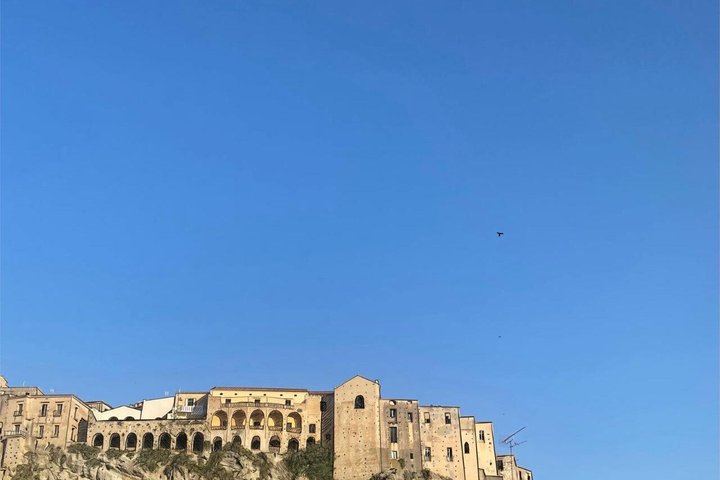
Tropea sits on a sandstone cliff above the Tyrrhenian Sea, and its historic center is the reason most people come. The old town is compact, walkable and almost entirely pedestrian in feel: narrow lanes run between honey-colored palazzi, wrought-iron balconies and doorways topped with carved stone arches that mark the homes of the noble families who once ruled the town. A guided walk focused on the medieval arches is the best way to turn a pretty stroll into a story. The guide points out the carved portals, family crests and hidden courtyards you would otherwise walk past, and explains how a town with Greek, Roman, Byzantine, Norman and Aragonese chapters ended up with such a dense collection of aristocratic architecture on one headland. Corso Vittorio Emanuele is the main spine, lined with cafes, gelaterie and shops selling red onion products, chili pepper pastes and local liqueurs, while the side streets quickly fall quiet. The walk naturally takes in the Norman cathedral with its soft yellow stone, the belvedere terraces that look straight down onto the beach and the sanctuary perched on its rock, and the small piazzas where residents still gather in the evening. It is an easy, low-effort introduction to the town that suits first-timers, history lovers and anyone who prefers to understand a place before they swim off the end of it.
The old town rewards slow looking. Many of the palazzi were built or rebuilt by noble families who prospered on trade and land in the centuries after the Norman conquest, and their carved stone portals are the signature detail: pointed or rounded arches, decorative keystones and coats of arms that quietly record who lived where and how wealthy they were. After earthquakes damaged much of southern Calabria, the town was repaired again and again, which is why styles overlap in a single street and why a guide is so useful for sorting out what is medieval, what is baroque and what is a careful later restoration.
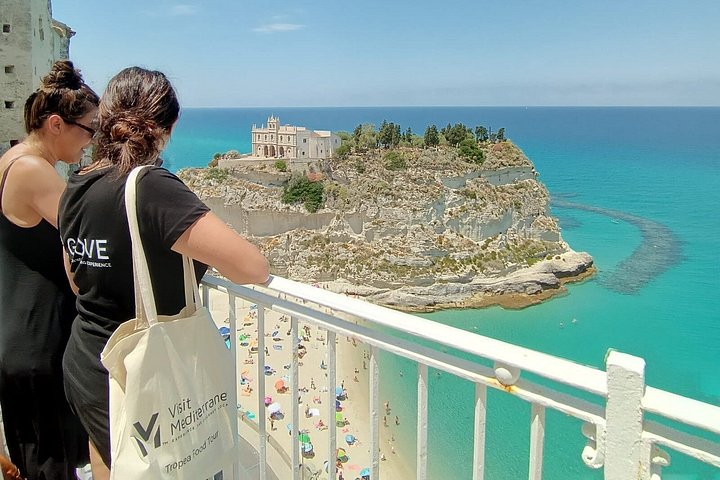
A good walk usually combines the arches with the town's anchor stops. The cathedral is the religious heart of the old town and a good place to step out of the sun. The belvederes along the cliff edge give the famous postcard views over the beach and the rock-top sanctuary, and they are the best place to orient yourself before heading down for a swim. Small workshops and delis along the lanes let you taste the local red onion in jams, relishes and sweets, so allow time to browse after the tour ends.
Practical planning is simple. Wear flat, grippy shoes, because the stone paving is worn smooth in places and the town is built on a slope. Go in the morning or toward the end of the day for softer light and thinner crowds, especially in high summer when the main street fills in the evening. The old town is the best base for dinner, so many visitors finish the walk with an aperitif and stay on for a meal.
Tour languages and group sizes vary by operator and date, so check what is offered when you book. If you only have a day in Tropea, this short walk gives the context that makes everything else, from the beaches to the boat trips, make more sense.
Combine the walk with the rest of your day sensibly. The arches walk fits neatly between breakfast and a beach session, and the narrow lanes are shaded for much of the morning, which makes it a comfortable choice on hot days. If you enjoy photography, bring a small camera or phone with a good low-light mode for the shaded doorways, and look up as well as ahead, since balconies, bells and carved lintels reward a second glance.
Cafes along the way make good resting points, and shops sell red onion products, chili pastes and handmade sweets that travel well as gifts.
What to expect
The experience
A short guided walk through the historic center focused on the carved medieval arches, noble palazzi, cathedral area and cliff-edge viewpoints.
Best time
Morning or late afternoon for softer light and fewer people; summer evenings are lively but busy on the main street.
How long
About one to one and a half hours, plus time to browse the shops afterward.
Tips
Wear flat shoes with grip for the worn stone, bring water in summer, and finish at a belvedere for the beach view before lunch.
Quick picks
- Best for
- Anyone arriving in Tropea who wants context before beaches and boats.
- Families
- Short and mostly flat along the main street, though stairs and slopes make strollers awkward.
- Couples
- A quiet golden-hour walk ending with an aperitif on a terrace.
- Pair with
- The sunset aperitif walk, the food and drinks walk, or a boat trip the next morning.
- Time needed
- Under two hours, so it fits before lunch or before a late swim.
Good questions
Is the old town car-free?+
Most of the historic center is pedestrian or very restricted, so plan to park outside the center and walk in. Check parking options with your hotel before you arrive.
Do I need a guide to enjoy the arches?+
No, you can wander freely, but a guide explains the families, dates and architectural styles behind the carved portals, which is easy to miss on your own.
How much walking and how many stairs are involved?+
The route is short but built on a slope with worn stone steps in places. Comfortable shoes matter more than fitness, and some lanes are not suitable for wheelchairs.
What else is close to the arches?+
The cathedral, the main belvederes and the stairs down to the beach are all within a few minutes of the walk, so you can combine them easily.
When is the town quietest?+
Early morning and out of season. In July and August the main street is busy after dinner time, but side lanes stay peaceful.